Amir Reza P’28 on Why International Education Is Central to Babson’s Mission

Summer 2026







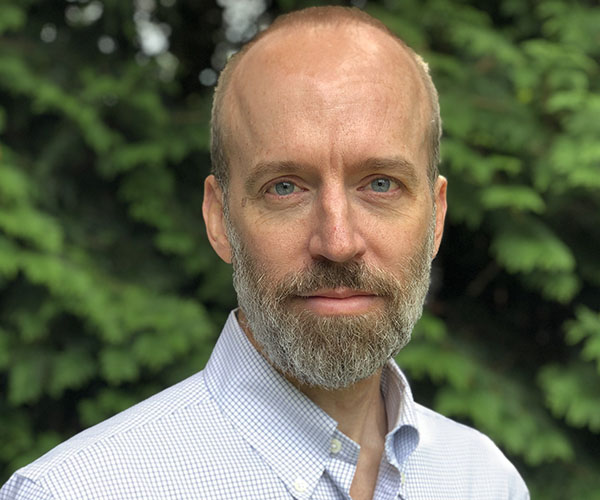
Amir Reza P’28 first experienced the transformative power of international education as an undergraduate student after spending his childhood in Iran surrounded by the effects of conflict and war. At the University of Maine, he often found himself in deep conversation with students from four or five countries, their humanity transcending their disagreements. “That humanization that international education can create became this almost epiphany for me,” he says. That led him to Babson, where he has spent the past 26 years. Now, as the dean of Babson Academy and global education at Babson, Reza and his team create those same opportunities for international students while also “bringing the best of Babson to the world.”
The Q&A
Why is international education so important, especially at Babson?
“As we prepare and educate entrepreneurial leaders, we want them to be able to lead in a variety of cultural, economic, and organizational contexts. International education helps make that possible. It develops intercultural competence, adaptability, and the ability to communicate and collaborate effectively across differences. Those skills matter whether our graduates are launching a startup, joining a family business, taking a company global, or leading within a nonprofit. That’s why international education is so important to Babson. It’s not peripheral to our mission; it’s central to it. I would argue that, for Babson, it is second only to entrepreneurship education in helping us prepare graduates to create value and make a difference wherever they go in the world.”
What makes Babson so supportive for international students?
“At Babson, international student support is everyone’s responsibility. Yes, we have an award-winning international education team in the Glavin Office that serves students with expertise, empathy, and a developmental mindset. But what makes the experience special is that support extends far beyond that office through our faculty, health services staff, career advisors, coaches, and student affairs professionals. Because international students are such an important part of our community, they’re not treated as a separate group, they’re fully integrated into the life of the institution. To me, that’s the real differentiator.”
How do you view Babson Academy’s impact around the world?
“Through Babson Academy, educators from around the world engage with our programs and return to their institutions as stronger teachers, researchers, and leaders. One of the best examples is the Babson Collaborative, a network of roughly 40 universities across 30 countries. At our annual summit, I reminded participants that if each institution takes these ideas and best practices back to their campuses, together we have the potential to impact nearly 900,000 students globally. That’s what excites me most. Through our partners, Babson can influence the learning experiences of nearly a million students around the world. For a college of our size, that’s an extraordinary multiplier effect.”
Two More for Amir
What does Babson mean to you?
“Babson, to me, means a global community where communication crosses borders and really lowers the misunderstandings that come from either misperceptions or things that people have been taught. We have an opportunity to overcome those so that people, when they interact with each other across those borders, and not just geographic borders, they can start to see that they have a lens through which they see the world, and that lens is not universal, and it’s OK to see the world through multiple lenses. And Babson has afforded me that, and it becomes a real part of the Babson story for me.”
Right now, what are you …
- Watching? “World Cup, of course, like all consumed.”
- Reading? “Fiction, I just finished reading Lion Woman of Tehran. I’m from Iran, and it’s a great fiction story, but really it’s my mom and my three older sisters who still live in Iran, I think of them often, and this book is about women empowerment through the ’60s, ’70s, ’80s, and ’90s in Iran. And, nonfiction, I’m thinking more and more about life and reading Die with Zero, which is about how to maximize what they call ‘life energy,’ and how do we make sure that we don’t just become consumers, but we really value and enjoy life to its maximum.”
- Listening to? “I listen to so many different things. One thing is anything that has comedy in it. So whether it’s ‘Wait, Wait, Don’t Tell Me’ on NPR, or fantastic comedians, especially if there’s something intercultural. I love storytellers, so there’s this Finnish comedian Ismo or Maz Jobrani, who’s Iranian-American, and comedians like Dave Chappelle, who are just amazing storytellers.”
- Doing in your free time? “I play soccer, volleyball, obviously spend time with family, and ride my motorcycle.”
Latest Stories
Posted in Entrepreneurial Leadership
Posted in Community
Posted in Entrepreneurial Leadership