From Imagination to Publication: How Tiny Star Empowers Young Writers in the Age of AI

Editor’s note: Babson College has been named the No. 1 school for entrepreneurship by U.S. News & World Report for 30 consecutive times. This ongoing series, Startup Stories, highlights the entrepreneurs who have been shaped by their Babson experiences.
Joy Meng MBA’28 believes it’s more important than ever for children to discover the power of their voice and their imagination.
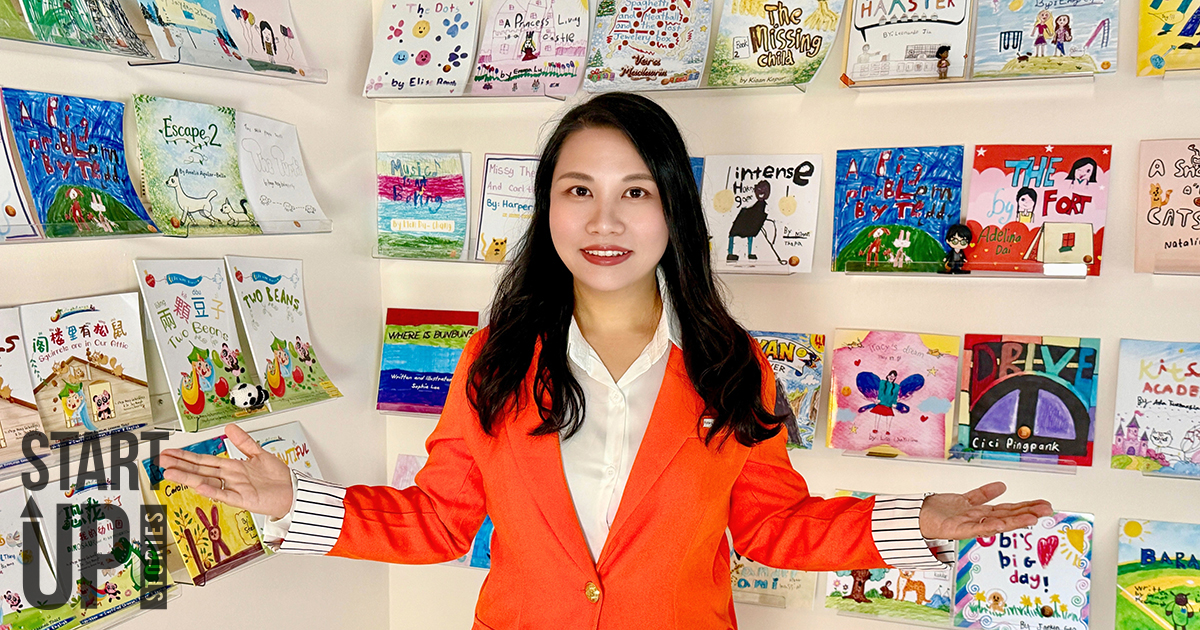
It’s why she and her daughter, Aanya, created Tiny Star, a creative storytelling startup that puts children in the driver’s seat, encouraging them to dream up stories, develop their ideas, and transform their handwritten words and illustrations into published books.
For Meng, a former literature professor and published author, the goal extends far beyond helping children see their names in print. It’s about giving young people the confidence and agency to become creators rather than passive consumers of content in an increasingly AI-driven world.
Meng founded Tiny Star in March 2025 after she had difficulties helping Aanya publish her stories. The business already has partnered with 14 elementary schools, helped more than 350 children bring their stories to life, and generated more than $130,000 in revenue.
Now, with a $25,000 grand prize from Babson’s 2026 B.E.T.A. Challenge and $1,500 in Babson Seed Funding, Meng is preparing to expand Tiny Star into an AI-assisted storytelling platform. But, her guiding principle remains unchanged: Children should be the storytellers, with AI serving as a tool to help bring their ideas to life.
What was the original problem you were trying to solve?
“When my daughter was 4 years old, she had a lot of stories to tell and deserved a chance to have her own books, but there were no publishing houses who would open their doors for her. I also recognized a larger problem: Children growing up in the age of AI face an increasingly fragmented attention, excessive screen time, and fewer opportunities to develop their own creativity.”
How does Tiny Star solve that problem?
“We started with an in-person program; children ages 6–10 turn their own hand-drawn and handwritten stories into published books on Amazon. They learn visualization, build storytelling skills, share their work, improve their work after feedback, and develop confidence and a creator’s identity.”
What hurdles have you encountered, and how have you overcome them?
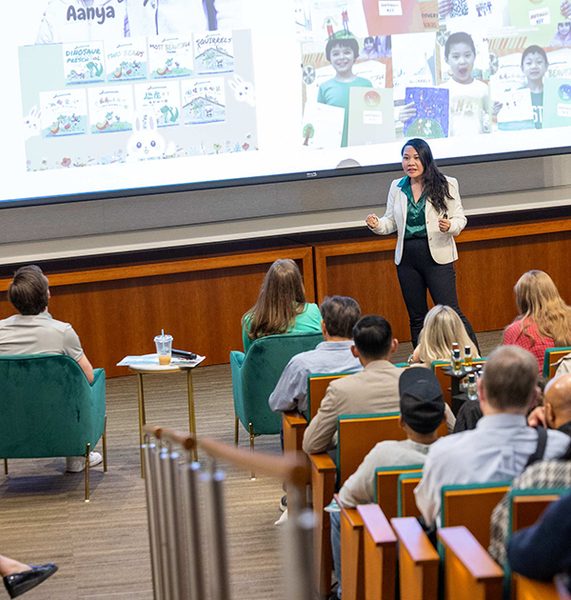
“Tiny Star’s first version depended on in-person instruction, manual operations, and hands-on publishing. The after-school program proved successful but difficult to scale. I responded by developing Tiny Star 2.0, adding live online and at-home programs released this fall, followed by Tiny Star 3.0, an AI-assisted storytelling education platform that will be released this winter.”
How has Babson impacted your venture and entrepreneurial journey?
“Winning the 2026 B.E.T.A. Challenge Graduate Track and receiving 2026 Babson Seed Funding were important milestones for Tiny Star. They brought recognition and resources at a stage when Tiny Star was ready to plan its next phase. Babson mentors and classmates have helped me think and act systematically and professionally as an entrepreneur.”
What is something you’ve learned as a founder?
“I’ve learned that Tiny Star’s mission goes beyond helping children create books. Tiny Star is designed around children: They bring the ideas, make the decisions, and create the work. The book is one tangible outcome; the deeper meaning is to help each child see themselves as a confident creator. Children should be the initiators, decisionmakers, and creators, with AI serving as a tool to support their work.”
What advice would you give to new entrepreneurs?
“Appreciate your life and look for ways to help others succeed. Try to bring light, laughter, and love into the world every day.”
Startup Stories is our ongoing series that highlights the entrepreneurial journeys of Babson-born ventures and entrepreneurs. To recommend a venture for consideration, please email us here.
Launch Your Own Venture
Check out Babson College’s new online Master of Science in Management in Business Creation (MSBC), where entrepreneurs build their ventures in real time while learning from experienced faculty, receive mentorship from established entrepreneurs, and graduate with a degree and an investor-ready business plan.
Latest Stories
Posted in Entrepreneurial Leadership, Outcomes

Posted in Community