A Better Bottle: How Daniel Danes MBA’24 Built an Olive Oil Business on Quality and Trust

Editor’s note: Babson College has been named the No. 1 school for entrepreneurship by U.S. News & World Report for 30 consecutive times. This ongoing series, Startup Stories, highlights the entrepreneurs who have been shaped by their Babson experiences.
A search for a better olive oil in American grocery stores led Daniel Danes MBA’24 back to his family’s roots, and toward a new business.
“I was surprised by how difficult it was to find truly high-quality extra virgin olive oil at a reasonable price,” Danes said.
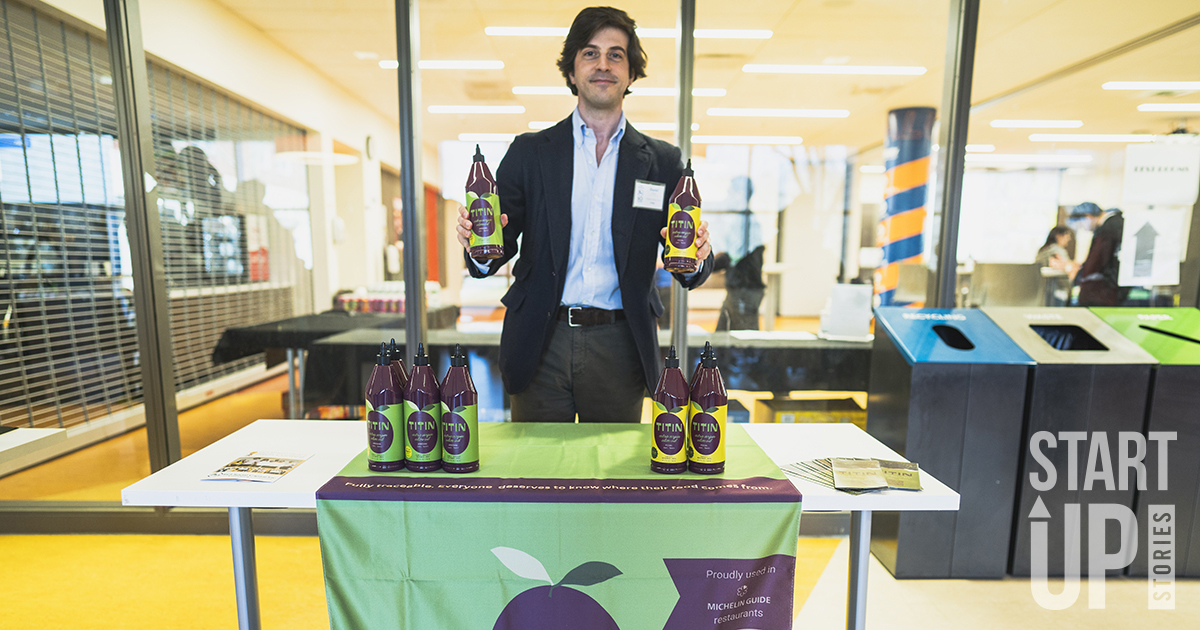
The experience planted the seed for TITIN Olive Oil, a Boston-based venture Danes founded with his wife, creative designer Casilda Cortés, after graduating from Babson in May 2024. His family’s olive oil production in Spain began with his great-grandmother Matilde, affectionately known as “Titin,” and the brand’s namesake.
Danes, who was a B.E.T.A. Challenge semifinalist in 2025, has maintained a relationship with Babson through campus dining events such as the Babson Food Summit and Dinner in Green as his entrepreneurial journey continues.
What was the original problem you were trying to solve?
“The problem we wanted to solve was the lack of traceability and consistent quality in the olive oil market at a reasonable price. Today, consumers often pay very high prices for olive oils with limited transparency about where they come from, how they are produced, or even the actual quality of the product. We saw an opportunity to offer a truly traceable, high-quality extra virgin olive oil without the excessive markups that often exist in the traditional supply chain.”
How does your venture solve that problem?
“My family has been producing olive oil for four generations, which gives us both the experience and the relationships needed to control the entire supply chain. We have full visibility from the olive groves and production process in Spain all the way to our warehouse in Boston. Our supply chain is intentionally simple: from the producer directly to us, then through the distributor to the retailer, and ultimately to the final consumer. By reducing unnecessary layers in the supply chain, we can preserve traceability, maintain strict quality control, and offer a premium product at a fairer price.”
What hurdles have you encountered, and how have you overcome them?
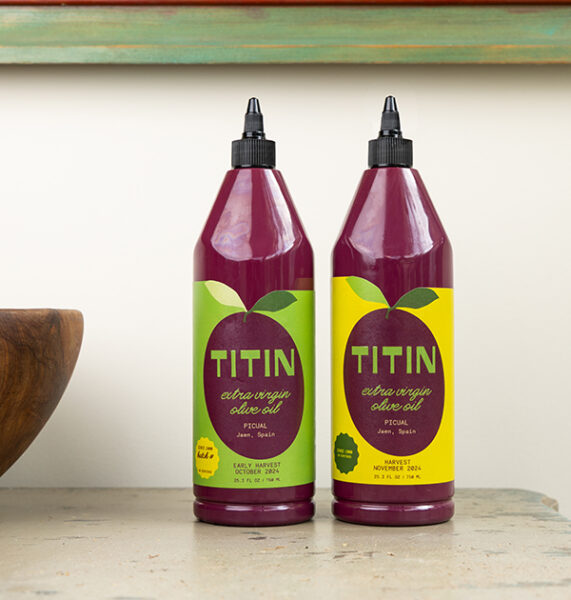
“The first year was particularly challenging because I had to build a brand specifically for the American consumer. That meant putting aside many of my assumptions as a Spaniard and focusing entirely on who I was selling to, how they shop, and what they value in a product. The biggest challenge, however, continues to be opening new accounts and generating enough volume while managing every other part of the company.”
What is the current status of your venture? And what’s next?
“We are still in the middle of the journey, but the business has already built a solid foundation. We currently work with several distributors across New England and New York, and our products are now present in more than 100 restaurants and 250 retail stores.
“The next stage is about scaling that distribution. We want to grow within restaurant groups, expand into universities and other institutional accounts, and continue building our retail presence across the East Coast without losing the quality, traceability, and identity that differentiate the brand.”
How has Babson impacted your venture and your entrepreneurial journey?
“I’m Spanish, and I grew up with a very traditional ‘old world’ approach to education: a lot of studying, a lot of memorization, and relatively little emphasis on putting things into practice. Moving to the United States changed that mindset. It opened my eyes to the idea that almost any project can be viable if you approach it with the right tools, discipline, and willingness to execute.
“Babson gave me those tools. Beyond the academics, it gave me access to an extraordinary network of entrepreneurs, professors, and business leaders who were genuinely willing to help, sharing their experience, advice, and personal connections. Over those two years, Babson prepared me to become a more complete entrepreneur: not necessarily an expert in everything, but someone who understands enough about finance, marketing, operations, strategy, and sales to build a company from the ground up.
“If there is one lesson that became deeply ingrained in me, it is the importance of cash flow. I have become almost obsessive about cash flow in my company—how quickly money comes in, where it goes, and how every decision affects liquidity. That discipline has had a major impact on the way I run the business, and I owe a great deal of it to Babson and, in particular, to Professor Brigitte Muehlmann.”
What is one piece of advice you have for new entrepreneurs?
“My advice to new entrepreneurs would be simple: if you have an idea, build a prototype as quickly as possible and try to sell it. Don’t spend too much time trying to prove the idea on paper. Put something real in front of customers and see what happens. If people who are not your friends or family are willing to pay the price you are asking—and they keep doing so—then you may have a real business.”
Startup Stories is our ongoing series that highlights the entrepreneurial journeys of Babson-born ventures and entrepreneurs. To recommend a venture for consideration, please email us here.
Launch Your Own Venture
Check out Babson College’s new online Master of Science in Management in Business Creation (MSBC), where entrepreneurs build their ventures in real time while learning from experienced faculty, receive mentorship from established entrepreneurs, and graduate with a degree and an investor-ready business plan.
Latest Stories
Posted in Entrepreneurial Leadership, Outcomes
Posted in Community, Entrepreneurial Leadership, Outcomes