Delivering Dignity: How a Babson Entrepreneur Fights Period Poverty
Editor’s note: Babson College has been named the No. 1 school for entrepreneurship by U.S. News & World Report for 30 consecutive times. This ongoing series, Startup Stories, highlights the entrepreneurs who have been shaped by their Babson experiences.
Entrepreneurs can’t forget why they started.
When facing tough and tiring days, when the path ahead feels uncertain, they can’t lose sight of why they began their entrepreneurial journeys in the first place. That’s particularly true for entrepreneurs such as Ceylan Rowe MBA’22 who are taking on entrenched societal challenges.
“On the hardest days, when you’re exhausted and it feels like you’re carrying the weight of it all by yourself, you need to come back to the people you’re serving,” Rowe says. “Their resilience will remind you why the work matters, even when it feels impossible.”
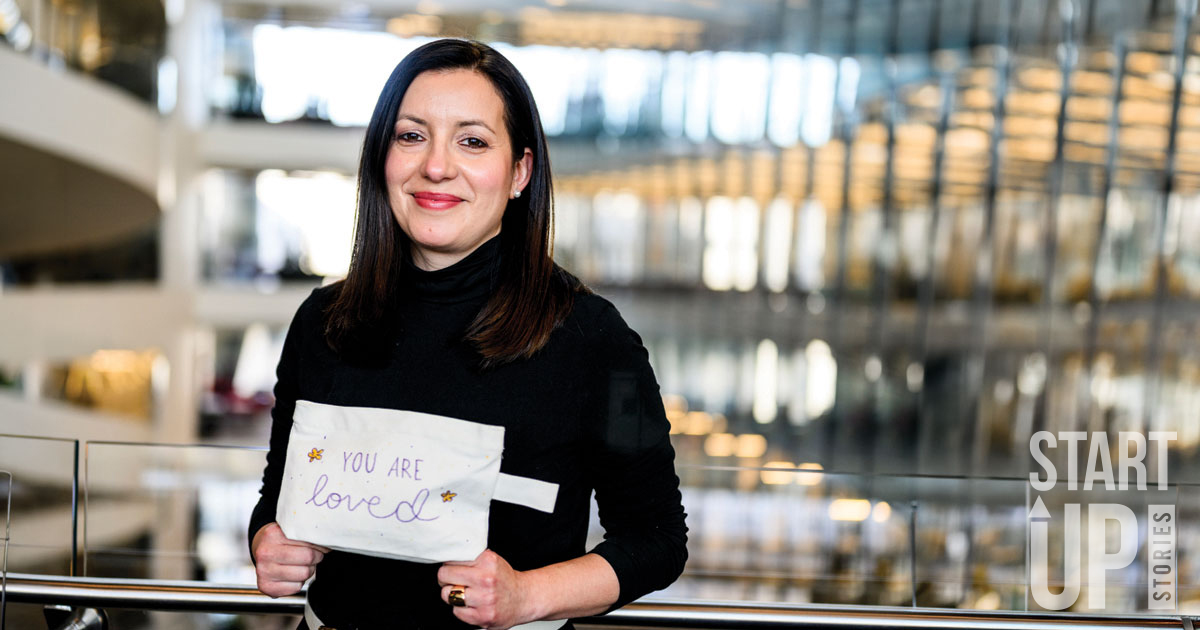
Rowe is the founder and executive director of the Fihri Foundation, a nonprofit organization with a mission to end period poverty, both locally and globally. “We believe access to period products is a basic human right,” Rowe says.
Defined by the inability to access the basics (products, education, and sanitation services) of menstrual health and hygiene, period poverty is far too common. According to the World Health Organization, an estimated 500 million women and girls will confront it.
The issue is especially fraught during a humanitarian crisis. “Menstrual health is too often left out of humanitarian response, even though it never stops, not during a war, a famine, or a displacement crisis,” Rowe says. “This is the reality for millions of women and girls around the world, and it’s the reality we’re working every day to change.”
Since its launch in 2021, Fihri has distributed over 300,000 period products across 20 countries, reaching women and girls in some of the most hard-to-access places in the world. In this latest installment of Startup Stories, a series dedicated to Babson-born entrepreneurs and their entrepreneurial journeys, Rowe discusses the obstacles she has faced, the influence of Babson College, and her advice for entrepreneurs.
Tell us more about Fihri and its mission.
“At Fihri, we believe menstrual health is not a luxury. It is a basic human right and a critical, and often overlooked, pillar of humanitarian aid. Food, water, and shelter are treated as essentials in every crisis response. Period products should be, too. Women and girls displaced by war, disaster, and famine are often forced to use rags, leaves, or unsafe materials to manage their periods, putting them at risk of infection, shame, and exclusion at the exact moment they are most vulnerable.
“Our signature program is Period Palooza, where we bring together students, companies, and nonprofit partners to write messages of hope and encouragement directly on period kits, then pack them with sustainable period products for distribution. These kits are shipped to women and girls in need around the world, with a special focus on disaster-stricken and conflict-affected areas.”
What challenges have you encountered, and how have you overcome them?
“One of my biggest hurdles has been figuring out how to distribute period products during ongoing wars. Sudan has been the hardest place for us to reach. As you can imagine, there is so much heartbreak and uncertainty. It’s incredibly challenging to get products to women in need, especially when they’re fleeing for their lives and dignity is often the last thing anyone has time to think about.
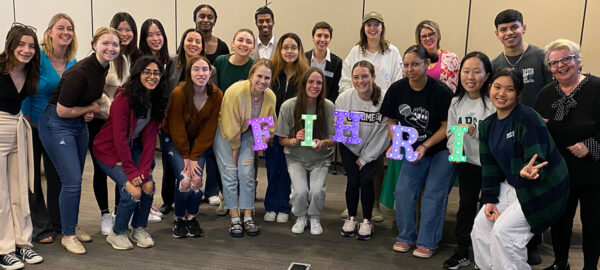
“When we can’t source locally, we’ve had to get creative and resourceful in ways I never imagined when I started this work. I’ve personally stuffed suitcases full of period products. Fihri volunteers and student ambassadors have done the same, carrying extra boxes in their luggage whenever they travel home to visit family. We’ve partnered with shipping companies to move larger quantities, and we’ve tracked down containers that were already headed to a region and asked to add our boxes to what was already in transit. Every route we can find, we take.”
What is the current status of Fihri?
“Our goal is to reach 1 million period products distributed, and we’re working every day to get closer to that milestone.
“Fihri is a volunteer-led organization, which means our growth depends entirely on the people who believe in this mission and show up for it. We’re always looking for more partners to help us scale our impact, whether that’s logistical support to help us move products more efficiently, community partners on the ground who can help with distribution, donors who can help fund the work, or ambassadors who can help spread the word and grow our reach.”
How has Babson impacted your entrepreneurial journey?
“Babson has been foundational to Fihri from the very beginning. The idea first took shape during my MBA, in an international business class, where the seed of what would become Fihri was planted. That spark pushed me to apply to the Babson WIN Lab®, and the following year, to the Summer Venture Program, each step giving me the structure and support to turn an idea into something real.
“Along the way, the professors, advisors, mentors, and peers I met at Babson were instrumental in helping Fihri get off the ground. They challenged my assumptions, pushed me to think more rigorously about the problem I was trying to solve, and connected me to a network of people who believed in the mission before it had any traction to show for itself. Babson didn’t just teach me how to build a business. It gave me the community and confidence to build one that could actually make a difference.”
What advice would you give to other entrepreneurs, especially those tackling a societal problem?
“Be a good listener. If you want to address a societal problem, don’t go in thinking you already know all the answers. Listen to the people on the ground who are actually living the problem. They understand the nuances of their own communities far better than you ever will from the outside. What works in one country, or even one village, may not work in another, and the only way to know the difference is to ask, and then actually listen to the response.
“Babson didn’t just teach me how to build a business. It gave me the community and confidence to build one that could actually make a difference.”
Ceylan Rowe MBA’22 of the Fihri Foundation
“Be willing to get uncomfortable and get your hands dirty. If you’re only willing to do the parts of the job that look good, you’re not really solving the problem. This work isn’t glamorous. It’s suitcases stuffed with supplies, long nights coordinating logistics, and figuring out plans B, C, and D when plan A falls through, which it often will.
“That’s why you must stay flexible. Borders close, conflicts escalate, partners fall through. The entrepreneurs who last in this space aren’t the ones with the most rigid five-year plan. They’re the ones who can adapt in real time without losing sight of the mission.
“Finally, build real relationships, not transactions. The nonprofits, volunteers, and community members you partner with aren’t just a means to an end. They’re the reason anything gets done at all. Trust takes time, and in fragile or dangerous places, trust is often the only thing standing between products reaching someone and products disappearing along the way.”
Startup Stories is our ongoing series that highlights the entrepreneurial journeys of Babson-born ventures and entrepreneurs. To recommend a venture for consideration, please email us here.
Launch Your Own Venture
Check out Babson College’s new online Master of Science in Management in Business Creation (MSBC), where entrepreneurs build their ventures in real time while learning from experienced faculty, receive mentorship from established entrepreneurs, and graduate with a degree and an investor-ready business plan.
Latest Stories

Posted in Insights
Posted in Community
Posted in Community