Finding the Character: What Melancholy Play Taught Sudhish Thati ’27
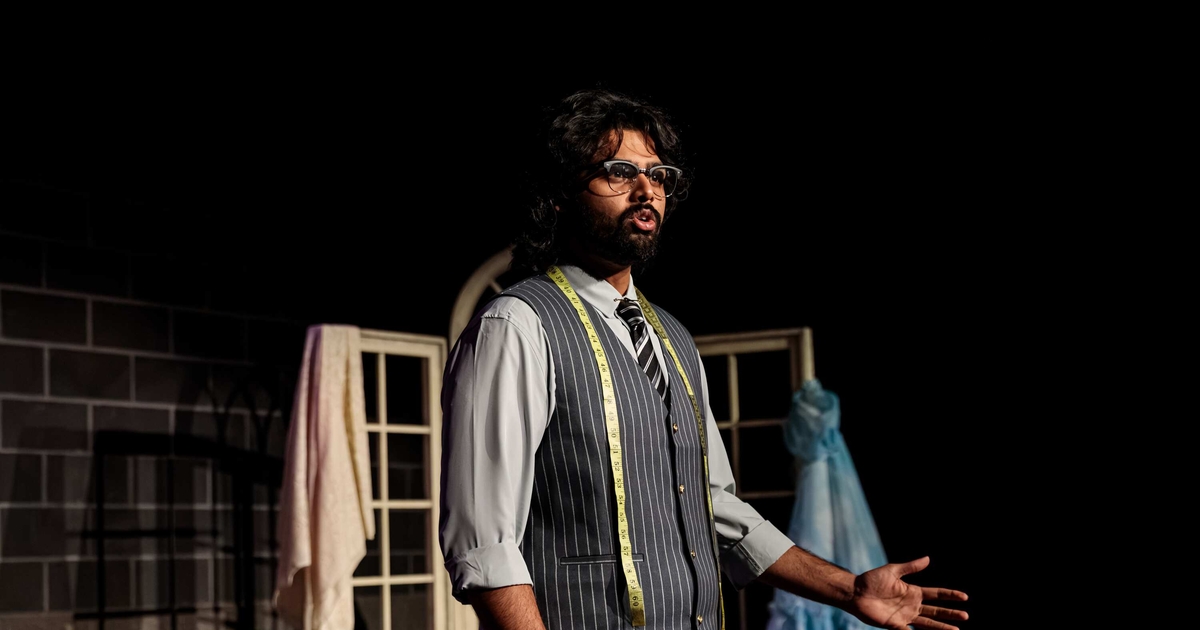
As Sudhish Thati ’27 stood off stage waiting for his entrance as Frank in The Empty Space Theater (TEST) production of Melancholy Play, he could feel the experience shift. More than any line or scene, it was this moment that stood out the most to him about the production.
“There’s this funny gap where you’ve spent weeks thinking about a person and the audience has known him for about three seconds,” Thati says. “I got to introduce a whole person to a room.”
For students like Thati, TEST and BabsonARTS provide an environment to make friends and find a creative outlet. It’s also a space to discover the power of entrepreneurship and entrepreneurial leadership that goes beyond business creation. It’s about thinking of something (in Thati’s cause, a character) from all angles. It’s about that moment when you can introduce the world to something new with full confidence.
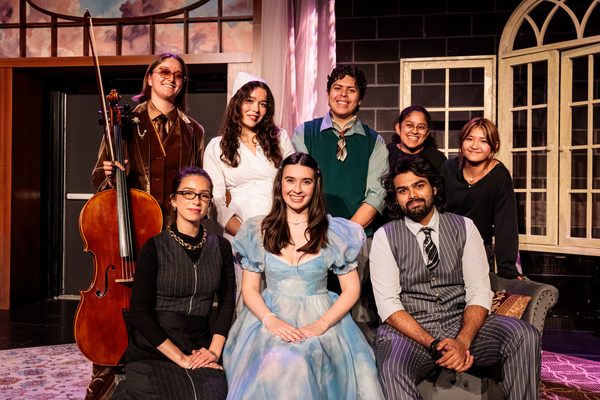
“If you want to be a successful entrepreneur, you better be creative. You better be collaborative. You’d better know how to improv and pivot and speak well. And these are all the things, of course, that theater does,” Beth Wynstra, TEST’s artistic director and director of this production, recently told WBZ-TV.
Melancholy Play is a 2002 play by Tony-nominated playwright Sarah Ruhl, who visited campus in October to discuss her book Lessons from My Teachers: From Preschool to the Present with students in Foundations of Critical Inquiry. She also met with the cast putting on her show.
The story explores the role melancholy and sadness play in the human experience and how emotions and love physically and mentally shape us. It specifically follows bank teller Tilly (played by Brigid Hughes ’27) and her interactions with various people. She has a sense of melancholy that makes everyone around her fall in love with her (including Thati’s Frank, a tailor). When her demeanor shifts to more positive, chaos ensues. The play is described as both surreal and dark, with one character even shape shifting into an almond.
Thati, who hopes to work in the entertainment industry after graduation, spent six weeks this fall learning and performing Frank. He reflected on how stepping into the Frank role and meeting Ruhl changed his views on acting, the creative process, and even himself.
How did Sarah Ruhl’s visit affect your perspective?
“Having Sarah on campus made me wonder what it’s like to write a character and then meet a college student who’s been walking around as him for weeks. She imagined Frank first. I got to figure out things as specific as what he does with his hands when he wants Tilly’s attention. The visit made me appreciate how personal both sides of that exchange are. It also gave me more confidence in the choices that made this version of Frank mine.”
What surprised you most about playing Frank?
“I went into the play thinking I understood why Frank falls for Tilly. The more interesting question turned out to be what happens when she’s happy. Here’s this woman he’s crazy about; then she feels better, and somehow, he’s the one having a crisis. I loved that about him.
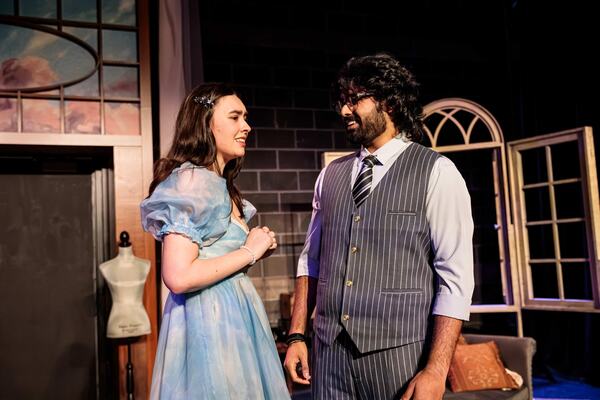
“It made me ask a slightly uncomfortable question about myself, too. How often do we think we really know someone when what we know best is who we get to be around them?”
How did you learn to trust the world of the play?
“At some point, you have to accept that, yes, a person can turn into an almond, and now somebody who loves that person has to figure out what to do. That second part made complete sense to me. As Frank, I could always find something I understood, like wanting Tilly to look at me the way she used to. Once I knew what I wanted from her, I was willing to follow Sarah Ruhl pretty much anywhere.”
What did performing teach you about Ruhl’s writing?
“Reading the play, I could go straight from Frank’s line to Tilly’s answer. Onstage, I had to stand there and wait for her to answer me. That wait taught me a lot about Sarah’s writing. A line I’d read as confident could suddenly feel like a guy who’d said too much and desperately wanted the other person to speak. I hadn’t realized how much of Frank I’d find in those few seconds after he opened his mouth.”
Posted in Community
Latest Stories
Posted in Community
Posted in Community