Smiles, Connection, and a Piece of Home: The Meaning of Inclusive Excellence
Assumptions can lead to mistakes. In the world of business, those mistakes can prove costly.
In the 2000s, Blackberry assumed its customers would always want a physical keyboard. The introduction of the iPhone in 2007 proved the company wrong. “That bet at that particular time cost them their market,” said Robbin Chapman, a consultant, executive advisor, and adjunct associate professor at the University of Pennsylvania. “It shows us the cost of untested assumptions.”
A generation or two earlier, white-owned cosmetic companies ignored the hair care needs of Black consumers. “The major beauty brands didn’t think there was a market,” Chapman said. Again, those assumptions proved wrong. A Black-owned business, Johnson Products Company, filled the need with products such as Ultra Sheen and Afro Sheen and became a cultural and economic force (company founder George Johnson H’76, P’72, G’08 is the father of Babson Trustee Eric Johnson ’72, H’24, P’08).
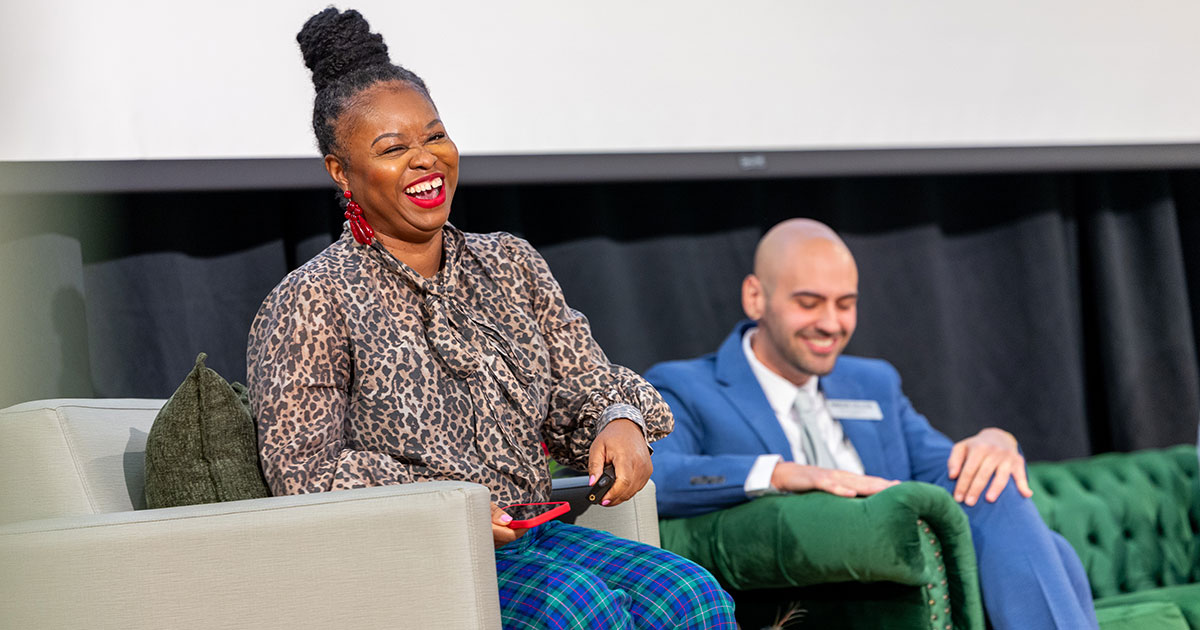
Chapman served as the keynote speaker at Babson College’s fourth annual Inclusive Excellence Summit, which was held last week at Knight Auditorium. In a talk entitled Managing Our Assumptions, she considered the repercussions of the preconceived notions we have about communities and about each other. Those assumptions can leave an organization blindsided.
“Our assumptions don’t just stay with us,” Chapman said. “They are contagious. They ripple through the teams we work on. They show up in big and small ways.”
Babson has made an ongoing commitment to inclusive excellence, which calls for fostering an environment of belonging where everyone can flourish and bring their true selves. Besides Chapman’s keynote, the summit featured Babson staff and faculty talking of inclusive excellence initiatives across campus, in areas such as international studies, alumni engagement, mental health, employee resources, student initiatives, and faculty endeavors.
The theme of this year’s summit was Weathering Change Together: Inclusive Communities Thrive. “This was an especially important year to bring the Babson community together for the Inclusive Excellence Summit,” said Sadie Burton-Goss, Babson’s chief inclusive excellence officer. “Higher education, our students, and the communities we serve are navigating significant social, political, economic, technological, and global change.”
What follows are a few highlights from the summit that illustrate how inclusive excellence is impacting the College and its community. “It is about how we learn together, how we lead together, and how we ensure that the talent and perspectives within our community help Babson deliver on its mission to create social and economic impact everywhere,” Burton-Goss said.
Five Seconds of Connection
Standing before the audience in Knight, Ariel Armony told a story about visiting his son, Ian, when he was in college. As the pair waited to pay in a long line at the school cafeteria, Armony noticed that none of the students in line said hello or made eye contact with the woman at the register.
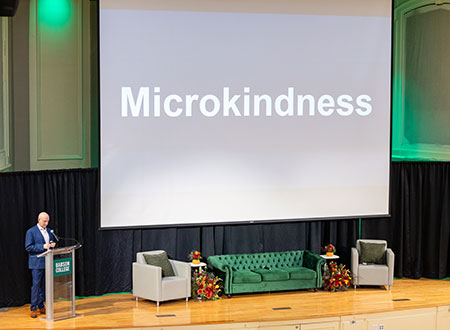
When Armony and his son approached the register, though, Ian smiled and called her by her name. “Her whole face changed. She gave him a hug,” says Armony, provost and executive vice president at Babson. “He was the first one to greet her. It took five seconds, maybe less. He created a moment of connection. A smile brought them together.”
Armony has thought about that simple moment many times, how five seconds is all that’s needed for kindness and connection. “It is something we do, or fail to do, hundreds of times a day, in moments so small we barely notice them,” he says.
Visitors to his office on the third floor of Horn Library are always greeted with a smile and an offer of chocolate, Armony says. He acknowledges that greetings and candies won’t solve all of society’s intractable problems, but the effect of a small gesture (holding the door for someone, calling people by name, asking about their sick parents) can compound and elevate a community. “It spreads, quietly, one smile at a time,” he says.
A Piece of Home
Denicia Ratley, senior director of belonging and inclusion and college chaplain at Babson, said that inclusion can’t be solely on a surface level. When people are invited into a community, that invitation means they bring their full selves with them. “It asks us to recognize the fullness of their humanity,” Ratley says.
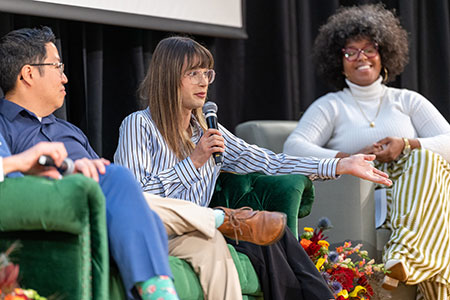
Pete Yoo, Babson’s associate director for spiritual life, recalled how a group of graduate students from Mexico (Ana Alderete MBA’28, Roberta Cantu Zaragoza MBA’28, Catalina Garza MBA’28, and Camila Migoya MBA’28) wanted to hold a Día de los Muertos (Day of the Dead) celebration this fall. “They wanted an altar, they wanted music, they wanted a party,” Yoo said. “They wanted to bring a piece of home here to Babson.”
The team at Babson made the event happen, setting up an altar in Glavin Family Chapel. “I wanted them to be able to express themselves and share their culture with the Babson community,” Yoo said.
The altar was filled with candles, pictures, and handcrafted marigolds. Attendees shared memories and stories. “It was very celebratory. It was not a morose event. It’s not supposed to be sad,” Yoo said. “If you remember your loved one, they are still with you. It was a beautiful time.”
Make Sure to Listen
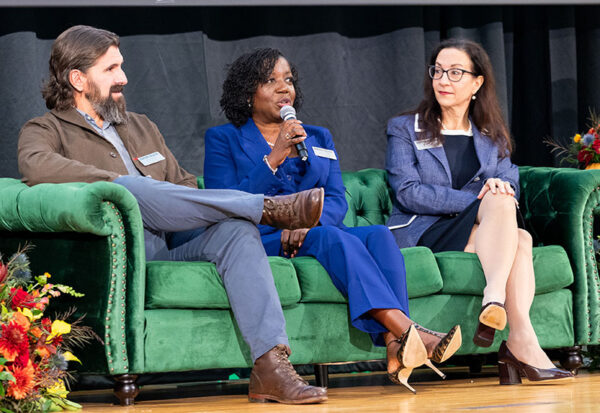
The importance of listening was a theme running through a summit session focused on the Arthur M. Blank School for Entrepreneurial Leadership.
When workers express fear around technology and the rise of artificial intelligence, part of that fear comes from a feeling they are being left out of the conversation, says Stefan Esposito, executive director of the C. Dean Metropoulos Institute for Technology and Entrepreneurship.
When pushback happens, that might be a sign that leaders need to listen more. “How do you distinguish between resistance and feedback?” Esposito said. “Resistance tells you there is feedback you’re not getting.”
Shakenna Williams ’94 thought back to her undergraduate days and the staff members who listened and looked after her. “The staff was so nice,” said Williams, executive director of the Frank & Eileen™ Institute for Women and Allies. “They made sure I was comfortable and engaged in the community.”
She tries to do the same for students today. If a student comes to her office and wants to see her, Williams instructs staff to let her know, no matter how busy she is. “I want to meet with that student,” she says. “Our job is to make sure every student has a great experience at Babson.”
Posted in Community
Latest Stories
Posted in Community


Posted in Insights