A 22-Hour Flight with 2 Sunrises? Qantas Nears Takeoff of Innovative New Route

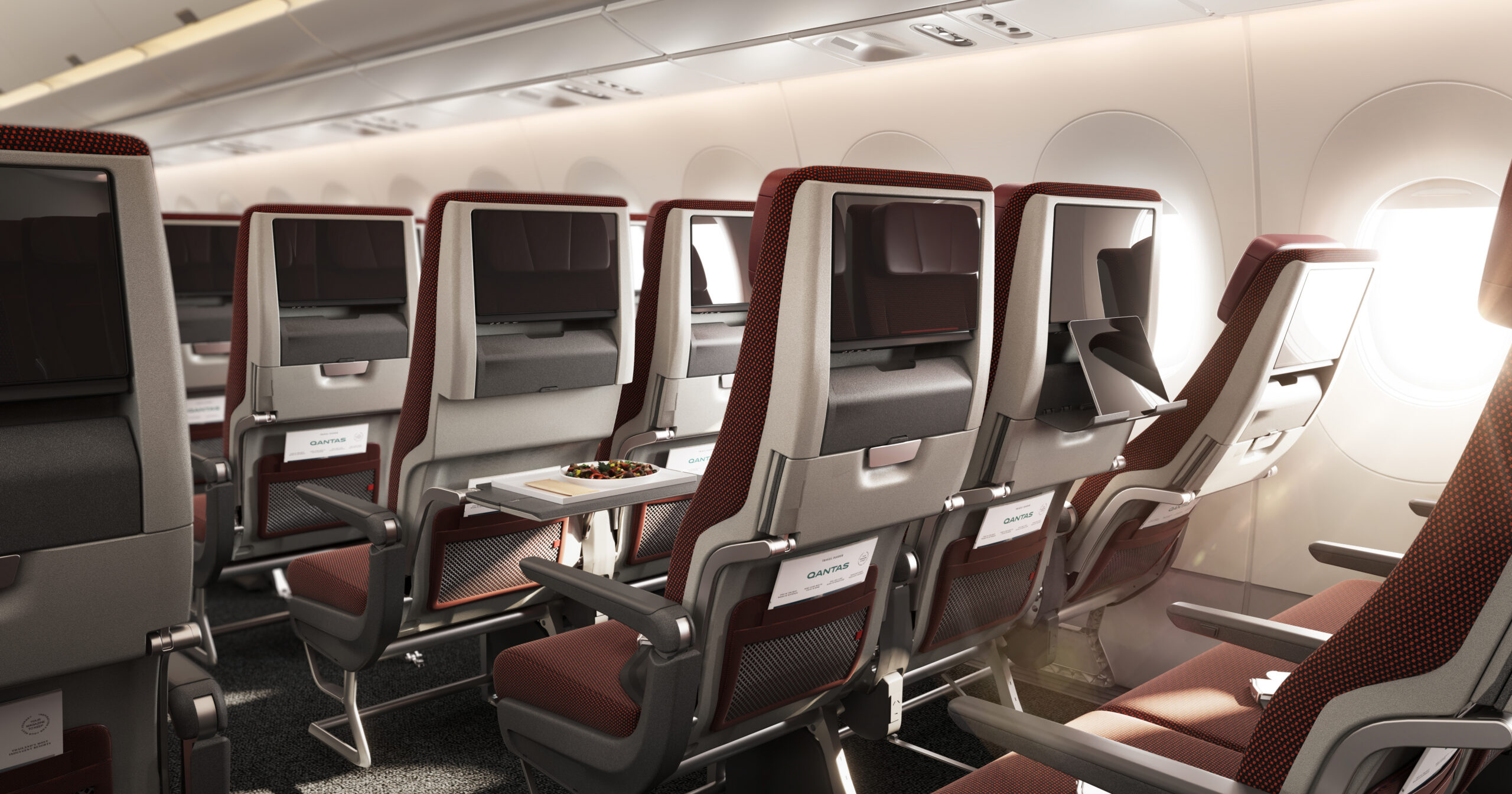
Next year, a select few will see the sun rise twice … in less than 24 hours.
How, you might ask?
Through the world’s newest longest nonstop flight, stretching more than 10,000 miles from London all the way to Sydney.
The 19- to 22-hour expeditions by Qantas Airways, in the works for nearly a decade and featuring uniquely modified Airbus A350 planes, will span nearly a dozen time zones, and as such require extensive entrepreneurial thinking to minimize disruption to the human circadian rhythm.
Babson College Associate Professor Jason Chun Yu Wong, an expert in aviation, discusses the innovative lead-up to this historic moment for air travel.
How do airlines decide if a bold idea like this is worth pursuing?
“It depends on their market position and niche. For Qantas, the challenge has always been to conquer incredible distances, and the London–Sydney corridor has not only the historical significance of the Kangaroo Route but also almost a core mission of the airline since its founding.

“Similarly, Singapore Airlines’ service from Singapore to New York and Air New Zealand’s Auckland to New York route share similar missions because of their location in the world and markets they need to access. Qantas is not new to this, though; it claims three of the current top 10 longest flights by distance.”
How does rethinking the passenger experience (sleep, lighting, movement, amenities) reflect entrepreneurial thinking, not just operational improvement?
“Operational feasibility and profitability have to be balanced with passenger willingness to pay, and for a 22-hour journey where one could see the sunrise twice (hence the name Project Sunrise), the passenger experience is paramount.
“Over the years, passenger comfort has become an interesting product attribute to experiment with, from pressurization to humidity to the more standard questions of leg room and recline. The new Qantas product will have to hit that point of indifference for the customer—just willing enough to pay for the premium to fly non-stop, and this is where the comfort elements for ultra long-haul travel come in.
“In the released design, there is a well-being zone on the A350-1000ULR, with client-centric, scientifically backed and tested designs, iterated with competitor innovations. I believe these together reflect the entrepreneurial thinking behind the new product.”
How else might we see the aviation industry innovate in the near future?
“Not to shift the story away from Qantas, but I think this is an exciting time as we see more deliveries of smaller aircraft that can go longer distances like the A321XLR and 737 MAX. More airlines are experimenting with new nonstop markets (called long and skinny routes—long distance but lower demand). Coming with the new ambition of transatlantic and transpacific nonstops using narrow bodies mean also innovation in passenger experience, seat, and service.
“I, for one, along with my Political Economy of Sustainable Development class, would love to see a Boston–Berlin flight on a A321XLR, because we visit Germany for a field study every spring break.”
Posted in Insights
Latest Stories

Posted in Community

Posted in Entrepreneurial Leadership, Insights