‘It’s Home, No Matter What Happens’
When the earthquake struck Haiti, the country was laid low. Buildings crumpled. As many as 300,000 people lost their lives.
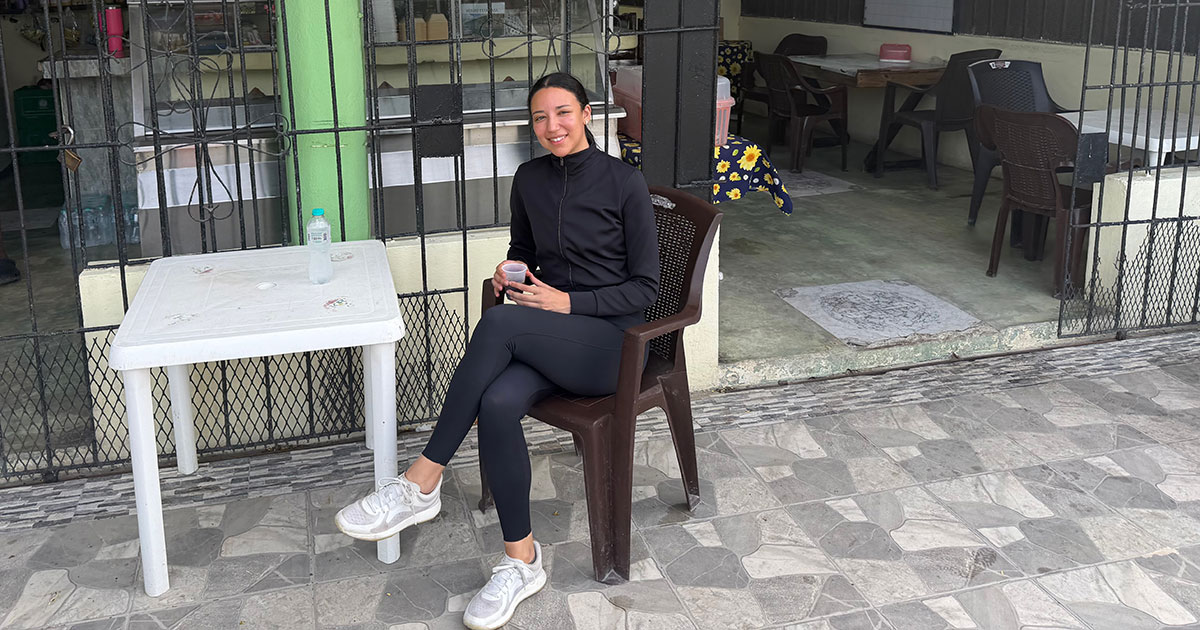
This was 2010, and Celine Turnier ’19 was a teenager living in the capital of Port-au-Prince. “The earthquake devastated my city,” she says. “Everything fell, literally.” Learning in such an environment was nearly impossible. For a year afterward, Turnier’s high school remained closed, and even when it finally reopened, many teachers had left the country.
Not surprisingly, when she came to Babson as a first-year student, Turnier was behind in English and math. Babson professors, however, rallied around her. In particular, Turnier calls out Megan Way P’26 and Joseph Ricciardi, both associate professors of economics, for all the time they spent with her, chatting over coffee, going over lessons. By the time she graduated, Turnier was recognized as the top economics student in her class.
“I have a lot of gratitude and appreciation and love for how much they believed in me,” she says. “They changed my life.”
At Babson, Turnier talked of giving back to Haiti, and Way and Ricciardi pushed her to think about how to create change that is sustainable. “They told me you want prolonged change,” she says. “Give them tools, not handouts.”
These days, Turnier splits her time between New York City, where she is enrolled in the MBA program at Columbia University, and Port-au-Prince, where she works in her family’s successful import business. Creating lasting change in her beloved country is still very much on her mind. She recently undertook the complicated project of modernizing the administrative processes at the Université de la Fondation Dr. Aristide (UNIFA), the largest private university in Haiti.
It was a fitting undertaking for Turnier, given the role that education has played in her own life. “Few investments are more powerful than education,” she says. “I have always believed education is the way forward for Haiti.”
A Family Business
These are troubled times for Haiti. Armed gangs control large swaths of the Port-au-Prince area, and Haiti hasn’t had an elected president since the last one, Jovenel Moise, was assassinated five years ago. Roughly half of the population faces food insecurity.
Turnier wishes people knew a different Haiti, before the earthquake and political unrest, the Haiti of her childhood. She remembers going to the beach almost every weekend, buying the catch of the day from fishermen who then cooked it in the sand.
“It was peaceful. It was nice. I had a great childhood. I wish people knew that side of it,” she says. “I have a lot of love for my country.”
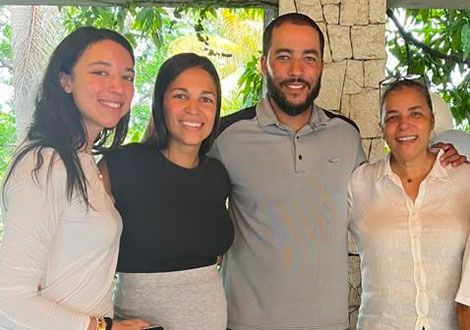
Turnier’s life rotates between two different worlds. She spends one month in the hustle and bustle of New York and then returns for a month to the uncertainty and challenges of Port-au-Prince. “It’s home, no matter what happens,” she says.
Her family business, Codigel, imports all kinds of consumer products to Haiti, from toiletries to foodstuffs to household goods. It also allows some foreign companies to utilize its facilities for manufacturing. Each member of the family, which includes her brother and fellow Babson alumnus, Cyrille Turnier ’11, has their own area of focus in the company. Turnier, for instance, manages the frozen food department for Codigel.
Being in a family business, as anyone in that situation knows, is a unique and often complicated experience. Disagreements can entail more than just business. Turnier and her family, though, don’t have time for drama. Living and working in Haiti doesn’t allow for it. “Haiti has many challenges. I won’t sugarcoat it,” she says. “You have security risks. Nothing is guaranteed. In that way, it keeps you grounded.”
Instead of disagreeing, the family needs to stick together. Turnier says they have a solid relationship. “We don’t sweat the small things,” Turnier says. “We have too much to worry about already.”
Early during her time in the family business, Turnier took on the hard work of modernizing and streamlining Codigel’s operations, which had been relying on outdated accounting software and a black book to record transactions. “It had to be done,” she says.
That effort took two to three years to finish and eventually led her to another project, one that would have a direct impact on the education of Haitian college students.
A Belief in Education
Turnier has long believed in the power of education to transform lives. For years, she has sponsored scholarships for students to attend Haitian schools, including at UNIFA, and since she was young, she has dreamed of building a school someday.
After Turnier streamlined operations at Codigel, a board member at UNIFA approached her to take on a similar undertaking at the school. Turnier knew she couldn’t say no. The need was too great. More than 6,000 students attend UNIFA.
“I am exactly the right person to do this,” Turnier says. “It felt like a calling. I had to step up and do this.”
“Few investments are more powerful than education. I have always believed education is the way forward for Haiti.”
Celine Turnier ’19
The UNIFA work was all-encompassing. The project needed to digitize and streamline tuition collection, student records, class scheduling, and financial reporting, all while confronting a number of obstacles. Most UNIFA students don’t have emails, for instance, and with no widely available online payment methods in Haiti, they are forced to physically go to a bank to make tuition payments. Student portals and the ability to record courses, two more things missing from UNIFA, also needed to be introduced.
To make the work happen, Turnier raised more than $80,000 to buy the required technology, and before her own day of classes began at Columbia, she held meetings with the UNIFA team from 6 a.m. till 8:30 a.m. “They worked around my hours,” she says. “They had me 2½ hours every day.”
Given her belief in education, Turnier didn’t ask for payment for her work, which is now finishing up. Instead, she requested that UNIFA bestow scholarships on 10 students.
Latest Stories

Posted in Insights
Posted in Community

Posted in Community