A Future that Folds: What the New iPhone Duo Says About Apple and Innovation

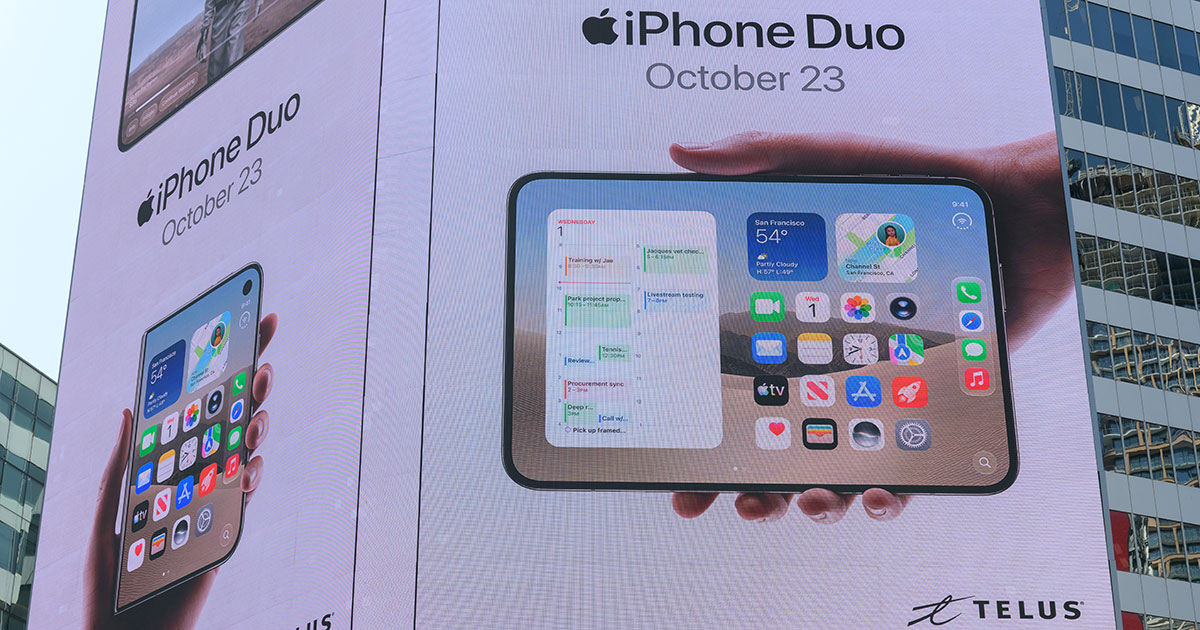
It’s a phone. And it folds.
That’s the essence of Apple’s newest product, the iPhone Duo, which will be released this month.
At first blush, the Duo isn’t exactly groundbreaking stuff. Foldable smartphones have been available commercially for years. In the summer blockbuster movie Spider-Man: Brand New Day, the web-slinging superhero even uses a Samsung foldable phone, the Galaxy 7 Fold8.
For longtime fans and observers of Apple, though, the design and timing of the Duo release is in character for the tech giant and speaks to where it is today, says Stephen Brand, assistant professor of practice in entrepreneurship at Babson College.
The relentless pursuit of simplicity and great design, long a hallmark of Apple, remains so. Instead of dreaming up game-changing new tech such as the iPod and iPhone, though, Apple appears content to observe rivals as they introduce their own new products, take note of the mistakes in those products, and then pounce with its own better version at its own pace.
“If you look at every product they’ve made in the last 20, 30 years, it’s been newer versions of the same things,” says Brand, an expert on corporate innovation and design thinking. “Ninety percent of their products are what they have been doing in the past 20 years, just faster and cheaper and multiple sizes.”
A self-described fan of Apple, Brand has been buying its products since the 1970s. For his dissertation on the early childhood experiences of inventors, he talked not only with Apple co-founder Steve Wozniak, but also his mother, Margaret Wozniak. “I was an Apple guy from day one,” Brand says.
Reflecting on the Duo release, Brand breaks down what it means for Apple and its fans and whether the product is something this Apple guy will consider buying.
No Need to Hurry
The announcement heralding the Duo release made news, but truth be told, the foldable phone can’t quite compare with the showstopping inventiveness of previous landmark Apple releases. “When we went from flip phones to smartphones, that was a huge change,” Brand says. “That was infrastructure innovation.”

While one may wonder about how truly innovative Apple still is nowadays, one can’t argue about the success of a company valued at nearly $5 trillion. “They know how to make money,” Brand says. “Their simplicity makes money.”
That success means that Apple doesn’t need to hurry, and it doesn’t need to take big swings. “When you’re a trillion-dollar company, you’re not in a rush to do anything,” Brand says. “They are so mainstream that they just have to keep their trillion-dollar evaluation.”
That’s not to say that Apple doesn’t put out great products, or that it is unresponsive to customers, many of whom stay loyal to the Apple brand. Go to an Apple Store, and it is often busy. “They are so good at responding to customer needs,” Brand says.
When the Duo is ultimately released this month, Brand expects those Apple fans to plop down their credit cards for the product, which starts at a retail price of $1,999 for its 250-gigabyte version. “For Apple fanatics, that is nothing,” Brand says. “When the Duo comes out, you’ll see lines.”
To Buy or Not to Buy
With the Duo, Apple demonstrated its wait-and-see patience. For years, it watched other foldable phones be released before finally putting out its own version. Part of that hesitancy may have been due to doubts about the foldable phone, a type of tech that hasn’t been popular with consumers.
“I don’t think they think this is a mainstream product,” Brand says. “I think it’s an experiment to see if this is a category that will work for them.”
Apple was also likely waiting so as to study the stumbles of their competitors. “I think they’re watching other people screw it up. They see those other companies do it in a mediocre way,” Brand says. “They won’t release anything until it’s perfect.”
“When you’re a trillion-dollar company, you’re not in a rush to do anything.”
Stephen Brand, assistant professor of practice in entrepreneurship
Duo isn’t entirely perfect. Among other things, critics have complained about the quality of its camera and the phone’s heftiness, but Brand expects the phone to improve in future iterations. “In two or three years, they’ll come up with a foldable phone that is light like a piece of paper,” he says.
Brand admits that, in the past, he has spent thousands on new Apple products. Will he do the same with the Duo and be an early adopter? For now, he may wait. “It’s cool, it’s interesting, it’s the next step,” he says, “but I don’t think I need it.”
Posted in Insights
Latest Stories
Posted in Insights

Posted in Community

Posted in Entrepreneurial Leadership