From Idea to Launch: 10 Lessons from a 3-Month Entrepreneurial Sprint

On your mark. Get set. Go.
Earlier this year, Peter Gordon MBA’96 embarked on an entrepreneurial sprint. Over the course of only three months, he and his team brought their fintech venture to life, from concept to launch.
That venture, HarborLine, is a technology platform that enables financial institutions to provide investors access to liquidity against their portfolios. Its launch comes at a time of profound change in securities-based lending. A large part of that change is driven by the rise of artificial intelligence, but that’s only part of the story.
“The biggest lesson of 2026 is that we’re not witnessing another technology cycle,” said Gordon, the founder and CEO of HarborLine. “We’re witnessing the convergence of AI, wealth management, and financial infrastructure. HarborLine sits at the intersection of all three.”
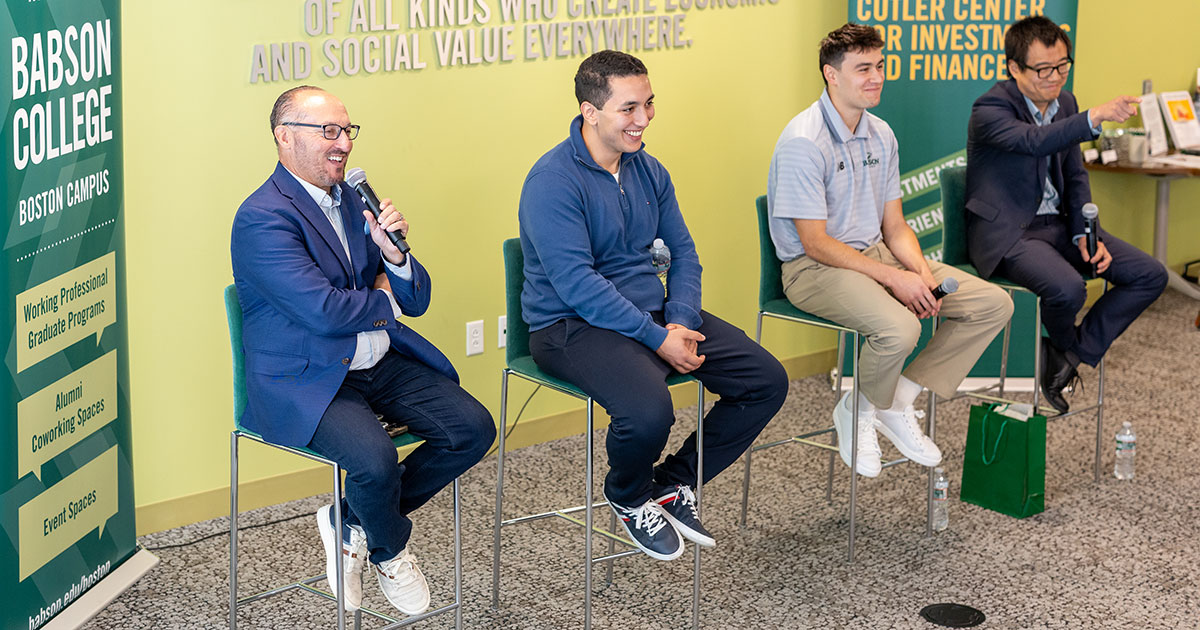
During the recent Boston Fintech Week, an annual gathering of the financial services industry, Babson’s Stephen D. Cutler Center for Investments and Finance held an event at the College’s Boston campus that looked at the rise of HarborLine.
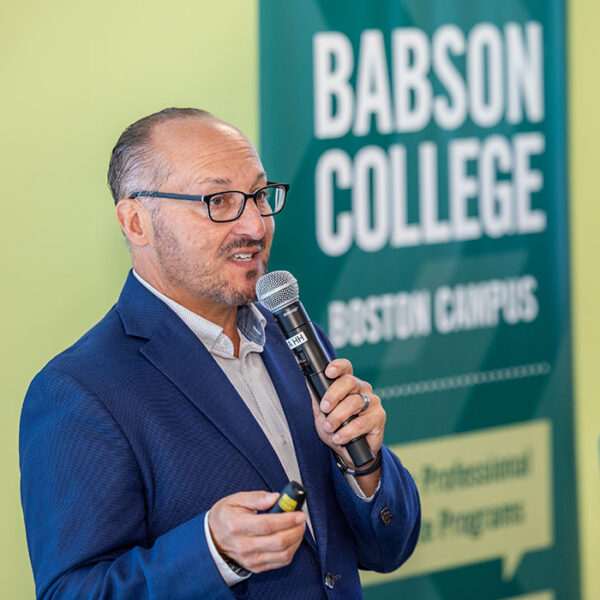
Speaking before an audience on the 12th floor of Babson’s High Street location, Gordon reflected on the dash to create HarborLine and shared 10 lessons that he learned in that fast-paced entrepreneurial journey.
1. AI Greatly Increases Productivity
From online and mobile banking to real-time payments and cloud computing, Gordon has seen many new trends and types of technology enter the financial industry through the years. AI stands above them all. “Nothing has accelerated learning, development, and execution like AI,” he said. “Small teams can now achieve what once required entire organizations.”
2. People Still Make Things Happen
That being said, technology can only do so much. As always, business and banking need good people doing what good people have always done. “AI accelerates everything, but relationships, trust, and human judgment still determine outcomes,” Gordon said. “The right people unlock momentum that no model can replicate.”
3. Experience Carries Weight
AI also can’t replace experience. Gordon knows this firsthand. He has worked for 35 years in banking, payments, lending, and wealth management. “You develop pattern recognition that technology alone cannot provide,” he said. “Experience doesn’t guarantee success, but it helps you recognize opportunities, avoid mistakes, and move faster when opportunity appears.”
4. Technology + Talent = Opportunity
Equip a small, focused startup with AI, cloud computing, a strong entrepreneurial spirit, and exceptional talent (which Gordon believes is available in every market), and it can compete with companies much larger. Opportunity opens up. “The barriers to building have never been lower,” Gordon said.
5. Focus Is Greater Than Speed
While speed matters, there’s something that matters much more: focus. Entrepreneurs can’t afford to be too broad. Their ventures need to be lean and laser-focused on their mission. “The companies that win are often the ones that know exactly what not to build,” Gordon said.
6. Find Partners
Going it alone is rarely a powerful growth strategy. Banks, advisors, fintechs, and technology platforms are looking for partners who can help solve shared problems. “The right partnership can accomplish more than years of traditional sales efforts,” Gordon said.
7. Know the Founder’s True Role
The founder’s job is not about sales. It’s not about fundraising, product, technology, or operations either. Instead, it’s about connecting all of these areas into a coherent vision. “Founders are the chief integrators,” Gordon said. “Every day is about integrating people, technology, capital, compliance, and execution into something customers actually value.”
8. Too Many Portals
Everything seems to have a portal. There’s Mercury for banking, Fidelity Private Shares for equity management, Microsoft Dynamics for customer relationship management, Vanta for compliance, and so on. All of these portals, though, have one glaring problem. “None of them talk to each other,” Gordon said. “Every workflow is digital, yet most remain disconnected. The next generation of financial infrastructure will be built around orchestration, not another portal.”
“AI accelerates everything, but relationships, trust, and human judgment still determine outcomes. The right people unlock momentum that no model can replicate.”
Peter Gordon MBA’96, founder and CEO of HarborLine
9. Timing Is Everything
The right idea at the wrong moment can mean failure for a startup. The right idea at the right moment—that’s quite a different thing altogether. The launch of HarborLine comes as several strong forces are colliding at once. AI is finally practical for real-world financial services, for starters, and advisors and banks are looking for new revenue opportunities as trillions of dollars in investable assets remain underutilized.
“HarborLine didn’t create these trends,” Gordon said. “We recognized them early and built directly into them. That’s the difference between chasing a market and catching a wave.”
10. AI Can’t Just Be an Add-On
AI may be a force that can redefine how business is conducted, but for it to be truly transformative, AI needs to be an ingrained, holistic part of how a venture operates. “The winners won’t be firms that simply bolt AI onto existing processes,” Gordon said. “They will be companies that fundamentally rethink how advice, lending, risk management, and liquidity should work in an AI-first world.”
Latest Stories
Posted in Community
Posted in Entrepreneurial Leadership, Insights

Posted in Insights