A Lifetime of Entrepreneurship: Professor Les Charm ’64 Reflects on Babson’s Rise

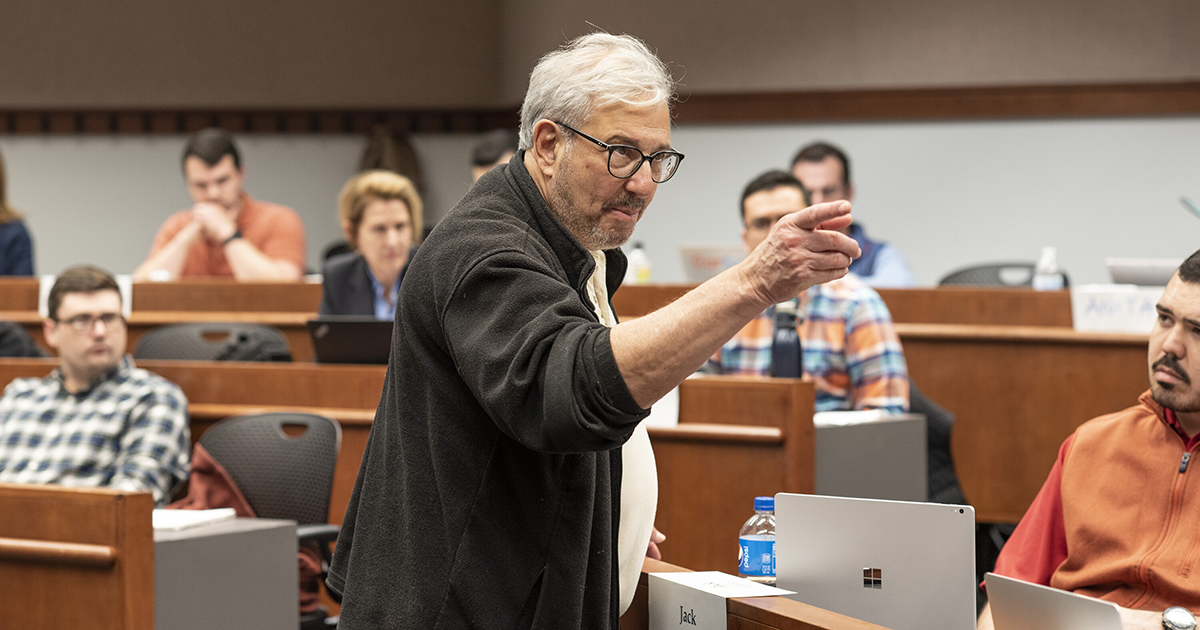
When Les Charm ’64 arrived at Babson College as a student, entrepreneurship was not yet a formal academic discipline. In fact, he said, the word itself was rarely used.
Babson was Babson Institute then, a small business school where students often came from family businesses and professors emphasized practical business lessons over theory. Yet, over the next six decades, Charm would witness and help shape Babson’s transformation into one of the world’s best-known entrepreneurship schools.
Now, after 36 years teaching entrepreneurship at Babson, Charm is retiring as an associate professor of practice, bringing to a close a career deeply intertwined with the evolution of entrepreneurship education itself.
“What I learned at Babson was practical and usable,” Charm said. “That’s still what matters most to me as a teacher.”
Charm is one of five Babson faculty members retiring this year with a combined 169 years of service. Other retiring faculty members include Richard Block, assistant professor of practice in accounting and law; John Edmunds, professor of finance; Dennis Mathaisel, professor of mathematics, analytics, science and technology; and Srini Rangan, professor of management.
Entrepreneurship before the Word Existed
Charm’s own entrepreneurial education began long before he stepped onto campus. His father owned a manufacturing business in Boston’s Scollay Square, producing wallets and women’s pocketbooks, and Charm spent much of his childhood working there.
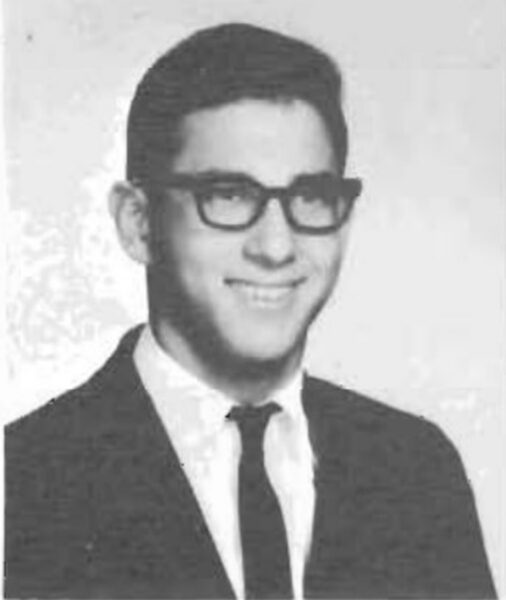
“I didn’t know there was anything else,” he said of entrepreneurship. “Everybody in my neighborhood owned their own business.”
Still, attending college had not originally been part of his plan. His father insisted he go, and Babson appealed to Charm because of its accelerated three-year business curriculum.
The school he entered was very different from today’s Babson. Enrollment was small, entrepreneurship had not yet become a branded concept, and many students arrived after transferring from other colleges.
“It was a business school,” Charm said. “That’s how people thought about it.”
Yet even then, he said, Babson possessed many of the qualities that would later define its entrepreneurial identity: close faculty relationships, practical business thinking, and professors who approached teaching through real-world application rather than abstract theory. Those factors would lead the U.S. News & World Report to rank Babson the No. 1 undergraduate school for entrepreneurship 29 consecutive times.
Lessons Outside the Classroom
One of the most influential figures in Charm’s student experience was Dean of Students Paul C. Staake, whom Charm met regularly after he became president of Babson’s student government. Those conversations taught him lessons about leadership, negotiation, and human behavior that stayed with him throughout his career.
Rather than enforcing rules through authority alone, Starkey relied on persuasion and practicality, lessons Charm later carried into his own classroom.
“I learned so much about leadership strategy,” Charm said.
Charm also discovered his love of accounting and finance at Babson, subjects that came naturally to him because of his early exposure to his father’s business. He later built a career in banking, finance, and entrepreneurial ventures after earning an MBA from Harvard University.
Babson’s Entrepreneurial Evolution
Babson eventually pulled him back.
Roughly 20 years after graduating, Charm reconnected with famed Babson Entrepreneurship Professor Jeffry A. Timmons, a former Harvard classmate and one of the pioneers of entrepreneurship education.
At the time, Babson was beginning to formalize entrepreneurship as an academic field, helping establish programs that would eventually influence business schools around the world. Charm joined a group of faculty members and practitioners who believed entrepreneurship could, in fact, be taught—a concept that was still debated widely in academia at the time.
“We never questioned it,” Charm said. “Of course, you could teach it.”
“What I learned at Babson was practical and usable. That’s still what matters most to me as a teacher.”
Associate Professor of Practice Les Charm ’64
Babson’s approach differed from many traditional business schools because faculty often came directly from industry rather than purely academic backgrounds. Entrepreneurs, executives, venture capitalists, and operators became central to the educational model.
Charm embraced that philosophy fully.
Alongside Timmons and other groundbreaking entrepreneurship faculty members such as William D. Bygrave and Julian Lange, Charm helped shape Babson’s practical, experience-driven entrepreneurship curriculum during a period when the College was gaining international recognition in the field.
Practical and Usable
Over time, Charm watched Babson evolve from a small entrepreneurial business school into a global institution increasingly associated with “entrepreneurial leadership,” the broader philosophy that now defines much of the College’s identity.
While he sees value in that evolution, Charm still defines entrepreneurship more broadly and practically than many modern interpretations.

“You don’t have to be innovative to be entrepreneurial,” he said. “Entrepreneurship is running your own thing. It’s creating choices.”
That perspective shaped his teaching for decades.
Charm taught graduate students on campus and professionals around the world through Babson’s global entrepreneurship programs, experiences that expanded his understanding of how different cultures approach business, risk-taking, and failure.
Those international experiences reinforced one of the central lessons he tried to teach students: There is rarely only one right answer in entrepreneurship.
Using case studies, guest entrepreneurs, and real-world business situations, Charm challenged students to question assumptions and consider multiple paths forward.
“That is what I’ll miss most,” he said. “Blowing up students’ perceptions.”
Even after decades in the classroom, Charm said the core lesson he carried from his own Babson education never changed: Entrepreneurship works best when it stays grounded in reality.
For him, Babson’s greatest strength has always been its ability to connect business theory with practical experience and real entrepreneurs.
“Practical and usable,” he said again. “That’s what mattered.”
Latest Stories

Posted in Insights

Posted in Community

Posted in Community