Fashion, Entrepreneurship, and the Enduring Legacy of The Devil Wears Prada


When audiences first met Miranda Priestly in 2006’s The Devil Wears Prada, the fashion world was portrayed as glamorous, ruthless, and intimidating, a place where assistants trembled, editors barked orders, and style mattered above all.
For a generation of young viewers, the movie became more than a hit comedy. It became an introduction to the hidden mechanics of fashion itself, the pressure, ambition, creativity, and power dynamics behind glossy magazine pages and luxury storefronts.
Now, 20 years later, the release of The Devil Wears Prada 2 has reignited interest in the franchise. For Babson Professor of Practice Caroline Daniels, who has spent the last decade building the College’s fashion entrepreneurship offerings, the timing couldn’t be better.
“Everybody’s talking about it,” Daniels said. “It’s a comedy, and it shows some of the glamour of the fashion and beauty industry.”
At the same moment, Babson launched a new undergraduate fashion entrepreneurship concentration. Daniels, who is also the faculty advisor for the John E. and Alice L. Butler Venture Accelerator Program and holds the Jonathan Epstein Term Chair in Fashion Entrepreneurship, said the concentration reflects how dramatically fashion has evolved since the first movie debuted.
“The industry has changed,” she said. “The first film focused on intensity and pressure and built a view of the fashion industry almost from the outside.”
From Cerulean Blue to Systems Thinking
Amid the memorable one-liners and iconic outfits, Daniels says the film has endured because it provided a gateway into understanding fashion as a business.
One scene in particular, the famous “cerulean blue” monologue delivered by Meryl Streep’s Priestly, helped audiences grasp how trends move from luxury runways into everyday closets.
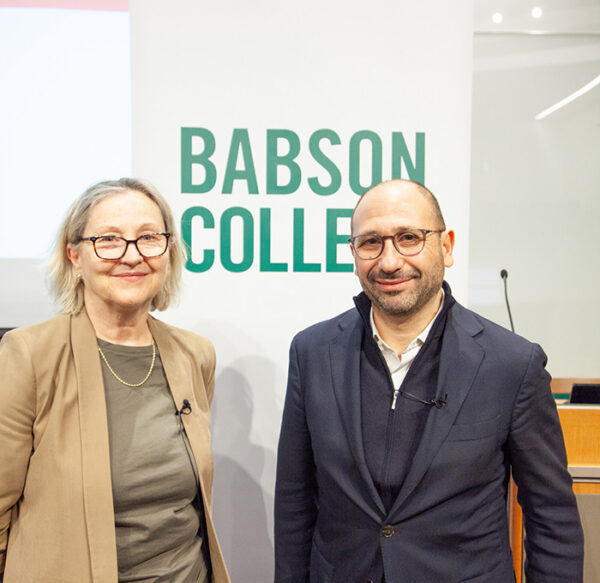
Today’s fashion world, however, is driven less by ego and exclusivity and more by collaboration, sustainability, technology, and systems thinking, Daniels said.
“The emphasis now is circularity and reuse,” Daniels said. “The industry is focused on building textiles and fibers that are environmentally sustainable, and almost everybody is on board.”
In recent years, major fashion companies have embraced climate accountability through initiatives such as the United Nations Fashion Industry Charter for Climate Action. Daniels recalls attending the Copenhagen Fashion Summit in 2019, where luxury conglomerate Kering historically pledged to share environmental measurement tools with competitors in an effort to accelerate sustainability across fashion.
“It was very moving,” she said. “It was a call to action that the industry has heeded, yet changing industry business models takes time, but change is indeed taking place.”
That spirit of cooperation stands in sharp contrast to the backbiting and cutthroat culture often depicted in the original film.
“The fashion industry understands deeply that everybody has to collaborate, coordinate, and communicate,” Daniels said. “You can only do that if you think about what all stakeholders in the fashion system, including customers and the environment, need.”
Fashion in the Age of AI
Technology also has transformed fashion since the first Devil Wears Prada debuted.
Daniels, whose doctoral research focused on technology integration in fashion supply chains, said artificial intelligence now touches nearly every part of the business, from forecasting and production to customer analytics and logistics.
“Everybody’s using AI in every function,” she said. “But it’s still a very human industry. You use AI as a tool; you don’t use it as the answer. Ultimately, choices and decisions are made with the human touch.”
That evolution also is reshaping consumer behavior.
“Younger customers are changing, too,” Daniels said. “Thrifting is cool.”
Babson’s Fashion Evolution
Those shifts also are influencing higher education. Babson students study fashion not simply as style or branding, but as a complex global business ecosystem involving supply chains, technology, customer trust, environmental stewardship, and entrepreneurship.
“Fashion is no longer just about style,” Daniels said. “It’s about systems and systems thinking.”
Even before the concentration, Daniels spearheaded the Fashion Entrepreneurial Initiative, which offered fashion entrepreneurship courses at Babson’s Wellesley campus and in London.
The new concentration, which was officially approved in March, includes fashion entrepreneurship courses such as Global Fashion and a Fashion Action Lab, where students work directly with companies on consulting-style projects. Daniels also is helping develop additional fashion sustainability-focused offerings alongside other faculty members.
“There are not many business schools who focus on fashion. What makes Babson different is that students are learning business models and entrepreneurship along with the creative side.”
Caroline Daniels, Jonathan Epstein Term Chair in Fashion Entrepreneurship
“All the courses are wait-listed,” Daniels said. “The minute they go up, they’re filled.”
Student-created fashion ventures, meanwhile, are becoming increasingly common in Babson’s entrepreneurship competitions, including this year’s B.E.T.A. Challenge, where 18 fashion-related ventures applied.
The concentration has strengthened Babson’s growing network within fashion and beauty as well. Companies including Tiffany & Co., Kate Spade, New Balance, TJX, Ross, and Loro Piana have recruited Babson students, while alumni across the field are helping mentor the next generation. Babson’s global alumni network in the fashion industry bring practical experience to the curriculum, Daniels said.
The concentration is all the more valuable, Daniels said, because there is a dearth of fashion business degrees in higher education.
“There are not many business schools who focus on fashion,” she said. “What makes Babson different is that students are learning business models and entrepreneurship along with the creative side.”
For many students discovering fashion entrepreneurship today, The Devil Wears Prada remains a cultural reference point that first made the field feel exciting, intimidating, and worth exploring.
For Daniels, fashion also offers one of the clearest ways to teach entrepreneurship because it touches identity, culture, technology, systems thinking, and human behavior all at once.
“Everybody wears clothes,” she said. “If you can make learning tangible and personal, students engage deeply with it.”
Latest Stories
Posted in Community

Posted in Entrepreneurial Leadership

Posted in Community