On a Mission to Become ‘The Greatest Entrepreneur of this Generation’
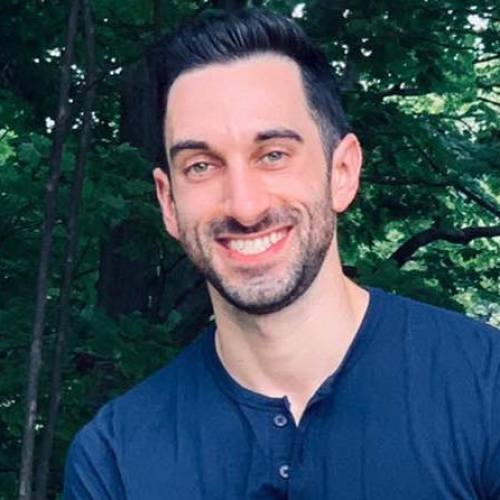
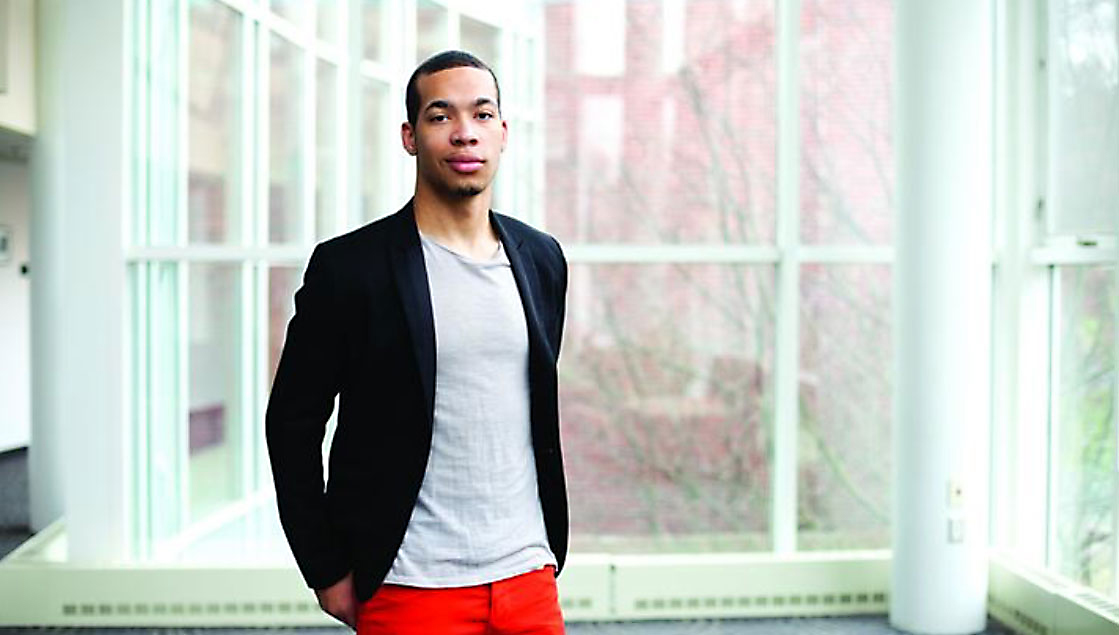
WeThrive and CEO Daquan Oliver ‘14 have helped fund so many impactful and meaningful businesses over the years that it’s next to impossible for the founder to highlight a favorite one.
There’s Love = Self, started by a cohort of seventh-grade students from the South Bronx to fill a void after the founders discovered that their peers did not have structured support to make time for self-love. And, then there’s Food and Finance High School, which launched a student-run café in its high school, and in the first month in operation, brought home $1,000 in revenue.
“There’s so many,” Oliver says, rattling through ventures with a sense of excitement. “I honestly have another five more, once I finish those, another five more. I look at the entrepreneurs coming out of WeThrive, and I can 100 percent see the social-change leaders of the next generation.”
Since 2014, WeThrive has equipped youth entrepreneurs from disenfranchised communities with the funding they need to scale their businesses and make a difference in the world. Now, as a newly named Ashoka Fellow, Oliver also is continuing to live out a goal of his own long in the making.
An Effort to End Economic Oppression
Through WeThrive, an educational technology program that strives to create economic prosperity and break down the barriers that enable oppression, a young person identifies a problem within their community with the hope of securing seed funding to start a business.
WeThrive’s establishment was influenced by Oliver’s childhood experiences, growing up in a single-parent household outside of New York City. At 14, he reached what he described as a “boiling point” surrounded by the challenges he faced socioeconomically, and pledged to be a change-maker through his career.
“In that moment, I made a promise to myself that I would be successful, that I would be the greatest entrepreneur of this generation,” Oliver said. “I want youth that come from communities like my own to have the best chance for success and greatness.”
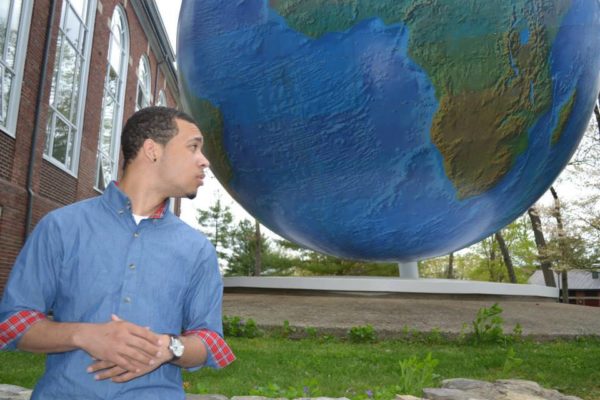
Daquan Oliver ’14 at the former location of the Babson World Globe.
In May 2014, after Oliver received his bachelor’s degree from Babson, WeThrive was born. In the years that followed, WeThrive partnered with companies such as Microsoft, AT&T, and WeWork, each of which brought in top corporate professionals to teach youth entrepreneurs. Meanwhile, Oliver was named to Forbes’ 30 Under 30 list of social entrepreneurs in 2017.
Last year, 95 percent of the students involved with WeThrive launched companies, and 84 percent of youth entrepreneurs continue to run their company after their first year.
The Newest Ashoka Fellow
Earlier this year, Oliver was one of eight innovators named an Ashoka Fellow, joining the world’s largest network of social entrepreneurs. As part of the honor, fellows receive a stipend to advance their work and plan for the future.
“The pandemic is exposing how broken many of our systems and democratic institutions are,” said Simon Stumpf, director of venture and fellowship at Ashoka U.S. “More than ever, we are thankful for social entrepreneurs who know the problems inside and out, and calmly and creatively step forward with solutions for the common good.”
“I want youth that come from communities like my own to have the best chance for success and greatness.”
WeThrive founder and CEO, and new Ashoka Fellow, Daquan Oliver '14
Oliver considers the recognition a partnership, one that will enable him and peer social entrepreneurs to help reach their goals for changing broken systems.
On the road to becoming the top entrepreneur of his time, the honor was “another point of validation.”
“Back when I was at Babson, I wrote down my vision of who I wanted to be in the sector, who I needed to work with. … I also wrote that if I’m going to be true to changing this entire oppressive system, then the Ashoka Fellowship makes sense,” Oliver said. “The Ashoka Fellowship is an affirmation, to let you know you’re traversing in the right way.”
Latest Stories


Posted in Insights
Posted in Community