Andy Moutinho: Navigating the Challenges of the Pandemic Safely
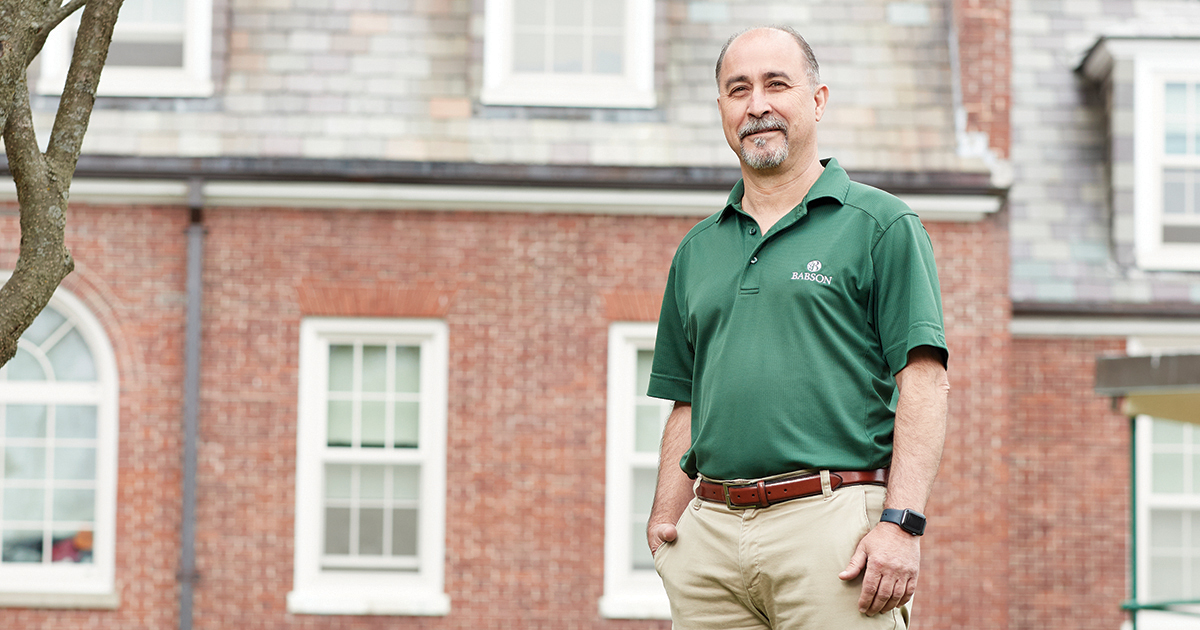
For more than 20 years, Andy Moutinho has worked behind the scenes at Babson College. As the senior director of operations in the Facilities Management and Planning Department, Moutinho oversees the day-to-day operations on campus. The efforts of Moutinho and his team have been particularly critical over the past two years as he has helped the College navigate the challenges of the pandemic, working tirelessly to keep the campus operational and safe for students, faculty, and staff.
The Q&A
What is a typical day on campus like for you and your team?
“I don’t know if we ever have a typical day. But, usually, we’re here at 6 a.m. until around 4. It involves a ton of reviewing what’s going on for the day, reviewing requests from the students and community, and trying to figure out what’s going to get done and what’s going to get prioritized the next day. Since the pandemic, we’ve had a multitude of challenges, especially with equipment, materials, delays, and lead times, that really have strained us in terms of trying to plan and schedule work.”
When the pandemic hit in March 2020 and the campus was forced to close, what were the first steps you had to take to deal with the virus?
“For us, it was working on a plan to get the students home safely. Then, we were really looking at the summer and what we had to do, based on the science, to put us in a position to continue the education, including filtration and air purification, and best practices for cleaning and disinfecting the spaces. Once we identified equipment best suited for dealing with the virus, we quickly began looking for volunteers within our staff to train them, provide them proper PPE, and put them into a position for us to be able to deal with it. But, the biggest challenge really those first six months was getting our hands on equipment and then the PPE and disinfectants, because there was a shortage. The whole country, the whole world was trying to find the same things. Luckily for us, we had a good network of suppliers, and a good network of alumni who either had a direct connection to a supplier that could help us or had businesses that had some of the equipment and materials and supplies needed that helped us.”
What were the early months of the pandemic like for you and your team when you were coming to campus every day?
“There was a sense of commitment that we needed to be here to be productive and continue to maintain our facilities. We had to put ourselves in a position where we could maintain operations but not put our staff at risk to the point that we’d risk losing them all. So, we broke all of our staff into teams of three, and we were rotating them to campus every three weeks, leaving some home for protection so we’d have a backup group at home ready to come in. So, there was a lot of continuous planning, and we made a conscious decision to have an inventory of PPE and chemicals in stock at least eight weeks out. We far exceeded what our health consultants were recommending and what the CDC guidelines were recommending from the standpoint of cleaning and keeping our facilities open.”
Reflecting back on the past two years, what have been the priorities of your team?
“There’s no question that the first goal from our leadership on down was to make sure that we had the safety of our community and our students in mind first. So, we focused on trying to make a difficult situation as good an experience as we could for our students, faculty, and staff. We wanted to give them that comfort level that we were doing everything possible to keep them safe and reassure them that when they came to campus, our campus was as safe as any other space outside, if not safer.”
In 2020, you received a handwritten note from a student thanking you and your team for your hard work. What did that mean to you?
“There’s nothing more rewarding than to know that you’re making a difference, that you’re having an impact on what’s happening here at Babson. We’re not the professors teaching the students and not the ones that give them the education to get that degree, but I like to think that the services we provide keep them safe and engaged, and is a contributing factor to our success at Babson and being the number one entrepreneurship school in the world. I really do believe in that. The biggest enjoyment to me is knowing that I make a difference.”
Two More for Andy
What does Babson mean to you?
“Over the years, Babson has given me a way to be able to support and provide for my family. I think Babson is one of the best places to work. I’ve gotten the opportunity to be challenged in a way that allowed me to develop my skill sets in ways that I wouldn’t have gotten to somewhere else.”
Right now, what are you …
- Reading? “A lot of the news. There’s so much going on in the world these days—what’s going on with the economy, what’s going on with Ukraine, and what’s going on at home.”
- Watching? “I’m a sports junkie, so ESPN. I follow a lot of sports.”
- Listening to? “When I’m not at work, and I’m in my truck driving home, the radio is always on sports talk.”
- Doing in your free time? “Family, to me, is everything. It’s what I work for. I have two daughters, who are both married, and five grandchildren. So, spending a lot of time with family. And, I still enjoy some team sports. On Sunday mornings, I still go out there and play a little soccer.”
Posted in Community
Latest Stories
Posted in Community, Entrepreneurial Leadership, Insights
Posted in Community
Posted in Entrepreneurial Leadership