From Banks to Beans: Career Switch Brews Up Flavorful Coffee Venture
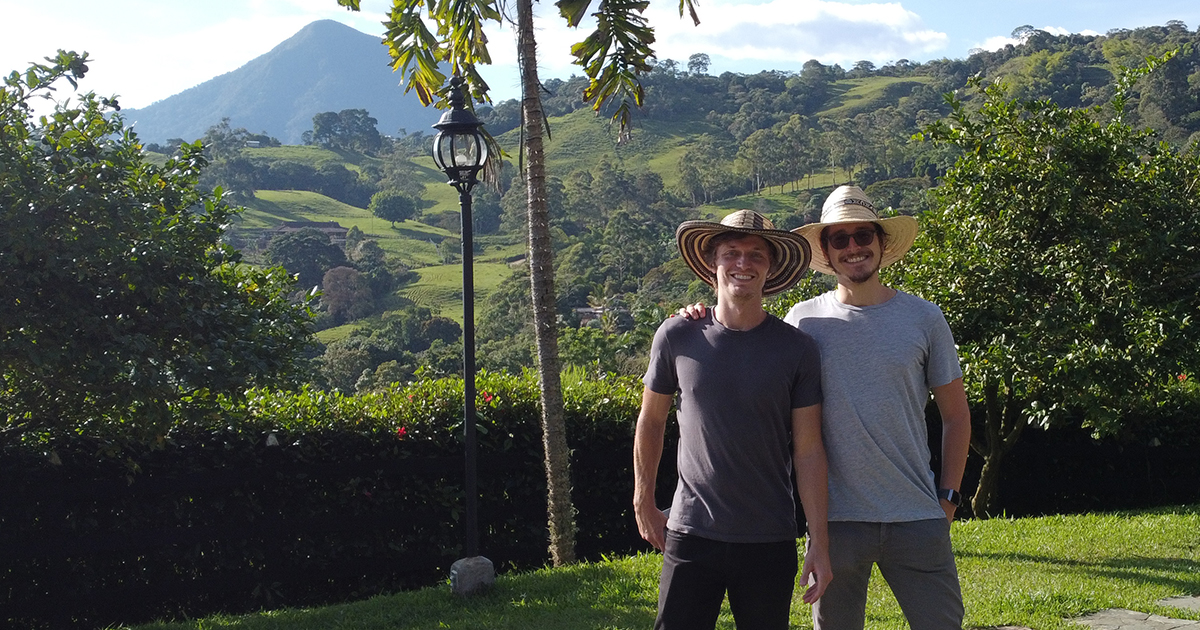
In spring 2021, Lucas Webb ’13 quit his finance career and traveled to Medellín, Colombia, with nothing but a backpack and an idea.
“I’d been working long hours in finance and drinking lots of coffee,” he says. Then, the pandemic hit and, like many people with an entrepreneurial streak, he began casting around for a way to leave the office life behind and realize a long-held dream of starting his own venture.
In winter 2021, he had been working remotely from Puerto Rico and had toured a coffee farm for “something to do” on the weekend. That trip was a revelation. “I had assumed coffee was always bitter. I assumed it was a bean. I learned on that trip that coffee is actually the seed of a fruit,” he says. “So, I began to dig for the info about what coffee really was.”
It turned out that coffee beans are actually full of complex flavors—red fruits, citrus, delicate floral notes—but coffee drinkers have grown accustomed to a certain taste. That taste, Webb says, comes from the big coffee chains. “They mix beans from multiple countries and regions,” he says, “then burn the beans to get rid of the flavor in the name of consistency across their stores.”
He wanted to create a coffee company that would preserve the bean’s flavor, buy the beans directly from single farms, and fairly compensate the farmers who grow them.
Tapping the Babson Network
Webb and his co-founder, Vicente Fullerton, chose Colombia as their base of operations because of its renowned coffee bean. But, they had no connections there.
That’s where Babson College really helped.
“We highly leveraged the network. Developing not only networking skills but also a global network helped mitigate the risk of moving to a country where my co-founder and I didn’t know anyone. That’s why we were so comfortable there,” Webb says. “When we knocked, doors opened.”
“Learning more deeply about marketing, accounting, strategy, operations, and finance was critical, since we are only two people and need to play a role in every business function.”
Lucas Webb ’13, co-founder of Who Is Coffee
Normally, the coffee business is focused only on “the last mile of the supply chain,” Webb says, with the farmers who grow it nearly invisible and underpaid. He and his business partner wanted to buy the coffee directly from the farmers who grow it, so they started going to cafés throughout Colombia and asking where they got their coffee. Eventually, they visited more than 30 farms and partnered with three farmers who agreed to sell their coffee directly to them.
Once he had the connection with the farmers and the product in hand, Webb says, he and his partner leaned heavily on the Babson network to get their business up and running.
“Learning more deeply about marketing, accounting, strategy, operations, and finance was critical,” he says, “since we are only two people and need to play a role in every business function.”
Putting a Face to the Brand
To break into the already saturated $50 billion U.S. coffee market, Webb would need a novel way to market his brand. He and his partner launched Who Is Coffee in January and put the names and faces of the three farmers—Ana María, Alejandro, and José David—on the bags and their stories on the website.
“This allows the consumer to put a face to the product,” Webb says.
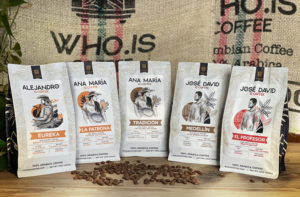
Who Is Coffee features the names and faces of three farmers.
The strategy has been done before, albeit in a way that now seems outdated. Coffee drinkers in the 1980s might remember Juan Valdez, a fictional Colombian coffee farmer who appeared in television commercials dressed in a sombrero and lovingly putting coffee beans into burlap sacks. Webb’s marketing strategy to showcase farmers is a “modern take on Juan Valdez,” he says. “And, it’s authentic.”
Webb also runs corporate coffee tasting classes that feature guest appearances from the farmers. “These classes educate the consumer about the fascinating world of specialty coffee,” Webb says, “and create a connection between consumer and farmer.”
Who Is Coffee is self-funded and has almost broken even. “The cool thing about being bootstrapped is you need to make every dollar count,” Webb says.
Webb hopes his new career will be as lucrative as the one he left, but he also recognizes that being an entrepreneur has its own rewards. So far, he has relished being involved in every aspect of the business. Of the career switch, he says, “I was happy to make the jump.”
Latest Stories
Posted in Entrepreneurial Leadership
Posted in Community
Posted in Entrepreneurial Leadership