What Babson Students Learned from Warren Buffett in Omaha

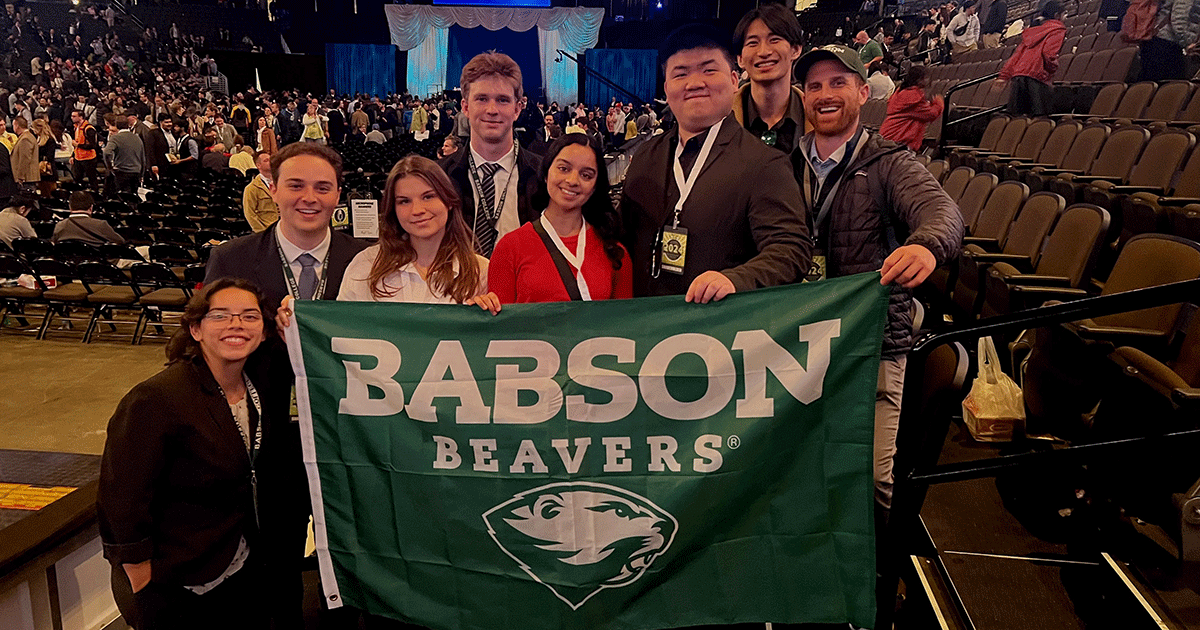
At this year’s annual shareholder meeting of Berkshire Hathaway, an enthusiastic gathering often called the “Woodstock of Capitalism,” a sense of poignancy hung over the proceedings.
Much of that was due to the November death of Charles Munger, the longtime business partner and friend of Warren Buffett, Berkshire Hathaway’s CEO. Their partnership spanned more than 50 years.
Munger’s death also laid bare the fact that Buffett himself, the Oracle of Omaha, is 93 years old and his time running Berkshire Hathaway is inevitably running short. “After Charlie Munger’s passing, there was a sense of urgency to get to see Buffett in person,” said Andrea Torres ’24, one of a group of eight Babson students and recent alumni who came to Omaha, Nebraska, for the annual shareholder meeting. “I am glad I had the opportunity.”
The Babson group lined up in the early morning hours for the meeting, which saw Buffett discuss a wide range of topics, including artificial intelligence, succession plans, the taxation of companies, and a host of other things. For the second time in the last three years, a Babson College Fund alumnus, who wished to remain anonymous, donated to support students on the trip. Babson College Fund students applied for four available spots.
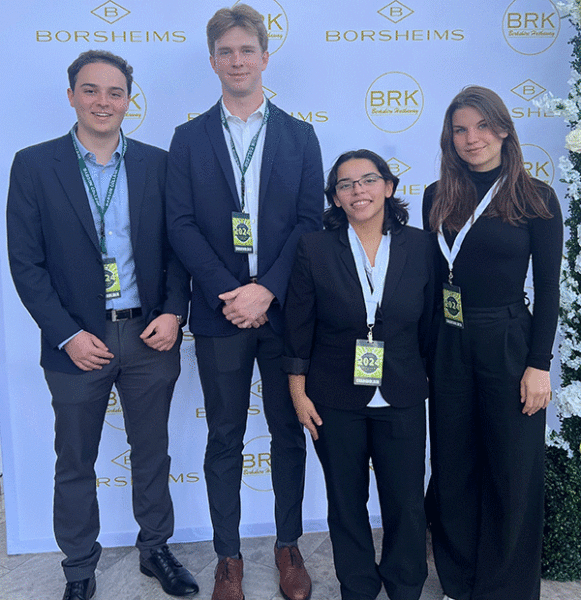
“I was fortunate to have the opportunity to hear one of the greatest investors of all time speak,” said Aaron Majchel ’24, who nabbed one of those four spots, along with Torres, Griffin Martin ’25, and Oleksandra Mukha ’26.
After the meeting, those four students reflected on four lessons they learned in Omaha.
Take Responsibility for Failures
At the meeting, Buffett spoke of how Berkshire Hathaway sold its stake in the struggling media company Paramount Global. “It was 100% my decision,” he told the audience. “We sold it all, and we lost quite a bit of money.”
That admission left an impression on the Babson students. “To see such a successful person recognize a mistake made me realize that failure will always be somewhat present in the entrepreneurial journey,” Majchel said. “The important aspect is how you deal with failure, recognize it, and learn from it.”
Martin was struck by how vulnerable Buffett seemed while talking about Paramount. “I noticed his voice changed, and he seemed to be somewhat ashamed for making the mistake,” Martin said. “Seeing Warren Buffet this way was incredibly humbling and furthered the already immense respect I hold for him. He was willing to admit his error, take full responsibility for it, and explain where he had gone wrong. This is what true leadership looks like.”
Don’t Be Afraid to Do Nothing
Buffet discussed Berkshire’s large cash stockpile, $189 billion, and how he expects it to keep growing since the company has no investments it’s currently interested in making. “We only swing at pitches we like,” Buffett said.
That resonated with Martin. “He taught an important lesson that sometimes doing nothing can be the right thing,” Martin said. “If there are not any truly attractive investment ideas in your pipeline, it can be OK to wait until the time is right to deploy capital.”
Look for Staying Power
Martin also liked that Buffett described his investment strategy of backing companies that are solid and enduring, ones that have been around for decades and will last for decades to come.
“This is an interesting concept in entrepreneurship that people often forget,” Martin said. “While investing in new products or novel ideas may seem like a good idea in the short term, the companies and industries with true staying power will be the ones that survive the storms of the financial markets.”
“After Charlie Munger’s passing, there was a sense of urgency to get to see Buffett in person. I am glad I had the opportunity.”
Andrea Torres ’24
Find a Trusted Partner
Not surprisingly, Munger’s presence lingered over the shareholder meeting, with Buffett calling Munger the “architect of Berkshire Hathaway.”
Mukha took away from the meeting the importance of surrounding yourself with trustworthy people who share similar values but offer differing perspectives. “Warren Buffet emphasized this through his partnership with Charlie Munger,” Mukha said, “showing how their diverse knowledge and views on investment opportunities complemented each other.”
Latest Stories

Posted in Insights
Posted in Community

Posted in Community