Google AI Searches Are Convenient, but Can They Be Trusted?
In the 1990s, as the Internet gained in acceptance and ubiquity, it was often described as an information superhighway. Nowadays, that highway is feeling increasingly closed off.
That’s clear when making a search on Google. For years, the search engine served as the primary gateway to the internet and its more than 1 billion websites. A Google search helped users access those myriad sites and the multitude of information, creativity, and commerce contained there.
Google was such a critical navigating tool that the word became a verb. “In the past, people used the word ‘Google’ in place of ‘search,’ ” says Vicky Zhu, an assistant professor of applied mathematics and quantitative methods at Babson College.
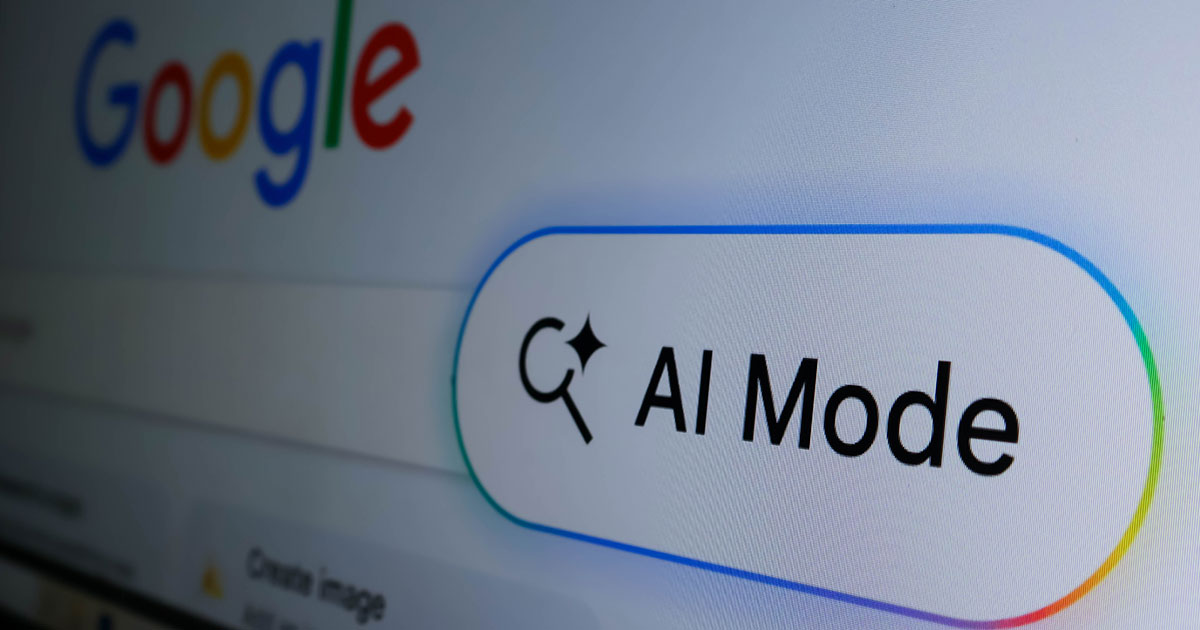
With the overviews powered by artificial intelligence that pop up at the top of the page, Google searches now feel a lot less open. The intent seems less to direct users across the expanse of the web but instead to keep them firmly planted on the Google site. Media outlets, including The New York Times and The Ringer, have reported how Google searches increasingly end with users never clicking to another site.
That’s bad news for any business dependent on Google search traffic. It’s also bad news for the off-the-beaten-path ideas and views that don’t make it into the overview. “If you just believe what the Google model gives you, it’s easy to be trapped in that box,” Zhu says.
For Zhu, this closing down of ideas is a concern. AI is frequently discussed in her classes, and she often talks about the importance of evaluating the answers it gives to inquiries. One shouldn’t blindly accept whatever the AI model spits out. “That would be the opposite of thinking outside the box,” she says.
An Educator’s Responsibility

Like many professors, Zhu spends much time helping students to traverse this new age of AI. “We talk about this every single day,” says Zhu, who teaches courses on predictive business analytics and machine learning. “Not just how to use it, but how to collaborate with it, build on top of it.”
Zhu serves as one of the faculty leaders of Babson’s AI-focused Generator. Part of Babson’s Metropoulos Institute for Technology and Entrepreneurship, The Generator is comprised of several interdisciplinary specialty labs that explore various aspects of AI. Zhu co-leads The Generator’s AI Entrepreneurship and Business Innovation Specialty Lab.
Zhu considers discussions about AI to be an educator’s responsibility. “We need to guide the user,” she says. “We need to give them the proper guidance on how to use AI, to use human judgment.”
That means teaching about critical thinking. “I am not just teaching them how to use AI,” Zhu says. “I also teach them how to evaluate what is trustworthy. Do you want to believe whatever they give to you, or do you want to dig a little more?”
That question is particularly pertinent as Google changes the way it does search.
Trust but Verify
Zhu doesn’t steer students away from looking at Google’s AI overviews. “You can still trust Google,” she says. “You can rely on the answer.”
That being said, her approach to those AI overviews resembles that of President Ronald Reagan when he was negotiating nuclear disarmament with the Soviet Union in the 1980s: trust but verify.
AI overviews contain links to the original sources of information, so Zhu encourages her students to click on those links. She also encourages students to search on Google using the web tab, which turns off the AI overview, or compare the Google AI overviews with the results from other search engines.
“If you just believe what the Google model gives you, it’s easy to be trapped in that box.”
Vicky Zhu, an assistant professor of applied mathematics and quantitative methods
“It may give you a different source, a different summary,” she says. “There are many ways to go to Rome. It’s not just one way.”
The bottom line is she wants students to take a moment and delve deeper. Make one more click. Visit one more site. Yes, the Google AI overviews are convenient and quick, but is the information accurate? Does it make sense? Is it giving a full picture or is it missing something vital?
“It’s always the user’s responsibility to think of the context,” Zhu says. “My students know how to evaluate, how to go beyond.”
Posted in Insights
Latest Stories
Posted in Insights


Posted in Entrepreneurial Leadership, Outcomes