How Does Skills-Based Hiring Work? Here’s How Colleges and Employers Can Prepare
A college degree still matters, but for many employers, it is no longer enough.
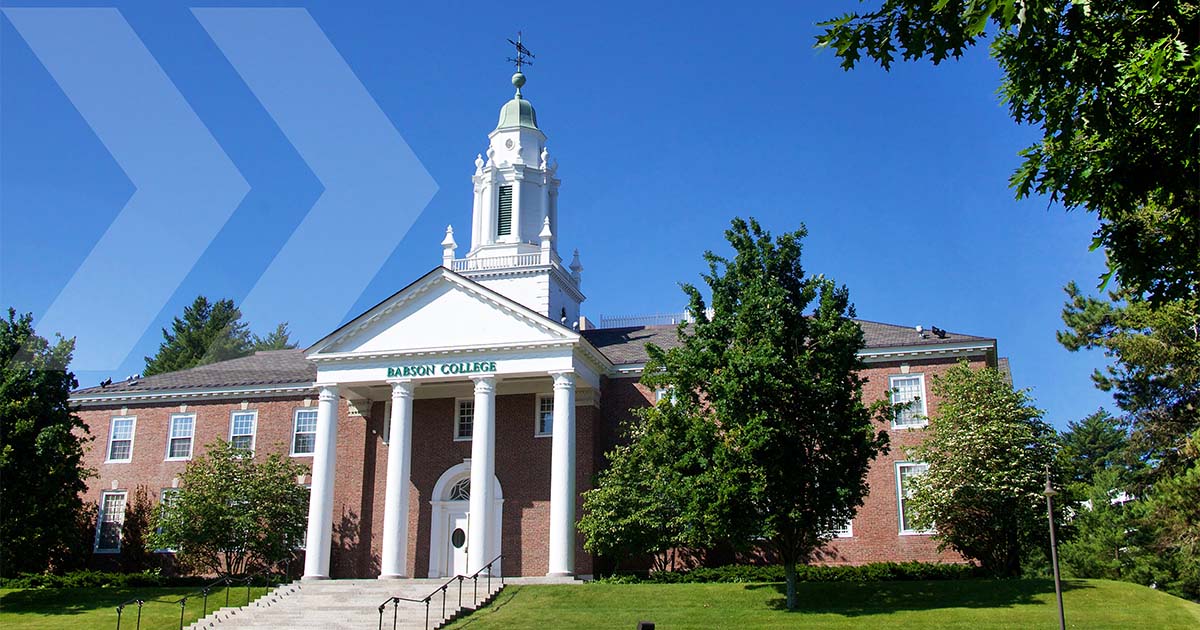
Across industries, organizations are increasingly embracing skills-based hiring, a talent-acquisition strategy that focuses less on credentials and more on whether candidates can demonstrate abilities such as problem solving, communication, collaboration, adaptability, and leadership. At Babson College, experiential learning has long been central to helping students develop and articulate those skills.
“Employers are interested in evidence that candidates can apply knowledge, solve problems, communicate effectively, work with others, and adapt to new challenging situations,” says Jessica Burkland, assistant professor of practice in Organizational Behavior and Management at Babson College. “They’re asking not only, ‘What does this person know?’ but, ‘What can this person actually do?’ ”
How Skills-Based Hiring Works vs. Degree-Based Hiring
Traditional hiring often emphasizes credentials such as degrees, majors, GPAs, or previous job titles as indicators of future success. Skills-based hiring takes a different approach, focusing on:
- Applicants’ practical abilities and competencies, which are applicable to the job
- Testing for those skills using targeted tools such as work samples, technical tests, and structured assessments
- Both hard skills (such as experience with Python) and soft skills (such as teamwork and communication)
While academic credentials show what someone has studied, they don’t necessarily demonstrate how effectively someone can apply that knowledge. That’s why many employers are placing greater emphasis on evidence of real-world performance. Burkland compares it to learning a sport.
“I often tell students that reading about bowling and actually stepping up to the lane and rolling the ball are two very different experiences,” she says. “In the same way, employers want to know not only what candidates know, but how they have used that knowledge to accomplish something, navigate a challenge, or work with others on a team.”
How to Figure Out What Skills You Need for Your Career
According to Burkland, employer priorities have remained remarkably consistent. Drawing on annual research from the National Association of Colleges and Employers (NACE), she says organizations continue to rank teamwork, problem solving, and communication among the most important career readiness competencies. What’s notable, she says, is that these skills are developed through experience, not memorization.
“Students strengthen them by working on teams, solving real problems, leading projects, managing conflict, and reflecting on what they learned from those experiences,” Burkland says. “That is one reason hands-on learning has become so important in higher education.”
How to Improve Student Employability Through Experiential Learning
To help students develop those competencies, Burkland and fellow faculty member Kerry Gibson worked with the Hoffman Family Undergraduate Center for Career Development at Babson to redesign their Organizational Behavior course around the NACE Career Readiness Competencies.
Through workshops, team projects, and simulations that mirror the kinds of challenges students will encounter in organizations, they practice collaboration and leadership while receiving feedback on opportunities to improve.
“The competencies provided a clear framework for connecting classroom experiences to skills that employers value,” Burkland says. “They provide a bridge between what students are learning in the classroom and what employers are increasingly seeking in candidates.”
Employability Skills Examples
According to Burkland, employers consistently value these skills:
- Teamwork: The ability to collaborate effectively, support your colleagues, and work with others toward a shared goal
- Communication: Convey information clearly, demonstrate active listening, and adapt your tone for different audiences
- Problem Solving: Evaluate the situation, use critical thinking to identify the issue and implement practical solutions
- Organization and Reliability: Identify tasks, prioritize them, create a schedule and complete them on time, deliver quality work, and make minimal mistakes
- Leadership: Set objectives and goals for your team, coach and motivate co-workers, and improve work practices
Babson students develop these competencies through simulations, projects, workshops, and team-based experiences rather than classroom lectures.
How to Show Evidence of Employability Skills
One of the biggest challenges in skills-based hiring is proving that you possess the skills listed on a resume.
Burkland says Babson addresses that issue through a skills portfolio where students document examples of competencies they’ve demonstrated, reflect on what they learned, and prepare to discuss those experiences in interviews.
“It is not enough for students to develop skills, they also need to be able to recognize them, describe them, and provide evidence of them,” Burkland says.
The result is that students leave the course with stronger career readiness skills, and with a clearer understanding of how to communicate their value to prospective employers.
How Colleges and Employers Can Partner on Skills-Based Hiring
As hiring practices evolve, Burkland believes collaboration between higher education and employers is becoming increasingly important.
Regular conversations with industry partners help faculty understand changing workforce needs while giving employers opportunities to influence how future talent is developed.
“Those partnerships create opportunities for faculty, career development professionals, and employers to learn from one another and ensure that students are developing relevant skills,” Burkland says. She points to discussions with members of Babson’s Employer Advisory Board and corporate partners as valuable sources of insight into the challenges organizations face and the capabilities they seek in new hires.
Those insights, in turn, help shape classroom experiences that prepare graduates for today’s workplace while strengthening the employability of graduates and helping employers build more future-ready teams.
As skills-based hiring continues to gain momentum, colleges that combine rigorous academics with experiential learning are increasingly positioned to prepare graduates who can do more than earn a credential—they can demonstrate the skills employers need from day one.
Posted in Insights
Latest Stories

Posted in Insights
Posted in Community
Posted in Insights