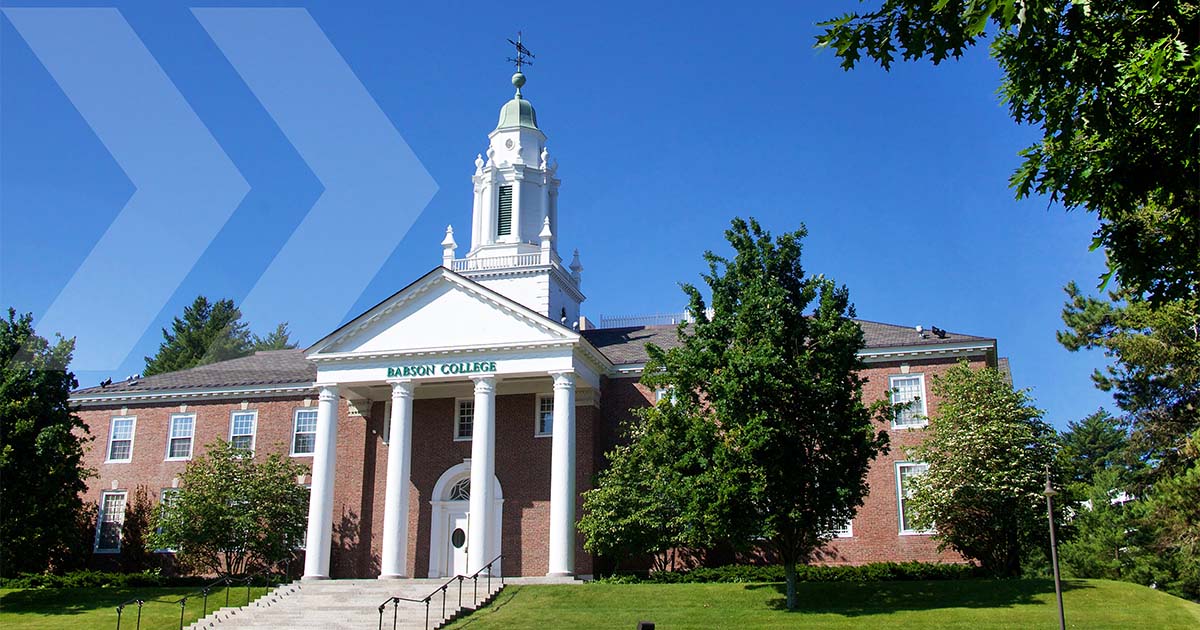
Why Future CEOs Choose Babson
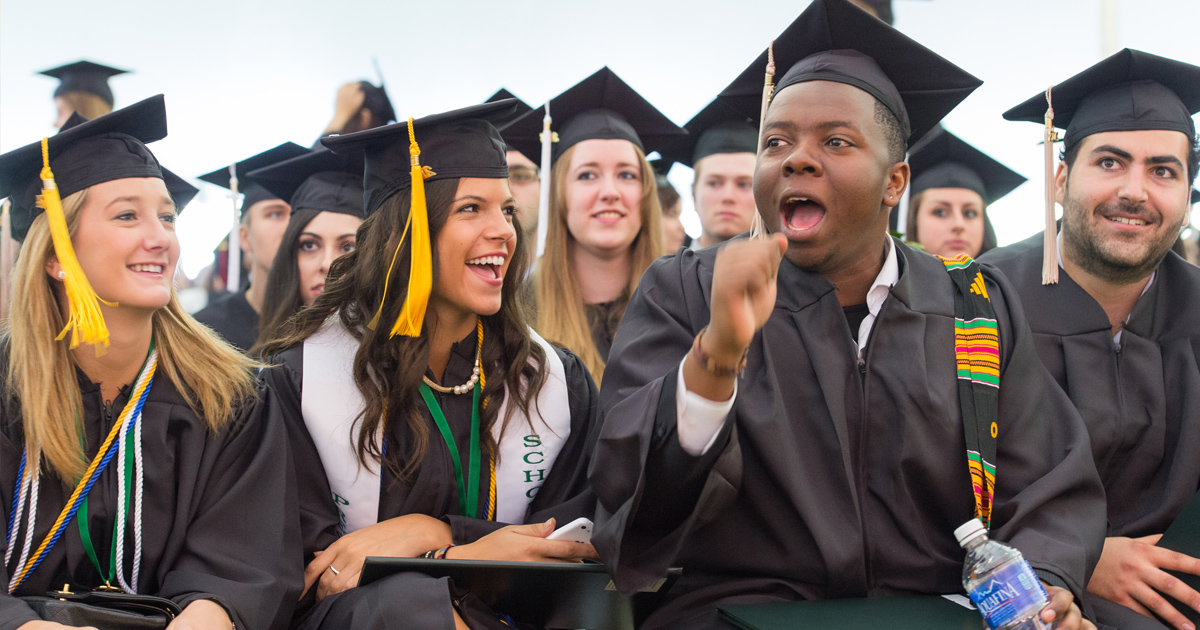
Money magazine reports that a bachelor’s degree can increase lifetime earnings by upwards of $500,000, and that business is now the most popular undergraduate degree in the United States.
PayScale advises that potential return on investment (ROI), above all else, be the priority when deciding on a college education.
With all of this in mind, Money set out to “help future CEOs and budding entrepreneurs find the colleges that stand out” the most.
Earlier this year, PayScale named Babson the No. 1 private business school for overall ROI, and recently, again ranked Babson the No. 1 private business school for early- and mid-career salary potential.
Money mirrored these efforts by narrowing its annual Best Colleges list and using PayScale data to advise future generations on the top U.S. business schools for value.
The result?
Money’s 10 Best Colleges for Business Majors, in which Babson is ranked No. 2.
Second only to the University of Notre Dame, Babson boasts an average early-career earnings of $68,600 for its alumni within three years of graduation.
According to PayScale, Babson alumni ultimately enjoy a 20-year net ROI between $793,000 and $941,000.
PayScale says, “It’s interesting to wonder why the Ivies, as well as other famous private schools like Babson, Stanford, Washington and Lee, Carnegie Mellon, and Tufts, do so well [in the PayScale College Salary Report] despite not focusing on STEM subjects exclusively. We speculate that because private schools are generally smaller and have strong alumni networks, they give college students [better] networking opportunities that help them start their careers off strong.”
Among the best colleges for business majors, Babson gives students many opportunities and ways to boost the value of their degree beyond potential earnings.
David Zamarin, for example, joined Babson as a member of the Class of 2020, but is taking advantage of Babson’s accelerated degree options and will graduate in 2019, saving money on overall college expenses, and jumping into his startup, DetraPel, full time.
“My experiences in and out of the classroom, the faculty and alumni connections I’ve made, and the successes I’ve already seen as a student entrepreneur—they’ve all contributed to an incredible, early return on investment, and I haven’t even graduated yet,” said Zamarin. “Without all of the resources at Babson, it would have taken me decades to get where I am today.”
Earlier this year, Zamarin pitched his startup on ABC’s “Shark Tank,” landing a $200,000 deal with Mark Cuban and Lori Greiner.
“Beyond their salary potential, our graduates are an everyday reminder of the impact of a Babson education,” said Ian Lapp, dean of the Undergraduate School at Babson College. “Our personal and powerful learning experiences help students develop an action-oriented, entrepreneurial mindset—one that continues to result in a positive ripple effect across the many people, communities, and organizations they touch for years to come.”
The latest findings show that 99 percent of Babson’s new alumni are employed or attending graduate school within six months of graduation. All become part of a powerful, global network of 41,000 alumni in 119 countries and all 50 U.S. states.
Posted in Community
Latest Stories
Posted in Community
Posted in Entrepreneurial Leadership
Posted in Community