What Did It Take to Break the Sub-2-Hour Marathon Barrier? Entrepreneurial Thinking.

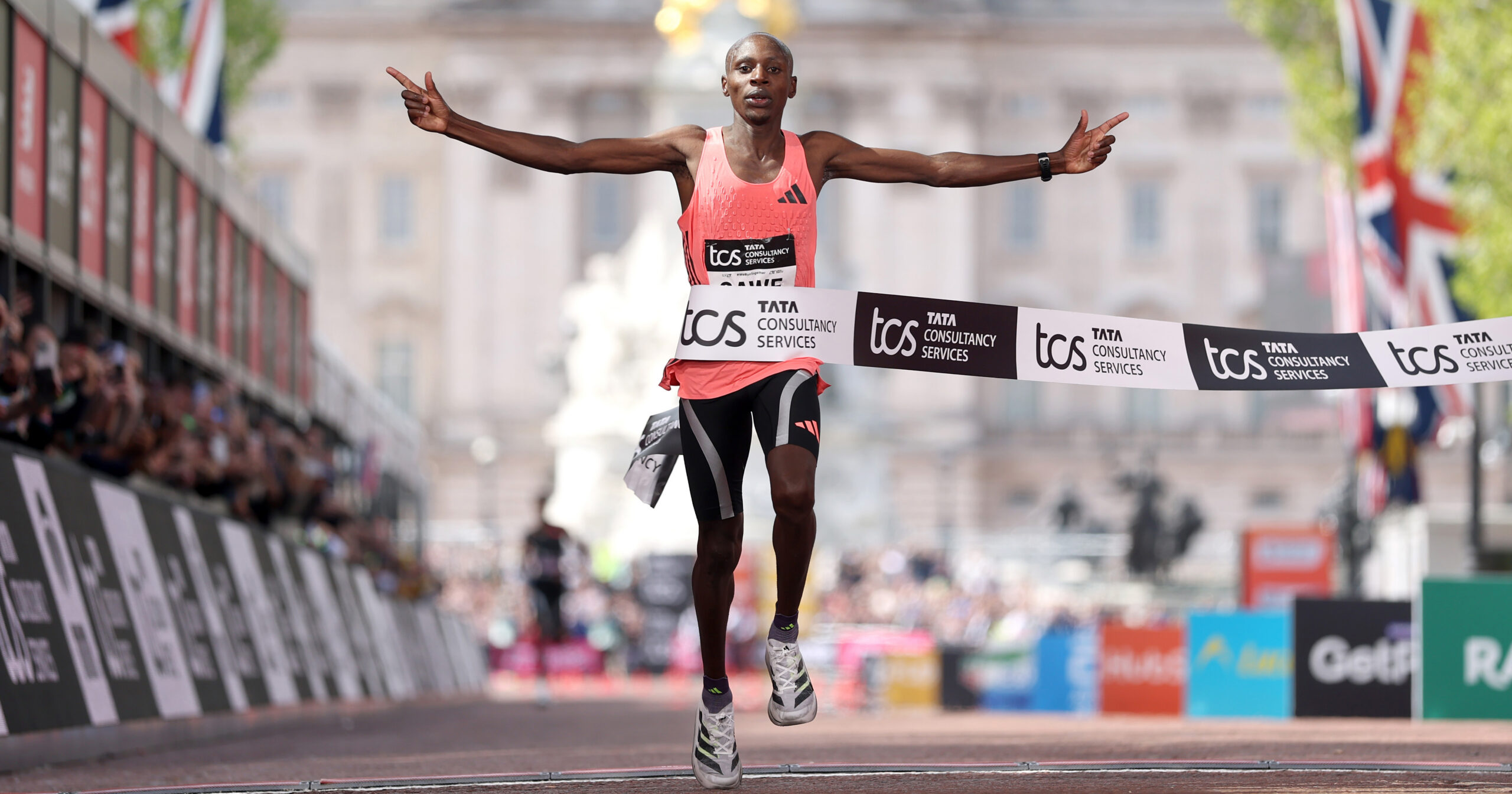
A sub-2-hour marathon had long been almost mythical in nature.
The first marathon under 3 hours was run in 1908, and the first under 2 hours, 30 minutes in 1925. After the first marathon was run under 2 hours, 10 minutes in 1967, world record progression slowly ground to a near halt.
It finally crossed what was once believed to be an unbreakable threshold last month, thanks to entrepreneurial thinking.
Sporting the brand new Adidas Adios Pro Evo 3 running shoe, which weighs in at just 3.42 ounces—about the same as a small apple—Sabastian Sawe and Yomif Kejelcha both surged their way to the first official sub-2-hour marathons at the 2026 London Marathon, clocking in at 1:59:30 and 1:59:41, respectively.
Daniel Auguste, Babson College assistant professor of entrepreneurship and an avid runner himself since high school, shares his insights on all the innovation that came along with this historical moment for the sport.
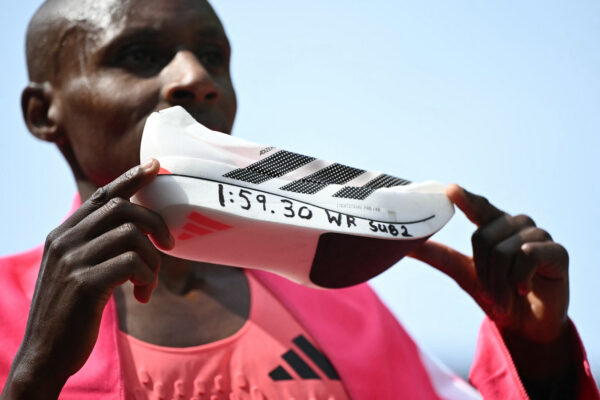
To equip athletes to run a sub-2-hour marathon, Adidas reimagined what was physically possible with its lightest shoe ever, the Pro Evo 3. How important is it for entrepreneurs to continuously question industry assumptions?
“Breakthroughs often come from questioning perceived limits. Adidas’s creation of a 3.4-ounce shoe, which is far lighter than the 8.8-ounce average, demonstrates how redefining constraints can unlock major performance gains and reshape an industry. This mindset is critical for entrepreneurs seeking disruptive innovation rather than incremental improvement. Accepting norms as fixed can prevent the discovery of transformative opportunities.”
The company also went through a dozen iterations and worked closely with its athletes to create the shoe. What role does rapid prototyping, iteration, and feedback play in innovation, whether it’s a startup product or a record-breaking shoe?
“Rapid prototyping, iteration, and feedback are essential because innovation emerges through continuous testing and refinement. Adidas’s multiple iterations and athlete collaboration reflect how important it is for startups to use feedback loops to improve their products/services and market fit. Each cycle in the iterative process improves learning, reduces uncertainty, and reveals real-world performance insights. This iterative process ultimately leads to more effective, user-centered innovations.”
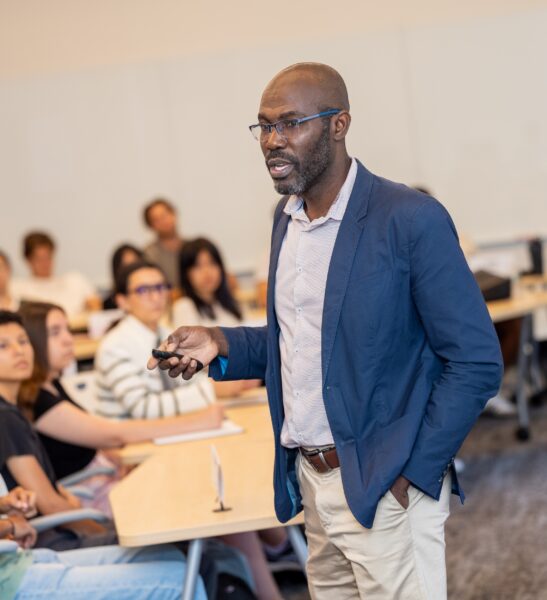
You teach Foundations of Management and Entrepreneurship (FME), where first-year students start and lead a venture. How do you teach students to get comfortable with uncertainty and experimentation, especially when success isn’t guaranteed?
“I teach my students to embrace uncertainty by encouraging action through small, low-risk experiments instead of waiting for perfect plans. In other words, FME is about Entrepreneurial Thought & Action® in practice. I tell students that it is about taking incremental steps, learning from outcomes, and adapting based on feedback. I also reinforce that failure is a valuable learning tool and part of the entrepreneurial process.”
From an entrepreneurial perspective, how powerful is it when a product becomes part of a cultural moment or historical achievement?
“It gains amplified visibility and symbolic meaning. This association can elevate the product from functional to iconic, strengthening brand identity and consumer loyalty. It also creates a compelling narrative that differentiates the company in competitive markets. Such moments can significantly accelerate adoption and long-term brand value. Adidas’s 3.42-ounce Pro Evo 3, combined with media coverage that it gains around elite marathon performances, is a prime example of such a cultural moment!”
Posted in Insights
Latest Stories

Posted in Insights

Posted in Community

Posted in Community