A Salute to Service: How Babson Students Give Back to the Community
True service to one’s community is not a one and done. It’s not a drop in and drop out, a quick fix it and forget it. Service takes commitment. It takes consistency.
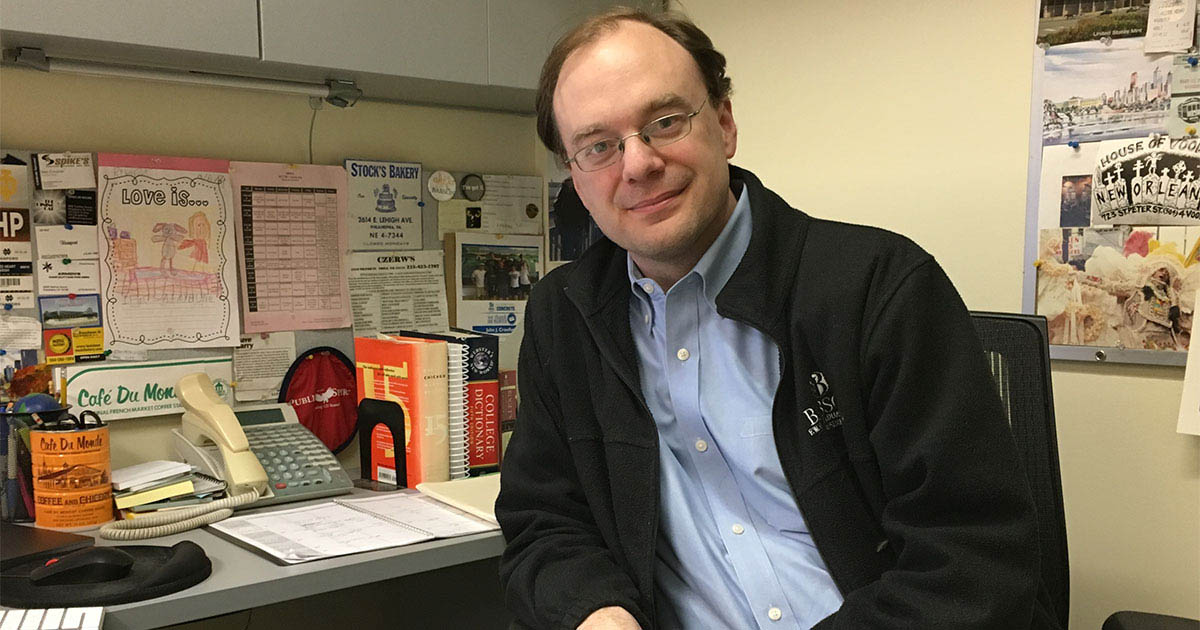
That’s what Omar Flores ’27 believes. He’s a program manager with Babson College’s Community Action Program, which offers service opportunities for students.
“I joined the program because I wanted to be part of a community committed to sustained service,” Flores says. “When you focus on doing your part and showing up week after week, you can change someone’s day—and sometimes even their direction—for the better.”
Yoel Gibbons ’28 feels the same. He’s the community manager of the Johnson House, a special-interest community geared toward Babson’s Black students. “I want to contribute to building opportunities that last, not just show up for a moment and disappear,” Gibbons says.
Flores and Gibbons are part of a long tradition of community service at Babson. The arrival this Monday of Martin Luther King Jr. Day, designated a national day of service in which many people honor the civil rights leader by volunteering in their communities, makes for an opportune moment to examine the giving-back efforts of Babson’s students throughout the year.
“Dr. King expressed love as a deeper, disciplined commitment to the well-being of himself and his community,” says Dylan Amaswache ’27, another program manager of the Community Action Program.
That deeper, disciplined commitment to community is certainly on display at Babson, albeit with an entrepreneurial bent.
Uplifting Others
Try to make a detailed, comprehensive list of all the community service efforts at Babson, and you’re likely to miss something. There are the social change projects of the Natalie Taylor Scholars, for instance, which involve the scholars pursuing solutions to social issues.
Babson’s fraternities and sororities often perform community service projects, as do special-interest communities, including One (Origins of Necessary Equality) Tower, Women Giving Back, and the Johnson House.
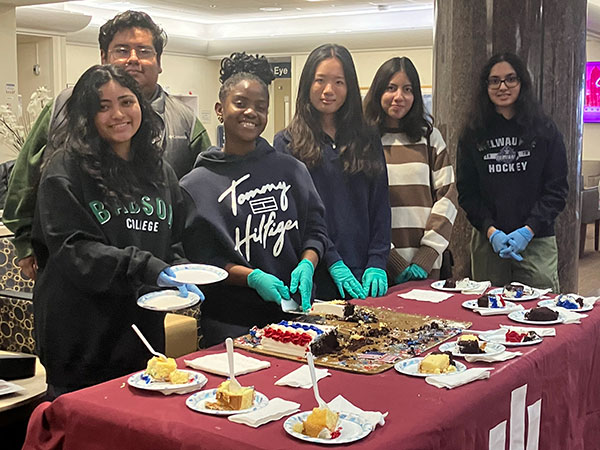
Historically, the Johnson House has worked with organizations such as the Boys & Girls Clubs of America to deliver entrepreneurship and financial literacy programming. “Moving forward, we are also broadening our approach to include direct support for minority-owned businesses, focusing on sustainable growth and long-term wealth creation,” Gibbons says.
In his service work, Gibbons is inspired by Malcolm X, who believed in preparing for the future. “He pushed people to invest in themselves and their communities, and that’s the kind of impact I try to make,” Gibbons says. “I see service, not as something you do for recognition, but as real work that helps people stand on their own.”
Alexiá Stine ’28, the Johnson House’s COO, views service as both an honor and a responsibility. “Real service is about a consistent commitment to uplifting others and investing in communities so they can thrive over time,” Stine says.
A long-standing initiative at Babson, the Community Action Program offers students service opportunities with four organizations: Big Brothers Big Sisters, Friends of the Homeless, the Volunteer Income Tax Assistance program, and Boston’s West Roxbury Veterans Affairs Medical Center. About 30 students in total work with the four organizations.
Giving back to others is one of the core values of Arthur M. Blank ’63, H’98, the namesake of Babson’s The Arthur M. Blank School for Entrepreneurial Leadership, explains Deborah Wahlen. She’s an executive director at the Blank School and oversees the Community Action Program. “It is important for students to see different perspectives and the different hardships that people are experiencing,” Wahlen says.
Doing service work also exposes students to the nonprofit sector. “They can see different career paths,” Wahlen says. “Working in the nonprofit world can sometimes be overlooked.”
Think Like an Entrepreneurial Leader
As they perform service, Wahlen encourages students to think like entrepreneurial leaders. She tells them, “Think about the partner organizations and how you can be creative and use that entrepreneurial mindset to make a difference.”
Using that mindset means that business and entrepreneurial projects are as much a focus of service as more nitty-gritty tasks. For instance, at Friends of the Homeless, which provides support to homeless families in Massachusetts’ South Shore region, Babson students are assisting with marketing and improving the organization’s website, in addition to helping with the maintenance of shelter homes.
The VA medical center is a new connection for Babson, but Wahlen expects students there will perform a similar mix of hands-on work (they recently served cake and coffee to veterans) and assistance with the center’s business and operations, including developing an inventory management system for donated goods.
“I see service, not as something you do for recognition, but as real work that helps people stand on their own.”
Yoel Gibbons ’28, community manager of the Johnson House
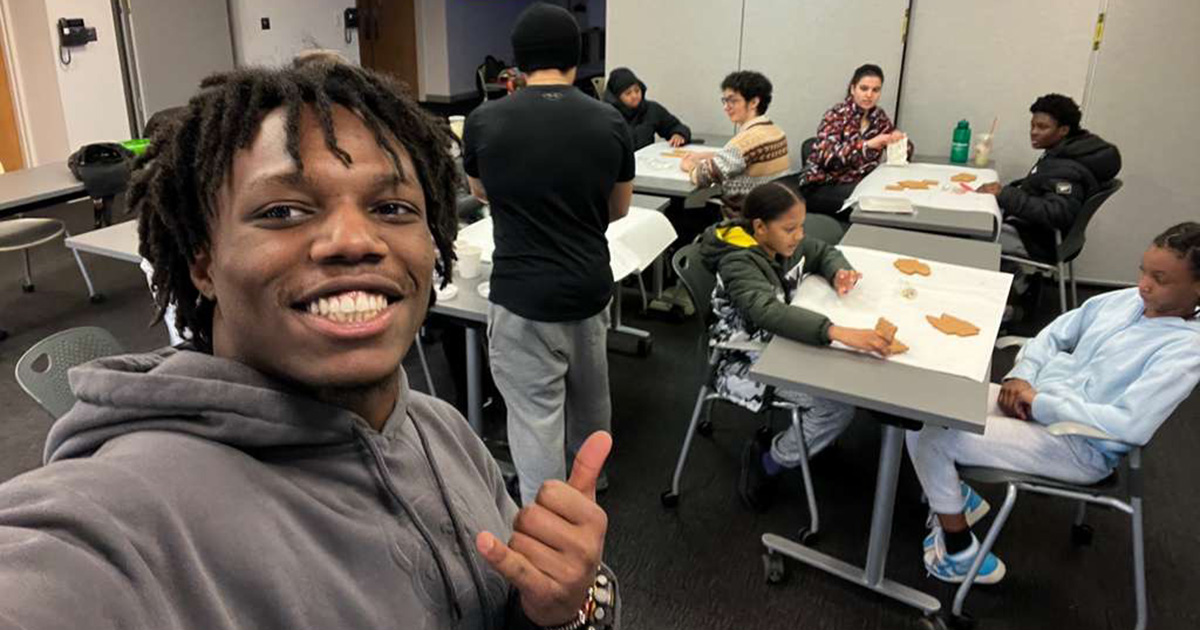
As part of students’ work with the Big Brothers Big Sisters, elementary and middle school children from the Dorchester section of Boston come to Babson’s campus every two weeks. Besides offering homework help and eating lunch with the children, Babson students teach them about basic skills for business and life, including about the importance of eye contact and a firm handshake and how to pitch their passions in front of others. “That can be terrifying for a middle schooler who hasn’t done that,” Wahlen says, “and Babson students create a supportive environment to practice these new skills.”
Amaswache, who serves as program manager of the Big Brothers Big Sisters efforts along with Flores, takes the role of mentor seriously. “I know firsthand how much it means to have one stable adult who genuinely cares, and how far that kind of presence can take a younger person,” he says.
The work of Babson students like Amaswache is much appreciated, says Terrence McCarron, chief program officer of Big Brothers Big Sisters of Eastern Massachusetts. “For our youth, a mentor isn’t just social support. It’s a powerful investment in their potential, a change in their trajectories, and an open door to a promising future,” McCarron says. “We’re so thankful for our Babson mentors. They are truly game changers.”
Latest Stories
Posted in Community
Posted in Community