Runway to Success: Babson Offers Unique Gateway into Fashion Industry
It happens each spring semester registration day. At 7 a.m., Caroline Daniels’ course Entrepreneurship in Fashion goes live with spots for 24 students.
In just a few short minutes, indicative of the interest and the need for entrepreneurial leaders in the field, all those spots are filled.
“Fashion is one of the largest industries in the world,” says Daniels, a Babson professor who also is the founder of the Fashion Entrepreneurial Initiative and serves as the faculty advisor to the Babson Fashion Group. “We want to keep being the leading business school that develops business models in fashion, building understanding and learning to innovate.”
The Next Fashion Entrepreneurs
Like all Babson students have when starting a business, William Everett MSEL’21 identified a problem. Golf shorts are overpriced, out of style, and uncomfortable.
The solution was simple: create a pair of shorts designed by golfers, for golfers, at a reasonable price, with a temperature-regulating liner, and Velcro strips for a golf glove.
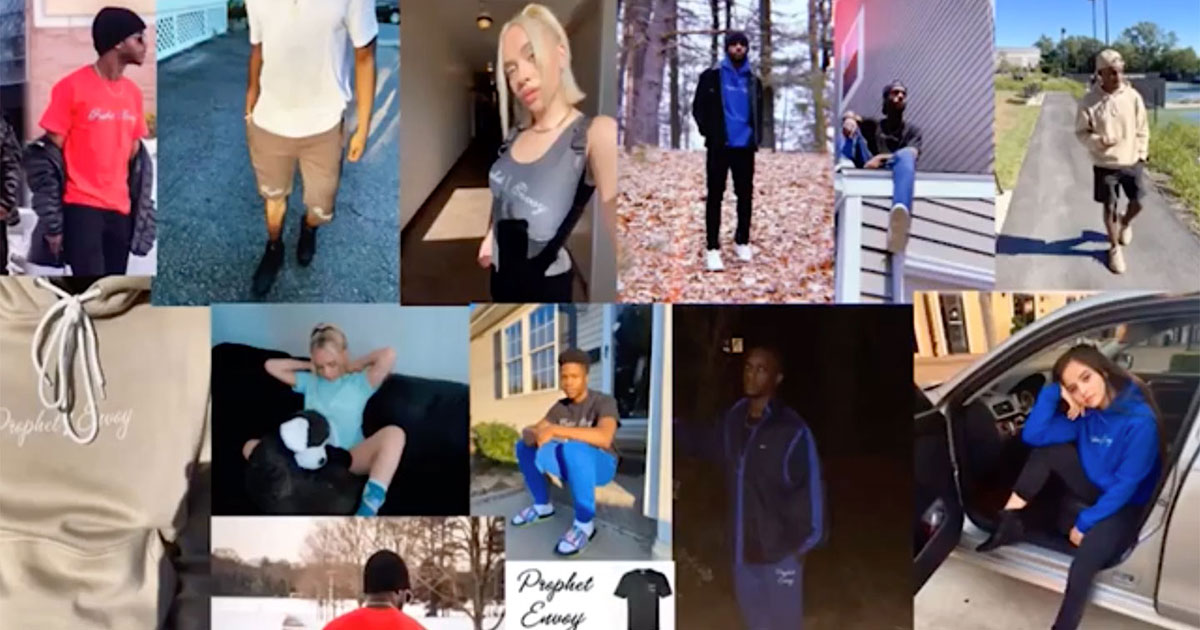
Everett’s idea was one of several showcased at last month’s virtual Global Fashion Show, featuring the work of BOW Three College Collaboration current students and alumni. The show was organized by the Fashion Entrepreneurial Initiative of The Arthur M. Blank Center for Entrepreneurship, Jaila Taylor ’22 and Mary Kille ’22, Jonathan Griffiths, the Weissman Foundry, and Larinda Cole from the Undergraduate Center for Career Development.
The Fashion Entrepreneurial Initiative hosts events with students, alumni, and corporate friends. Established in 2016, the project’s goal is to understand and research business models in fashion.
Students such as Everett have worked closely with experts in the field of fashion to tailor their ideas and ventures.
“We have alumni all over the world in the fashion industry,” Daniels says, referencing graduates in China who work in design and manufacturing, as well as partners in Europe, India, Malaysia, and South America.
Not to mention, one can’t forget icons such as Milaaya Embroideries founder Gayatri Khanna ’97, fashion entrepreneur Ruthie Davis MBA’93 or Bombas founder David Heath ’05 and chief financial and chief operating officer Andrew Heath MBA’12.
Over the years, students have worked with partners from global brands such as Dior and Uniqlo.
“The companies have a blast (working with the students),” Daniels said. “Every class I have, students are interested in every part of the industry. … It’s visual, experiential, it’s an industry people notice and that everyone can relate to.”
Economic and Social Impact
There are two clear avenues for students interested in a prospective career in fashion, Daniels says. They are through the business side, in social media, analytics, and finance departments, and through the need for sustainability, in an industry responsible for 10% of human carbon emissions, and in which 85% of textiles end up in landfills annually.
To no surprise, fashion-passionate Babson students are positioned to thrive through both paths.
“Those are the entryways,” Daniels says. “It’s no longer the design that will get you in, it’s the business model sense. The companies are looking for our students … economic and social impact, our students enter the job market with expertise.”
Latest Stories


Posted in Insights

Posted in Community