Babson Undergraduates Deliver Real-World Solutions for Senior Living Community
Being on a first-name basis with someone implies a sense of trust. For teammates or colleagues, you know each other well enough to dive deep on a topic and truly collaborate.
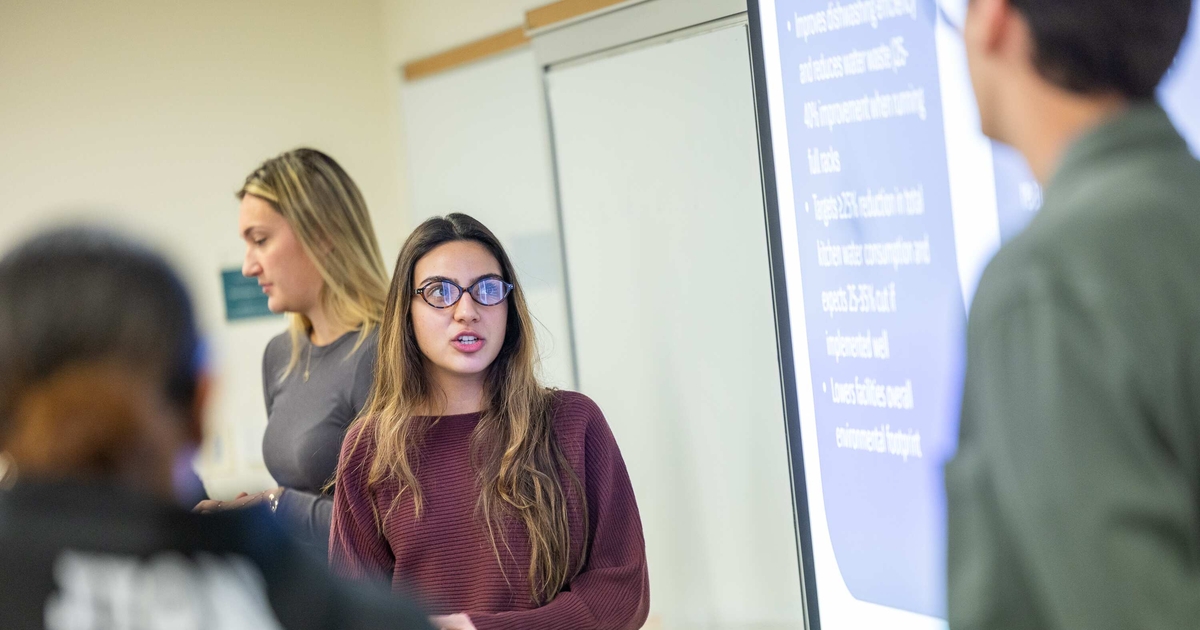
As students in the Sustainable Operations and Innovation class presented their final projects for their client, North Hill, a senior living community in Needham, Massachusetts, that first-name feeling was in the room—literally and metaphorically.
Led by Professor of Operations Management and Innovation Sinan Erzurumlu, students weren’t just presenting to faculty members or themselves. They were presenting cost-benefit analysis reports and months of research to North Hill leaders from operations, facilities, and human resources.
Because this course, which is designed to immerse students in the concept of sustainability thinking, is part of the Advanced Experiential requirement, undergraduate students spend the semester working directly with their client as consultants. Across six teams, students presented energy- and water-usage solutions that North Hill could implement to improve efficiency and sustainability practices.
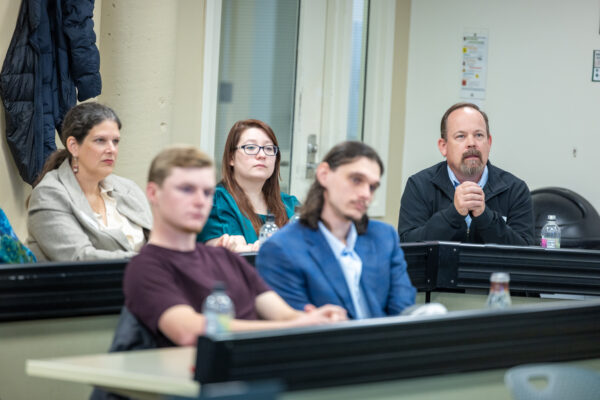
“These projects help us with our long-term capital planning and operational goals,” says Bethany Mercer, director of operations at North Hill. “On a micro level, these projects produce practical recommendations that can be implemented to improve efficiency and resident experience. We have been so impressed with the caliber of recommendations that we will be piloting several of the projects that were proposed.”
North Hill is only 2 miles from the Babson campus, so students could do frequent site visits, meet with staff members across functionalities, and feel like part of the team. That high-touch relationship allowed for tangible results, for both the students and the client. Recommendations ranged from adapting different food defrosting techniques to implementation of new laundry equipment.
“Engaging with Babson students brings fresh academic thinking, creativity, and enthusiasm to our initiatives,” Mercer says. “They engage directly with staff and residents through interviews, site visits, and data analysis, fostering a meaningful exchange between academic research and real-world application.”
Below, students reflect on how working with such a hands-on, trusting client, especially for work they are passionate about, expands their education.
Cate Aggouras ’26
Aggouras, whose team presented energy solutions North Hill could implement in its kitchen operations, found that working with an organization as dedicated to sustainability as North Hill is “gave me hope that a sustainable future can be built.”
What interests you in sustainability?
“I studied abroad in Copenhagen, Denmark, for a semester and took several courses on sustainability. These courses had students from all different schools and majors including engineering, education, and biology. I was able to learn from my peers, as we all came into the course with a different idea on what sustainability was. Seeing the sustainable practices that Copenhagen implemented was eye-opening, and I became curious as to how these practices could be adapted to the United States.”
How would you describe the relationship you built with North Hill?
“As students, we appreciate the trust and support that North Hill has given us throughout this process. It is uncommon to work with real clients for a class project, and North Hill has given us students so much support throughout this project and we enjoyed our visits with them.”
Raya Kilani ’26
As she prepared with her team to present water solutions, Kilani’s interest in sustainability grew, citing the analytic and results-driven aspects of it.
How would you describe this class?
“It’s very hands-on and application-based, rather than a traditional lecture class. Working with an actual organization is different because you can’t assume perfect information or ideal situations, and it helps you visualize materials you’ve learned during class to implement them in real-world problems. You have to work with constraints and challenges, while still producing something meaningful for the organization, preparing us for our work experiences.
“Sustainability interests me because it’s one of the few areas where you can make changes that are actually real and measurable: less waste, lower costs, and better operations over time.”
What was working with North Hill like?
“A collaborative, professional partnership. We’re supporting them with research and recommendations, and they’re giving us real access and context to understand their operations. Instead of studying them, we’re working with their team, asking questions, and building solutions that fit their actual constraints. From this relationship, I get real-world experience applying business and consulting skills such as communicating with stakeholders, presenting a clear analysis, and creating recommendations they could implement into their operations.”
Ata Yilmaz ’26
With a professional interest in operations and sustainable practices, Yilmaz, a teammate with Kilani, appreciated that this coursework explored how you can meld environmental responsibility with long-term business success.
How does working with an actual organization help you go beyond the theoretical?
“Working with North Hill felt like a real professional partnership where our work had purpose. I got exposure to real client expectations and decision-making, not just classroom feedback. This class felt more like consulting than a typical academic course. Working with a real organization forced us to focus on feasibility, not just theory.”
“It doesn’t have to be big to make a difference” is an idea that came up a lot in the presentations. How did that ethos drive the business solutions you proposed?
“We focused on small, realistic interventions that could be implemented quickly and still have measurable impact on staff’s behavior. That mindset helped us design solutions that were affordable and sustainable. We prepared by editing, rehearsing, and simplifying technical content so it was clear and actionable. I learned that clients value clarity, practicality, and confident communication.”
Posted in Community
Latest Stories

Posted in Entrepreneurial Leadership, Outcomes
Posted in Community