Why Faculty Research Matters: Babson Scholars on AI, Markets, and Real-World Problems

The exploding use and rapid technological advancement of AI has reshaped how students learn and companies operate, leading to deep uncertainty about its impact on campus and in the job market.
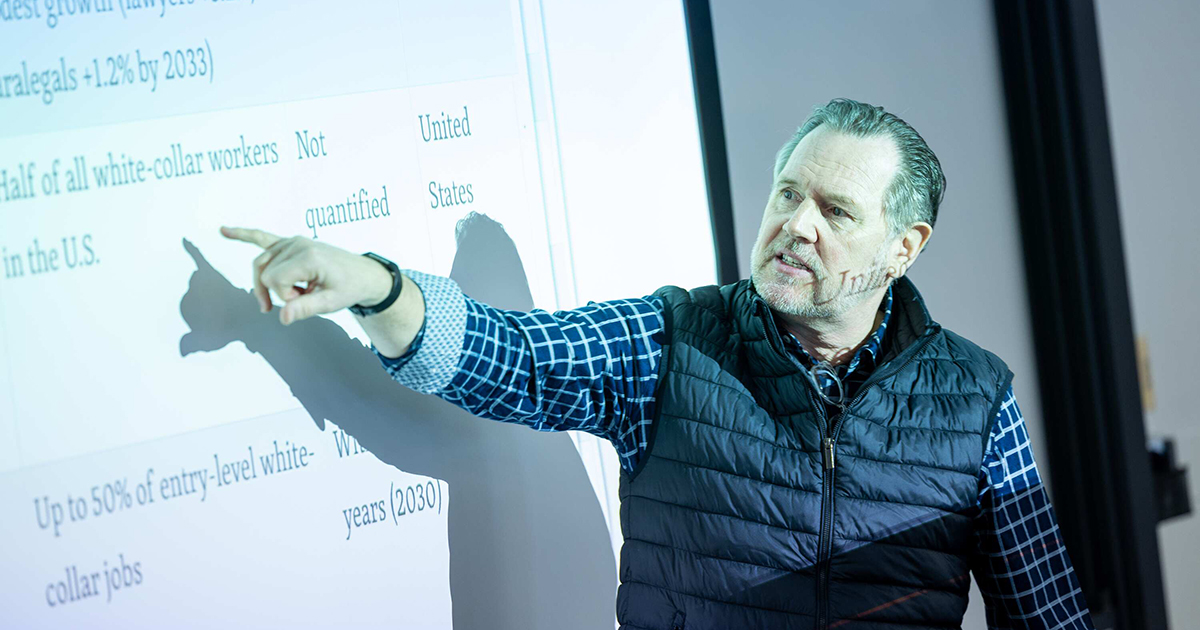
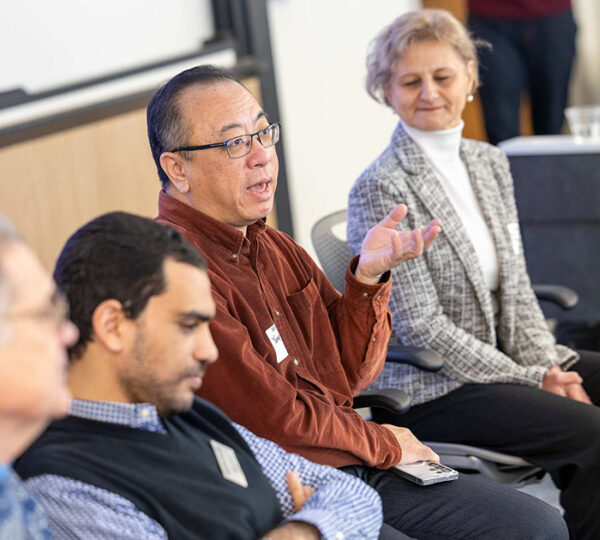
Drawing from research and extensive classroom experience, Professor of Innovation and Design Sebastian Fixson, Associate Teaching Professor Kristi Girdharry, and Associate Professor of Entrepreneurship Erik Noyes sought to address some of that uncertainty in an early morning presentation at Babson College’s Faculty Research Day last week. The interdisciplinary panel, chaired by Fixson, discussed the opportunities and challenges that AI presents for recent graduates.
“What seems to be happening right now is that significantly lower hiring is happening in certain industries in certain entry-level jobs,” Fixson said, pointing to a Stanford University study of payroll data that examined the impact of AI on the U.S. labor market since late 2022.
Fixson, also the founding faculty director for Babson’s Doctor of Business Administration program, highlighted other indicators showing that AI is fundamentally changing how work is organized and problems are solved, particularly as tasks once reserved for early-career employees become automated.
“I think that raises a whole host of questions,” Fixson said. “The biggest question is, as educators, what is it that we can do, both in research and teaching, to help students be competitive in this world.”
Girdharry, who researched students’ use of AI through graduation and into the workforce, noted that many use AI less as an authority and more as a tool for reassurance—with one graduate describing it as a way to make sure they are “not missing something obvious.” The recent graduates remain cautious about the information coming from AI, Girdharry added.
Entrepreneurial innovation, meanwhile, has gone into hyperdrive, according to research conducted by Noyes and Tom Davenport, the President’s Distinguished Professor of Information Technology and Management and the faculty director of the C. Dean Metropoulos Institute for Technology and Entrepreneurship.
Entrepreneurs can start and expand their new ventures with less funding and fewer people as AI continues to advance and grow.
“The rate of change on a quarterly basis is shocking,” Noyes said. “It’s hard to forecast where we’re going to be in one year, three, or five years in terms of innovation.”
Breadth and Diversity
The panel was one of many timely discussions during a day dedicated to showcasing the breadth and diversity of Babson’s scholarly community. More than 40 faculty members presented research on varied topics such as recent shifts in U.S. monetary policy, the correlation between long-term unemployment and the chances of entrepreneurial success, and how emerging technologies such as artificial intelligence can be used to better understand issues such as global supply chain transparency.
“One of the distinctive strengths of our faculty research is its interdisciplinary nature.”
Babson Provost Ariel Armony
Lauren Beitelspacher, associate dean of faculty research and the Ken and Nancy Major Romanzi Senior Term Chair in Marketing, chaired an interactive workshop highlighting how different disciplines would tackle problems such as climate change, inequality, and market inclusion.
Different problem-solving styles also were featured in an earlier panel chaired by Beitelspacher, who spoke with Babson faculty experts in highly technical data analysis about how they applied their skill to address multifaceted research.
“Thank you all for encouraging us to think in different ways and sharing your expertise,” Beitelspacher said. “It’s very inspiring, because sometimes we’re in our silos and we think there is one way to do something.”
A Culture of Research
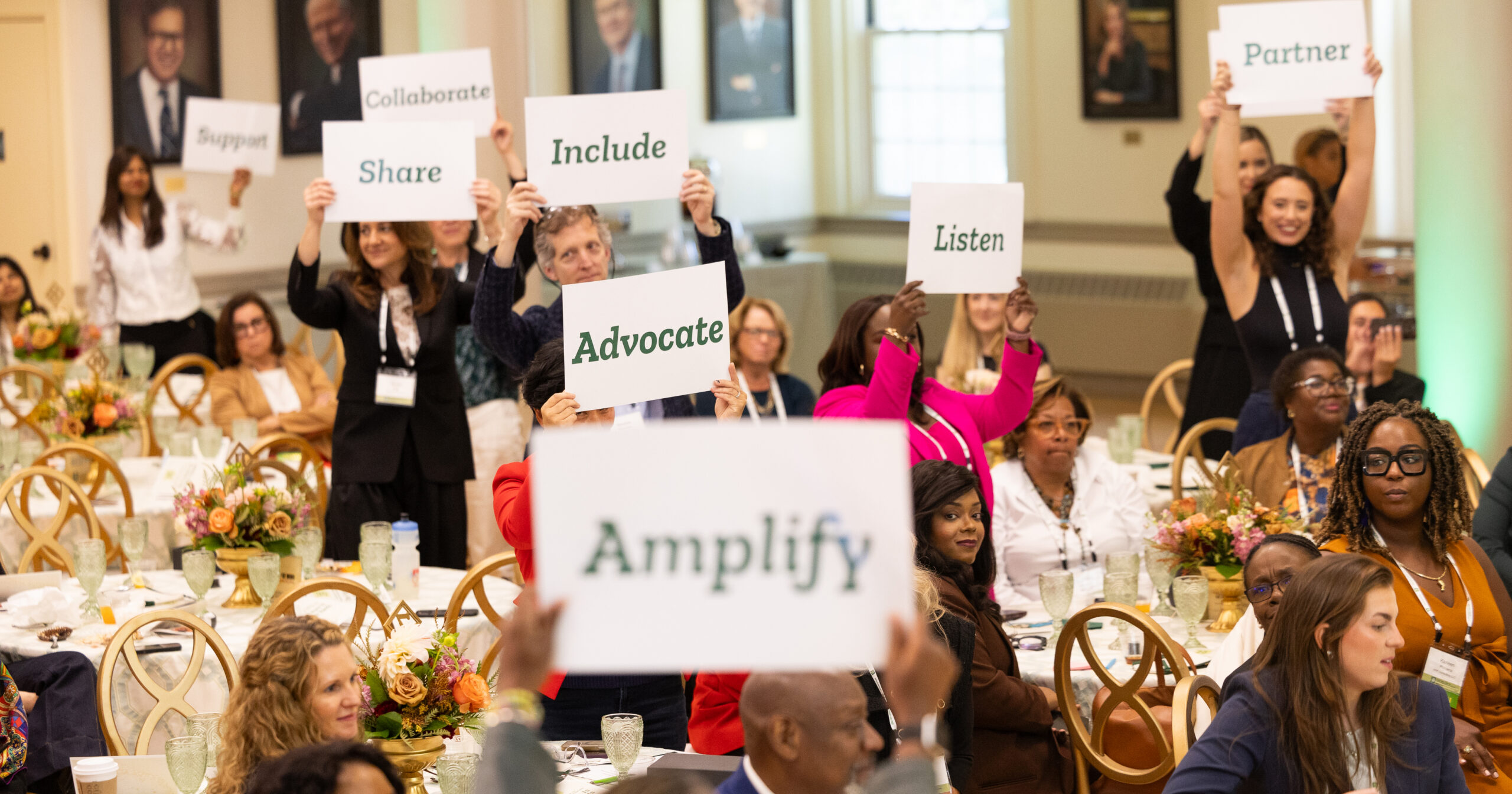
With more than 70 attendees, the day provided a window into how faculty research works and why it matters. Ariel Armony, provost and executive vice president, underscored the importance of Faculty Research Day as both a celebration of impact and a reflection of Babson’s collaborative culture.
“One of the distinctive strengths of our faculty research is its interdisciplinary nature,” Armony said, pointing to scholarship that spans the boundaries of academic division. Bringing together different methodologies and perspectives, he added, leads to richer scholarship and models for students and shows them “how to think expansively, creatively, and how to address new questions and challenge dominant assumptions,” he said.
Armony also emphasized his commitment to nurturing a culture of research at every career stage, calling research advancement “indispensable” to the College’s mission. He highlighted institutional supports such as the Babson Faculty Research Fund, the Faculty Research Day subcommittee, and new initiatives including the faculty research newsletter and website, all designed to elevate and celebrate faculty impact.
Babson President Stephen Spinelli Jr. MBA’92, PhD also applauded the interdisciplinary teamwork, telling faculty in attendance that working together “is built into the fabric of how you think about teaching and learning.”
“The productivity and the collaboration, I think, produces better research,” Spinelli said. “I think it is more important research, and I think it is more impactful research because the world sees it in a more holistic way, and it is relevant to a bigger audience.”
Latest Stories
Posted in Community

Posted in Community