From Tote Bags to Buckets: How Everyday Items Become Cultural Currency
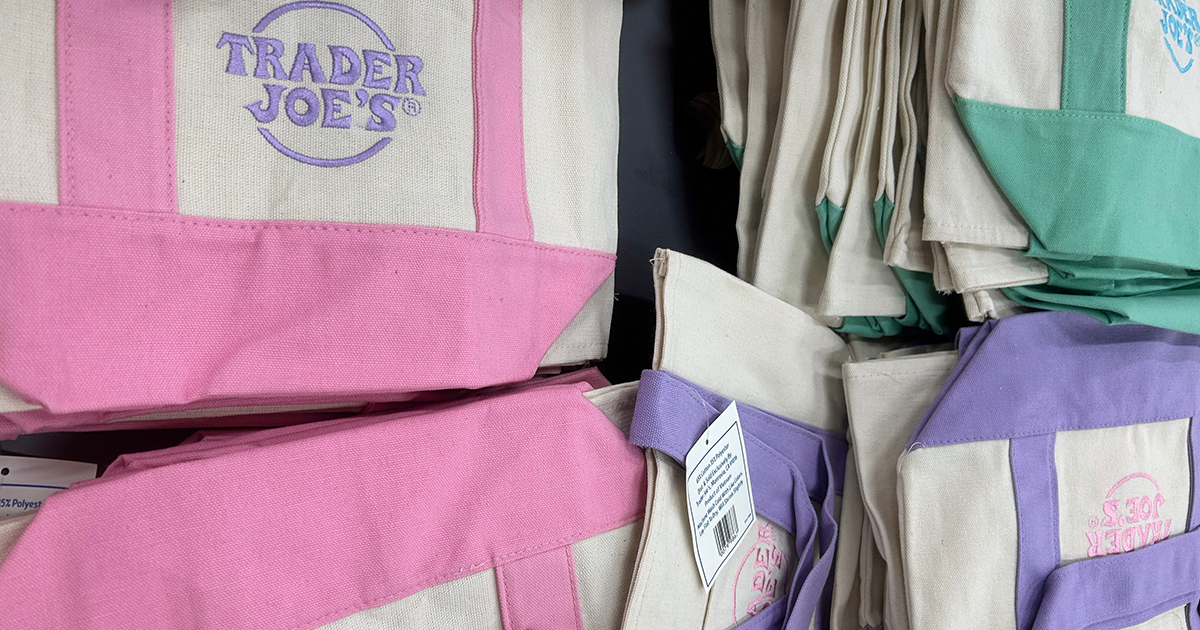
The brightly hued totes sprung up shortly before Easter, festively trimmed in light lavender and embroidered with a pastel pink Trader Joe’s logo. Even before the viral bags hit supermarket shelves, the hunt was on.
And, just as shoppers had scrambled for other cult favorites such as the Starbucks Bearista cup and the teal Lowe’s mini bucket, they waited in long lines to snatch up several of the $2.99 mini totes. Within days, the reusable canvas bags had sold out, only to reappear on resale websites at multiples of their original price.
“I just bought the mini totes for my friend out in California whose local Trader Joe’s was in the news for having a line of more than 500 people,” Babson College Associate Professor of Marketing Ellie Kyung said. “She was in Japan last week and saw firsthand that locals there have them. There is no Trader Joe’s in Japan.”
The shopping frenzy over these seemingly ordinary objects is, in reality, a carefully layered marketing phenomenon, one that brands such as Trader Joe’s, Starbucks, and Lowe’s have learned to harness with remarkable precision.
“This is a combination of scarcity and time as a democratized way of obtaining goods,” Kyung said. “The value of these bags as they hit eBay shows the value to consumers is real.”
The Power of Belonging
Gary Ottley MBA’97, an associate professor of practice in Babson’s marketing division, said the appeal of these limited-edition “drops” has less to do with the products themselves and more to do with psychology, identity, and timing.

“Cult-favorite items are, by definition, attractive only to those already in the ‘cult,’ ” said Ottley, who researches marketing and societal issues.
That built-in audience gives established brands a major advantage. A startup might struggle to generate buzz around a tote bag or coffee cup, Ottley noted, but companies with strong brand affinity can turn even the most mundane object into a must-have item.
Layer on scarcity, and demand intensifies. From luxury icons such as the Hermès Birkin bag to fast-food comebacks like the McRib, “limited availability” has long been a proven driver of consumer behavior. But, Kyung points out, today’s viral items don’t require a lot of money.
“The Trader Joe’s tote bag frenzy is nothing short of marketing genius,” Kyung said. “Unlike scarce luxury goods—like a handbag from Hermès—these bags are inaccessible because they are limited drops. But they’re still attainable if you have something everyone has: time.”
Retailers have refined this strategy into a science, releasing short-run items that disappear quickly and return unpredictably, creating a kind of Easter egg hunt that keeps customers coming back.
“There are only a certain number of these available,” Ottley said. “First come, first served. That creates a heady mix of community, collectability, and even status.”
Everyday Objects, Elevated

What’s new in this wave of viral merchandise, said Babson Adjunct Lecturer Lee Gustafson MBA’88, is how ordinary the items are.
Trader Joe’s mini totes, Starbucks’ Hello Kitty holiday edition cups, and Lowe’s miniature buckets are inexpensive, functional, and easily replaceable. Yet they generate long lines, sell out instantly, and spark online resale markets.
That’s because, Gustafson explained, “the object itself rarely carries the weight. The moment does.”
These products act as cultural signals, proof that a consumer participated in a specific moment. Owning the item is secondary to being part of the story.
Kyung said that moment signals a new kind of status. “It’s not about wealth,” she said. “It shows that you are culturally in the know—and that you invested your time.”
The Formula Behind the Frenzy
According to Gustafson, the success of these drops comes from a convergence of three forces:
- Brand affinity
- Scarcity
- Social sharing
In the case of Trader Joe’s, strong customer loyalty and a scramble for the limited totes, all documented on social media, turns local product drops into a national conversation almost instantly.
Starbucks’ Bearista cups blend nostalgia with a visual appeal that translates easily into shareable content. Meanwhile, Lowe’s miniature buckets demonstrate how consumers themselves can redefine a product’s purpose, transforming a basic item into planters, drink containers, or viral Easter basket props.
“The value wasn’t designed into the product,” Gustafson said. “It emerged through reinterpretation.”
Going Viral
While companies can create the conditions for success with strong branding, limited supply, and everyday usability, they can’t fully control how consumers will respond.

“Brands can create the conditions, but they can’t dictate outcomes,” Gustafson said.
In fact, attempts to manufacture hype too aggressively can backfire if consumers sense inauthenticity. The most successful moments often feel organic, even when they’re strategically enabled.
The rise of these limited-edition drops reflects a broader shift in how consumers assign value. Products are no longer just goods; they are experiences, signals, and content. A tote bag or coffee cup is now a cultural ticket, giving shoppers a way to participate in something larger than themselves.
“The common thread is participation,” Gustafson said. “Owning the tote or the cup matters less than being part of the shared story around it.”
Posted in Insights
Latest Stories
Posted in Insights
Posted in Insights