Inside Babson’s First Food Summit: Where Food Entrepreneurs Connect Across the Ecosystem
Babson College’s inaugural Food Summit served up a powerful mix of food industry insights and student product pitches that brought entrepreneurs and operators from across the food ecosystem to the table.
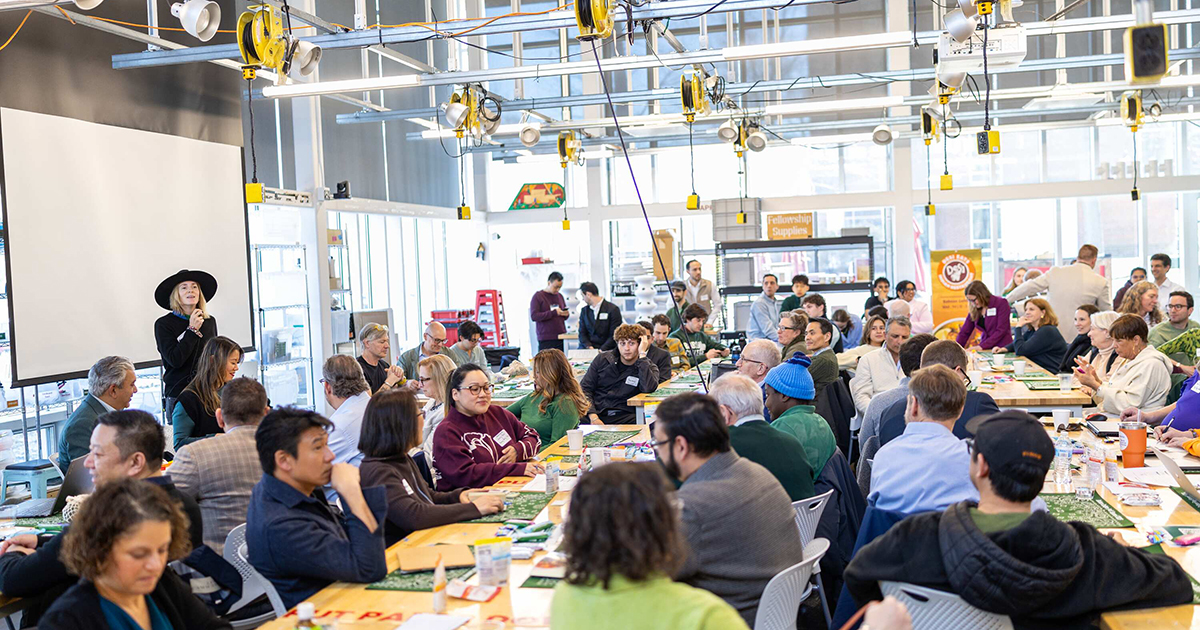
“Every person in this room is some kind of food advocate, food lover, food solutions enthusiast, or food systems thinker,” Babson Food and Beverage Business (FABB) Lab lead Taryn Miller-Stevens said. Dozens of students, staff, alumni, and food community leaders packed the Weissman Foundry last week for an afternoon of industry discussions and quick-fire product pitches.
“It’s incredible to be around people who care about something so fundamental to humanity,” said Miller-Stevens, also the associate director of strategic programs & growth at the Arthur M. Blank School for Entrepreneurial Leadership.
READ MORE: The Food Network of Babson in Babson Magazine.
The event, co-hosted by the Babson Graduate Food, Agriculture, and Technology Club, culminated with the fourth annual Dinner in Green across the street at Trim Dining Hall. Dinner in Green is an immersive dining experience hosted by Babson College Dining spotlighting local, sustainable, alumni-founded food businesses.
“The Dinner in Green team, including Alison Moppett, Tara Norcross, and Babson College Dining, has been engaging Babson food alumni for the past few years and we’re grateful for their incredible partnership,” Miller-Stevens said.
Many of the same alumni who whipped up dishes for the dinner attended the summit, where they and other industry insiders discussed how food businesses are built, how the industry is evolving, and what it takes to scale impact across the system, all while highlighting Babson’s booming food network.
Building a Brand: Lessons from the Frontlines
Moderated by Gerri Randlett, assistant vice president of Babson’s Alumni Engagement and Annual Giving, the first panel focused on personal tales of success and setbacks while building a CPG business—bringing together founders who have successfully navigated the leap from concept to grocery shelf.
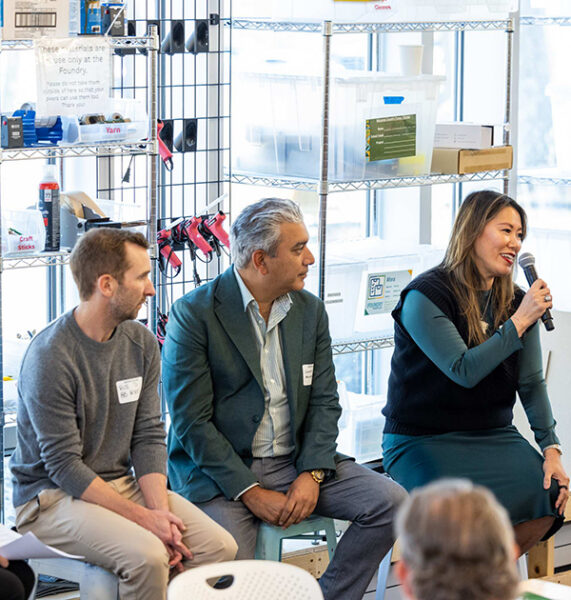
For Sameer Malhotra ’00, CEO of Cafe Spice, the CPG journey was a way to share his family’s food with the world, producing fresh, ready-to-eat Indian meals distributed in supermarkets such as Whole Foods and Hannaford nationwide.
But success didn’t come without some missteps. When the company attempted to stretch its brand into new cuisines, such as Latin American food, the market pushed back.
“We tried to use the Cafe Spice brand for other cuisines … and we realized it did not work,” Malhotra said. They got better reception after changing the name to Cantina Latina. The lesson? “Let everything have its own identity,” he said.
Rob Dalton MBA’14, co-founder of 88 Acres, said maintaining focus on his mission has been key. He and his wife produce allergy-friendly, seed-based bars and butters.
“We firmly believe in what we’re doing, and that gets us out of bed every morning,” Dalton said
Meanwhile, Nadia Liu Spellman ’04, founder of Dumpling Daughter, highlighted the human side of scaling a brand that spans both restaurant roots and retail expansion.
“When you start something, there’s hard things every day,” she said. “The biggest inflection point is finding the right people, the right team.”
Food Science
Soumya Roy MBA’16, co-founder and CEO of UpLevel Foods, operated in the emerging food science and functional foods sector for decades. His company is focused on making condiments such as ketchup, mayonnaise, and mustard healthier, using phytonutrients to improve tasters’ metabolic health without skimping on flavor.
“I’m a food scientist and food engineer by training,” Roy said. The sector means Roy has a sneak peek at emerging food trends. “What consumers don’t know yet is how deeply ingrained the food industry is with AI. Rather than going through trial and error, companies are using predictive modeling to develop new products.”
Errol Norwitz, executive director of the Kerry Murphy Healey Center for Health Innovation and Entrepreneurship, asked serial restaurateur Roger Beaudoin ’89 about evolving consumer expectations—from transparency and health benefits to cultural authenticity in hospitality.
“Let’s start with the word hospitality, because that’s the foundation of this business,” Beaudoin said. “I learned a long time ago that hospitality is absent when something happens to the guest, and hospitality is present when something happens before the guest.”
“I learned a long time ago that hospitality is absent when something happens to the guest, and hospitality is present when something happens before the guest.”
Roger Beaudoin ’89, founder of Restaurant Rockstars
Now running Restaurant Rockstars, a restaurant consulting business, Beaudoin highlighted vegan dishes, food allergies, and the rise of non-alcoholic beverages as ongoing trends in the dining world.
“People are much more health conscious than ever,” he said. “You can still make money, but you really need to have mocktails and alcohol-free offerings.”
David Waters, CEO of Community Servings, also discussed the connection between food and health consciousness. He spoke about the increased focus on food as health care, and his non-profit’s work delivering nutritious and tasty meals to thousands of people suffering life-threatening illnesses across Massachusetts.
From Supply to Social Impact
The final panel zoomed out to examine the broader systems that enable the food industry to function.
Jordan Levi ’98 oversees Five Rivers Cattle Feeding, the world’s largest cattle feeding business. While operating an incredibly complex, capital-intensive supply system, Levi keeps it basic when it comes to his motivation.
“My ‘why’ is my 610 employees and my family, and that’s what drives me every single day,” Levi said.
Moderated by Ab Igram MBA’96, executive director of the Tariq Farid Franchising Institute, the panel also highlighted how supply systems intersect with entrepreneurship and innovation. Dennis Hogan, CEO of the food procurement powerhouse Foodbuy, emphasized the role of procurement and partnerships in helping brands grow within large institutional networks.
“We have the privilege of managing $35 million in goods and services, and I think with that comes a lot of responsibility,” Hogan said.
Across the discussion, collaboration emerged as essential—whether through shared kitchens, capital networks, or educational initiatives that prepare the next generation of food entrepreneurs.
An Industry Connected
Student founders bookended the summit, showcasing their food and beverage creations at the opening and closing with a round of rapid-fire pitches.
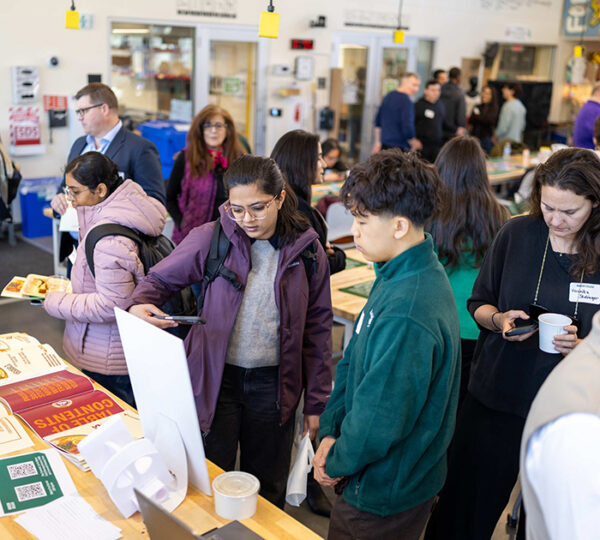
DesiEats founder Krish Khemlani ’27, who already serves his venture’s Indian food out of Roger’s Pub, was one of 10 student entrepreneurs at the event looking to make connections and get feedback from industry leaders.
Other featured student businesses included MAZA Corn Products by Guillermo Peralta MBA’27; PHINA, a coffee concept by Arthur Gatbonton MBA’26; READI, an updated take on instant oatmeal by Kaiden Cheng ’29; Sweet Little Drinks by Vedika Sunil Chamakalayal MSBA’23, offering clean, functional beverages with ingredients such as adaptogens and collagen; and Discos by Will Manzi MBA ’27, a fried tofu snack concept.
The summit concluded and the crowd crossed the street to Dinner in Green, where attendees experienced the food industry in its most tangible form: mouthwatering morsels created by alumni-founded businesses.
From Rail Trail Flatbread Co. and New City Microcreamery to Titin Evoo, Rub Smoke Love, Volante Farms, and Fox Farm Brewery, the dinner showcased the breadth of Babson’s food network—spanning restaurants, consumer brands, farms, and sustainable ventures.
“It’s all about community,” Miller-Stevens said. “We want to be a resource for students, the alumni, and the community. You have ideas? Let’s build it.”
Interested in Food Entrepreneurship?
Summer at Babson offers a range of pre-college courses for high school students including a look at food systems, a course about how to polish your pitch, and insights into entrepreneurial investing.
Latest Stories
Posted in Community, Entrepreneurial Leadership

Posted in Insights
Posted in Insights