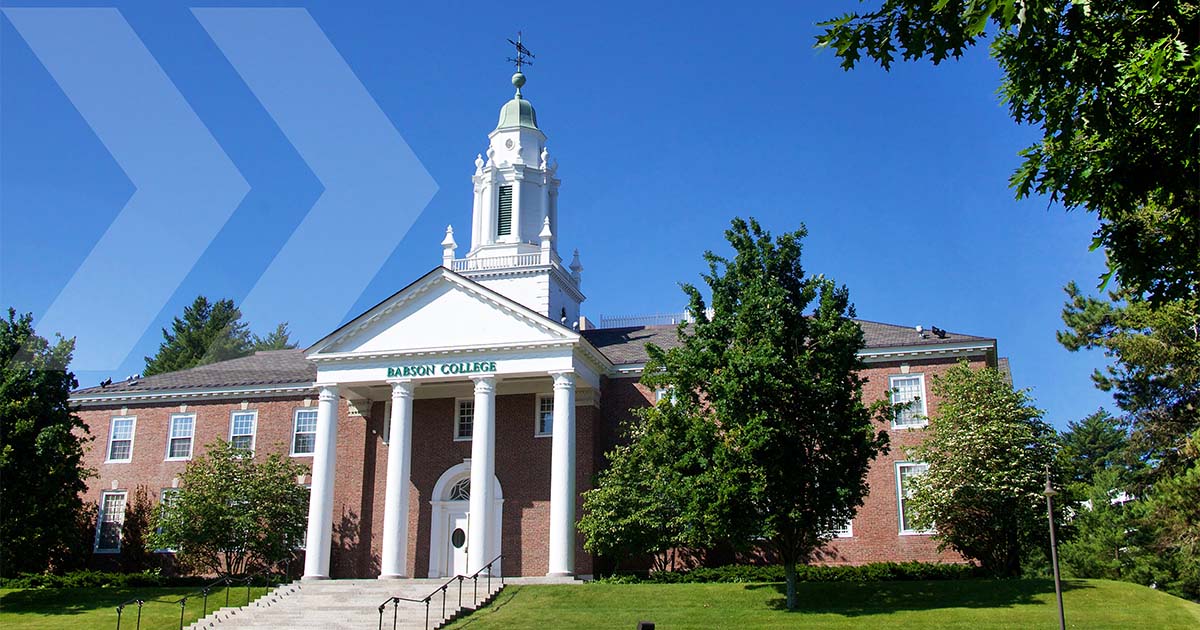
Recovery and Reinvention: An MBA Student’s New Beginning
When Saheli Pujari MBA’27 turned away from the dark place she found herself in, loosening the grip that alcohol addiction held over her, she began the hard work of beginning again.
As she toed the starting line for what was to come next, Pujari came to Babson College. On campus, she has taken on fulfilling work in Babson’s Office of First-Generation Student Success, helping students to adjust to college life and thrive.
Pujari also is putting together a new direction for her career. Before coming to the College, she worked for four years at TJX Companies as a project analyst. The job was good, and she enjoyed TJX’s people and culture, but now, she seeks something different, something to create meaningful change in society.
For Pujari, graduate school serves as a place for professional and personal rebirth. The process of recovery is long and winding, hopeful but hard. “The process is scary,” Pujari says, “but when you come through the other side, you become the best version of yourself.”
With Babson’s help, Pujari is figuring out what that best version of herself looks like.
Where She Is Supposed to Be
The start of Pujari’s resurrection, fittingly enough, came on Easter Sunday two years ago.
She was supposed to be visiting with her family, but instead, she spent much of the day sleeping. At that point, Pujari believes she had spent two years in active addiction. She experienced blackouts nearly every day. “I am doing it knowing I am harming myself,” she says, “but I still keep going because my body is dependent on it, mentally and physically.”

On that Easter, Pujari’s sister, Desi, pulled her aside. “We need to talk about your drinking,” she said. “Do you want to get help?”
At that moment, Pujari felt seen. She felt relieved. “Yes, I need help,” she replied. “I don’t know how to stop.”
Her recovery was rocky at first. What began as a short stint in detox turned into a month-long hospital stay after a massive blood clot was discovered, requiring an emergency craniotomy. That left Pujari the dual challenge of recovering from both alcohol withdrawal and brain surgery. Later, she relapsed twice, but she took her last drink on Nov. 5, 2024, a date etched into her mind.
The following September, she started the two-year MBA program at Babson. “It felt like the natural next step,” she says. “This is where I am supposed to be.”
A rewarding part of Pujari’s Babson experience so far has been the Office of First-Generation Student Success, where she serves as coordinator for first-generation, limited-income, and graduate student services. About 20% of Babson students identify as first-generation college students, and the office aims to give them guidance and support.
As someone born in India who came to the United States at the age of 2, Pujari remembers her undergraduate years, how out of place and unsure she felt. She hopes to alleviate that feeling in others.
In the office, Pujari supervises a team of six interns, five of whom are first-generation students themselves. “I really like my job. I love being able in small ways to impact the lives of my interns and give them the structure to succeed,” Pujari says. “They are so young, and they care deeply about the work they’re doing. They are inspiring.”
Helping Others in Recovery
Looking to the future, Pujari hopes to do more work with a social impact. That work has fulfilled her in the past. As an undergraduate, for example, she was president of a student-run domestic violence awareness organization. “I’ve often found myself drawn to work where I can support others,” she says.
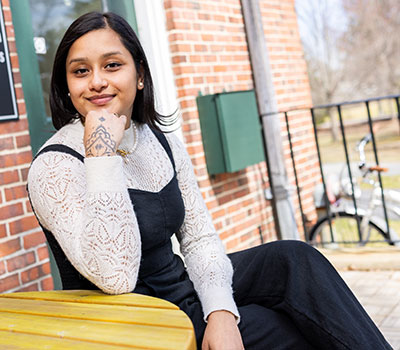
Moving forward, she wants to make that work the focus of her career, whether at a large company, nonprofit, or even her own venture. In particular, Pujari hopes to help other young professionals struggling with alcohol addiction. She says they often feel a cultural expectation to “work hard, play hard,” balancing professional intensity with an equally intense alcohol-filled social life.
“Alcohol has infiltrated almost every aspect of our social lives,” she says. “The idea of going out and not drinking seems almost unfathomable to most people.”
Pujari doesn’t have concrete plans yet for what a recovery program would look like, but she would like to tailor it to the unique mindset of young people and the challenges they face. “It stems from recognizing that people in my age group experience recovery, stigma, and shame differently than previous generations,” she says, “and from wondering what support might look like if it were built with those differences in mind.”
For those facing addiction, Pujari believes in openness. That’s why she created an Instagram account, SoberSaheli, that documents her journey through recovery. She hopes it brings comfort to others.
“I am super open about my experience,” she says. “I recover out loud, so others know they do not have to suffer in silence.”
Latest Stories
Posted in Entrepreneurial Leadership

Posted in Insights

Posted in Entrepreneurial Leadership, Outcomes