Wall Street’s Final Frontier: A Look at the SpaceX IPO
Space is the final frontier. It’s also big business. Want to boldly go where no man has gone before? Looks like it will cost $135 a share.
That’s the reported price that SpaceX has set for its initial public offering, which is expected later this week. The aerospace company, founded by Elon Musk, is targeting an astonishing valuation of $1.77 trillion. According to media outlets, its goal is to raise roughly $75 billion (or more), which would make for a historic IPO.
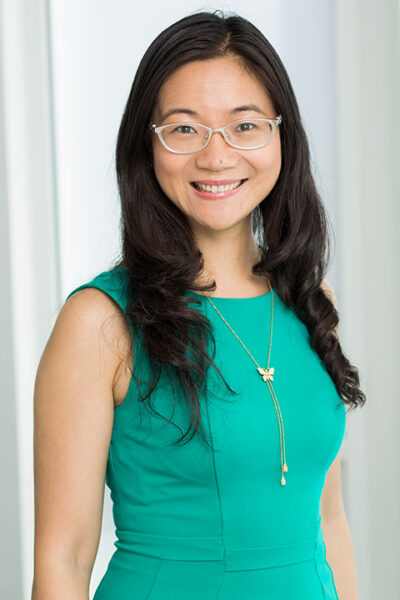
“The reported size of the SpaceX IPO is extraordinary,” says Jia Hao, an associate professor of finance at Babson College and the Zwerling Family Endowed Chair. “If the company were to raise around $80 billion, that would be more than three times the size of the largest IPOs in history.”
Such a staggering IPO raises a host of questions, about the company’s visionary yet volatile founder, about whether his electric car company will be overlooked, and, ultimately, about whether the sale will be worth it for investors.
“The SpaceX IPO is not just a question of whether investors believe in the company,” Hao says. “It is a question of whether the price, governance structure, and risk profile leave enough expected return for public shareholders, especially retail investors who may not receive the most favorable IPO allocation.”
Investing in Musk
Investing in SpaceX means investing in Musk. He has a firm hold over the company, controlling some 85% of shareholder votes.
Hao believes that Musk’s command of the company isn’t necessarily good or bad. “On the one hand, founder control can allow a visionary leader to pursue long-term strategies without being distracted by short-term market pressure,” she says. “On the other hand, public shareholders would have limited ability to influence governance, capital allocation, related-party transactions, or strategic direction.”
In short, Musk will have free rein to pursue his vision, for better or worse. “In finance terms, investors are buying economic exposure without meaningful control rights,” Hao says.
The Other Trillion Dollar Company
The rise of SpaceX does make one wonder: What of Tesla? Musk’s other trillion-dollar company, Hao says, has taken steps, in terms of governance and compensation, that appear designed to keep him more engaged with the business.
Will SpaceX’s IPO change that engagement? “A SpaceX IPO could cut both ways for Tesla,” she says.
On the positive side, a successful SpaceX debut could reinforce confidence in Musk and increase the perceived value of his leadership across companies. “But on the negative side,” Hao says, “it could also raise concerns that investor attention, capital, and Musk’s own time may shift further toward SpaceX and AI-related ventures.”
What Investors Should Consider
Like all investments, the SpaceX IPO comes down to the question of whether the rewards outweigh the risks. The company certainly has ambitious goals for the future, including launching data centers into orbit and putting humans on Mars.
“SpaceX may offer exposure to several powerful growth stories: reusable rockets, satellite broadband, defense contracts, space infrastructure, and possibly AI-related synergies,” Hao says.
At the same time, the company is led by a tech pioneer with almost total control who has a habit of bringing negative attention to himself. “SpaceX is led by a high-profile founder whose public actions can introduce additional reputational and governance risk,” Hao says.
Additionally, SpaceX loses a lot of money. It lost almost $5 billion last year, and earlier in 2026, it merged with xAI, Musk’s AI company, which also lost billions in 2025. “The question is whether the potential return is high enough to compensate investors for those risks,” Hao says.
This essential equation, of the balance between rewards and risks, will continue to hover over big IPOs, as AI giants Anthropic and OpenAI are both exploring public offerings, possibly for later this year.
Posted in Insights
Latest Stories
Posted in Entrepreneurial Leadership

Posted in Entrepreneurial Leadership, Insights