How Babson Helped SkinCeuticals Rejuvenate Physician Learning
A key part of future proofing a business is recognizing that the future actually means now.
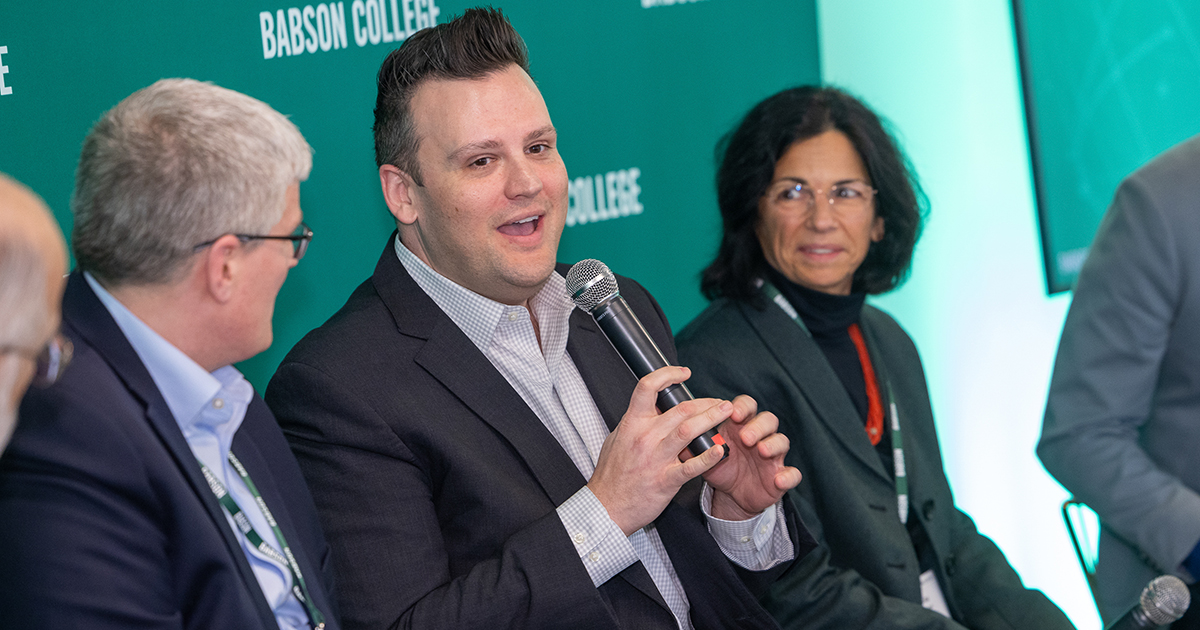
For Josh Taylor, the assistant vice president (AVP) of global education for L’Oreal’s SkinCeuticals brand, addressing a market shift meant finding the right partner. Taylor’s role includes overseeing product training and education for the physicians who sell and distribute SkinCeuticals products.
The brand was a heavyweight in the medical aesthetics space when it was founded in 1997, and almost 30 years later, Taylor and his colleagues noticed that while they are still a big fish, the pond is definitely not small.
“We realized our old differentiator of excellent formulas and product education no longer set us apart,” Taylor says. “Every competitor now follows that model.”
He then had two realizations: There’s no business courses in medical school even though many doctors become small business owners, and while most medical aesthetics companies offer ad hoc business training for practitioners, no one works directly with an academic institution to provide it. Ultimately, SkinCeuticals wanted to be more than a vendor; it wanted to be a true partner to physicians, helping them upskill and strengthen their own customer relations.
Enter Babson Executive Education.
Taylor originally pitched an online-only, six-course offering to Assistant Professor of Practice Mark Carr and Babson Executive Education Executive Director Stephen Flavin. Babson countered with what Taylor calls a “real net improvement” on his idea.
“They gave us a program, when we originally just had a list of topics,” Taylor says.
They landed on a hybrid program that offered asynchronous learning modules, synchronous sessions with faculty, and an in-person summit at the end of the course. Learners could plan around their schedule without losing the peer-to-peer element that’s so important to the medical space or the facetime with faculty every learner craves.
Suddenly, the SkinCeuticals team had a curriculum that spoke to the nuances of the medical aesthetic space. It was a new approach for both SkinCeuticals and Babson Executive Education that has paid off in both tangible and intangible ways, with Taylor seeing the impact that a tailored educational experience can have on professionals. Two years and two cohorts later, Taylor reflects on how this program shifted its own landscape.
When did you first see the impact of this program?
“During the summit, I was struck by the commitment of the learners. We planned it around the American Academy of Dermatology annual meeting because most of our customers are dermatologists. We ended up recruiting mostly plastic surgeons who could not have cared less about the annual meeting. It was a midweek obligation for many of them. And yet they chose to prioritize and attend it anyway, including one plastic surgeon who literally rescheduled surgeries to attend.
“Seeing the commitment to the content and the value that they clearly placed on it surprised me. They saw the value from their online experience and were hungry for the in-person continuation of it.”
You say that practitioners focus on the health of their patients, and you can focus on the health of their business. How does this program support this?
“What surprised me the most in the curriculum development was the extent each faculty member adjusted the baseline curriculum to feel relevant to a physician. These topics aren’t unique to the medical setting, but faculty found a way to make them relevant.
“Take Professor Danna Greenberg’s module on effective corporate psychology that covers managing yourself and leading others. She does a nice job of demonstrating how doctors can lean on the bedside manner skills they already have and apply them in a more strategic way. Management as a topic can be ethereal, and seeing the way Danna demonstrated broad, actionable steps they can use while managing employees was a big value.”
This program is a value proposition for SkinCeuticals. What would you say is the value proposition of the Babson program?
“It all comes down to the collaborative spirit. The experience from end to end was bespoke. We had a sense of what we needed and what our customers needed, but by working with a team that’s both experts in their academic fields and in executive education, we were able to marry a level of expertise with customization. Babson faculty and staff wanted us to be completely satisfied. Not every institution would be that keen or that eager.”
Why do you think this program was successful for SkinCeuticals? What’s next?
“I know my customer, but my Babson team knows adult learners and knows entrepreneurial learners. Mark as our faculty director, being such an entrepreneur, he can’t help but think about what comes next. How do we iterate, improve, fail fast, and try things. I see that borne out in the curriculum. I see it borne out in the truly hybrid format.
“He’s already come back to me about what’s next. How do we keep alumni engaged? How do we make sure they continue to grow? And so, we’re actually working on a follow-up that can help us build not just our numbers but help us build out networking potential among our alumni. I don’t know that I would have dared to swing that big without Babson faculty saying, ‘This is what your learners are going to want next.’ ”
Latest Stories

Posted in Insights

Posted in Insights
Posted in Community, Entrepreneurial Leadership