Babson and Microsoft Team Up to Help Small Businesses with AI
For sure, artificial intelligence is powerful and increasingly ubiquitous, but the technology’s swift rise may have left many wondering one big critical question: What exactly can we do with it?
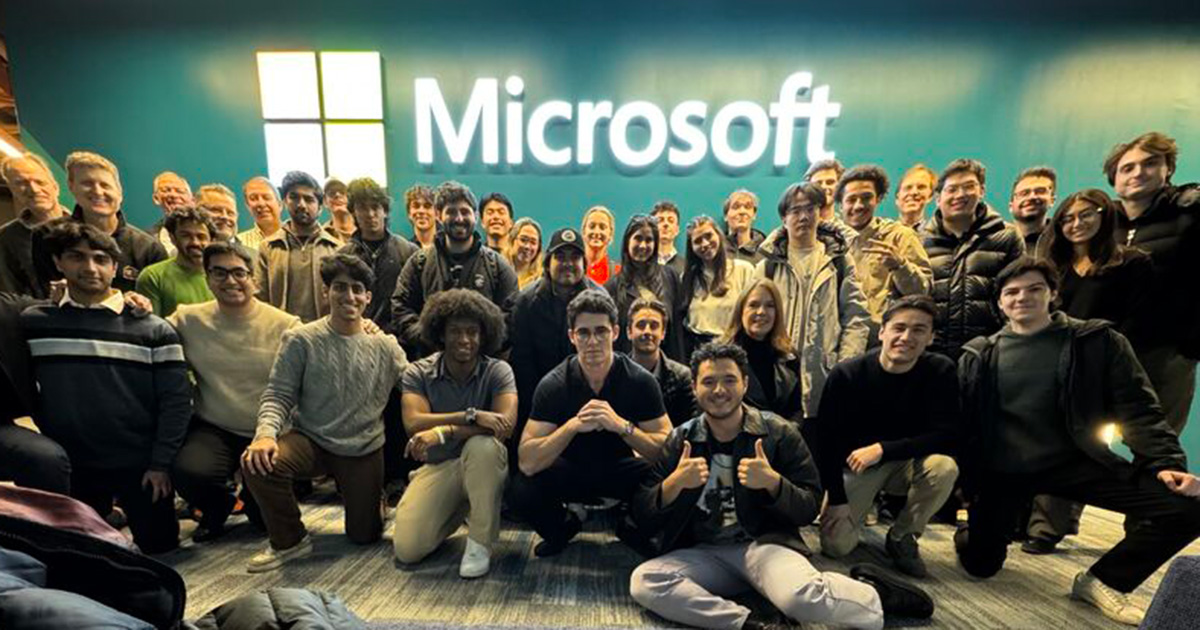
That’s a conundrum that small business owners may be wrestling with. In early March, seven of them, along with about 30 Babson students who are part of The Generator, the College’s interdisciplinary AI lab, met up at the Microsoft Garage, a gathering place and maker space located in the tech giant’s offices in Cambridge, Massachusetts.
There in Cambridge, representatives from Microsoft Research demonstrated an AI agent prototype designed for small businesses, one that can handle scheduling and customer inquiries and follow-ups. Then, student teams, each paired with a small business owner, took the tool for a spin. They spent an hour stress-testing the technology against real operational needs, developing recommendations that they presented to the Microsoft Research team.
“This is what applied AI looks like—researchers building, students stress-testing, and business owners grounding it all in what actually matters,” says Erik Noyes, associate professor of entrepreneurship and director of The Generator.
The Microsoft session comes as The Generator continues to pursue its larger mission, that of preparing and training small business owners for a new technology that’s promising to remake the way businesses operate.
A Natural Partner
Microsoft proposed the collaboration in its Cambridge office because it needed something its own labs couldn’t easily supply: direct, unfiltered access to small business owners and to people who understand how those businesses actually operate.
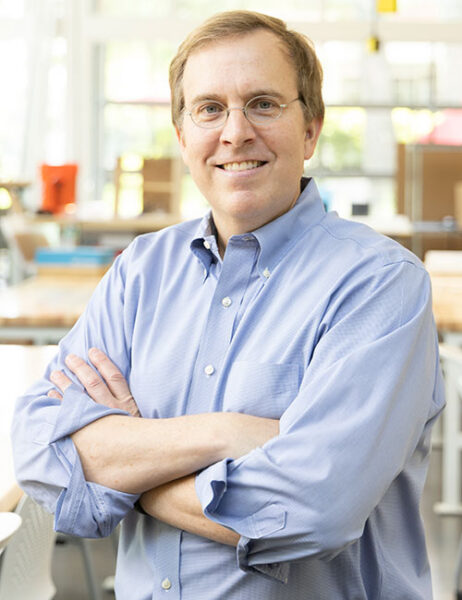
“Babson was a natural partner,” says Noyes, the Michael London ’92 and Stephen H. Kramer ’92 Term Chair in Entrepreneurship.
That’s because Babson students aren’t just learning about and experiencing entrepreneurship at the College. Many of them grew up with it. Upward of 40 percent of Babson students, Noyes says, grew up in small businesses, giving them front-line insights into the needs and priorities of these types of entrepreneurs.
Several of the students attending the Microsoft session also had served as co-leaders of two pilots of the Generator’s flagship initiative, the AI Innovators Bootcamp, in which both Babson professors and students offer small businesses a one-day, hands-on dive into AI, demonstrating how it can enable innovation and improve how they run their organizations.
Given their experiences, the Babson students were well prepared for the Microsoft session. “They arrived with real experience translating between the language of technology and the language of Main Street,” Noyes says.
An Ongoing Collaboration
The session in Cambridge began with a small business owner panel, moderated by Noyes, that explored the daily realities of running a slim operation. The owners talked of the need for constant customer communication, the cost of missed inquiries, and the tension between responsiveness and the hundred other things demanding owners’ attention.
After a demonstration of the AI agent prototype, students and small business owners got to work exploring the tool and then giving specific ground-level feedback to Microsoft. The session was designed as the first phase of an ongoing collaboration, giving Babson students access to innovative AI research and development and the chance to offer input into Microsoft’s product development cycle.
“The Generator is deepening students’ ties to industry and positioning Babson’s entrepreneurial expertise as a genuine asset to technology companies building the next generation of AI tools,” Noyes says.
Beyond the Microsoft session, The Generator and the Babson students who work there are keeping busy. Two more bootcamps are on the calendar for April 10 and 17. The Generator’s ultimate goal, through the bootcamps, is to train 1,000 small business owners in AI.
Posted in Insights
Latest Stories
Posted in Community
Posted in Insights