Could You Live in a World Where Everything Is Recorded? It May Be Coming Soon.
Imagine a world where you must assume every sentence uttered, every step taken, every location you’re in, is recorded.
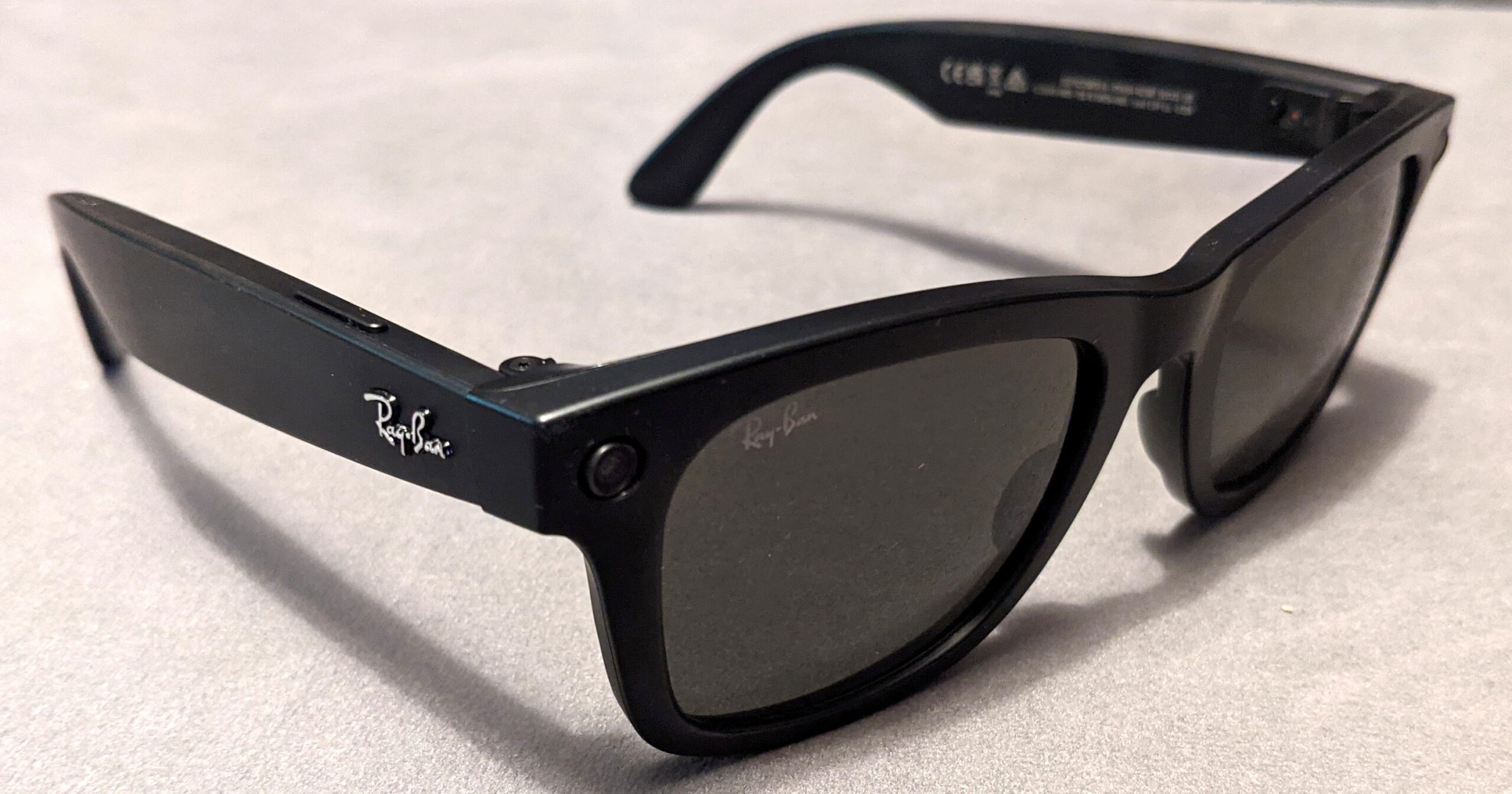
In the age of Meta AI smartglasses, forthcoming camera-equipped AirPods, and license plate readers, it could soon become the norm rather than the exception, says David Nersessian, professor of law at Babson College. Increasingly, these emerging, innovative technologies outpace laws and regulations, leading to a whole host of ethical questions as to what’s fair game, what’s frowned upon, and what we should worry about.
Here, Nersessian weighs in on all the questions.
Do you think society will normalize constant recording the way it normalized smartphone cameras, or is this fundamentally different?
“There seems to be a pattern of rapid adoption of new technologies for useful and even noble purposes, which then is followed by the overuse, misuse, or unexpected uses of that technology by those who control it.
“When this becomes public, significant social backlash often follows. We’re seeing this now with Flock Safety, the company that makes and markets license-plate reading cameras for law enforcement purposes. The backlash from the general public, as well as more hard-line privacy advocates, has real market impact for a company—for example, the number of towns suspending Flock contracts or removing the cameras entirely.”
Five years from now, what do you think the biggest debates around smartglasses will be?

“Smartglasses present their own unique issues but are part of a much larger trend in technology. In the 1980s, computers for the first time became something that people could use for personal purposes in their homes. In the1990s, all of those computers became connected to one another through the internet. In the 2000s, social media changed the way humans relate to one another and their informational environment. In the 2010s, we went mobile. And, in the 2020s, we have the vastly improved computing technology that powers AI combined with 5G mobile technology that allows that technology to be deployed everywhere.
“Smartglasses are one small part of a far greater trend that will continue into the 2030s—technology impacting the kinetic world and interacting, sometimes sub-optimally, with human beings in the process. In 2026, that ranges from augmented reality through smartglasses that can help you to fix your broken lawnmower, to the robots that build your car and drive it.”
Which is the bigger privacy concern: the smartglasses recording itself, or what AI can do with the recorded data afterward?
“There are important questions around data misuse, data storage, and reasonable expectations around privacy with all technologies. Different societies draw the line in different places in terms of how that data is used. A fundamental question is whether data collected can be used only for a particular purpose without additional permission (opt-in) or whether data can be used for any purpose provided that the owner of that data doesn’t refuse (opt-out). The U.S. tends to be opt-out, whereas Europe tends to be opt-in. AI simply accelerates and magnifies the impact of how we answer these more fundamental questions.”
Are we headed toward a future where recording is assumed by default, rather than requiring consent?
“Very likely. Whether that recording is legal is a separate question from whether it will happen. Some of this relates to notice. For example, Meta’s glasses are supposed to display a white light when they are recording, but the company is engaged in a constant technological back-and-forth struggle with users seeking to defeat this.
“In some states (including Massachusetts), it is a felony to secretly record someone without a court order, regardless of the means employed to do the recording. More states may adopt that approach as a way to protect their citizens as recordings proliferate, particularly given the difficulty of even knowing when recordings are happening. That said, it’s hard to think of a public setting in which one could reasonably expect that one might not be recorded, so there will be many situations in which recordings would not be deemed ‘secret’ and thus not illegal.”
Posted in Insights
Latest Stories
Posted in Insights

Posted in Community