When an Entrepreneur Decided to Take on Cancer
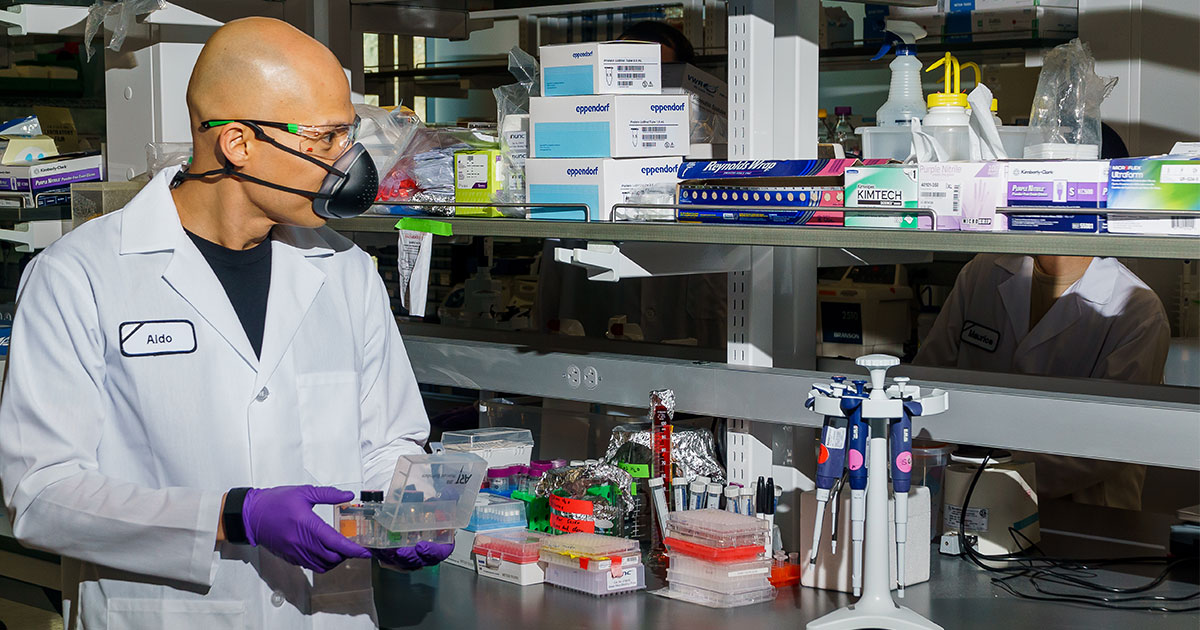
When Aldo Carrascoso MBA’08 applied to Babson College for graduate school, he wrote about his mother for the application essay.
Her name was Lily, and in September 1993, she died of breast cancer. Inspired by her and wanting to make an impact on people’s lives, Carrascoso pledged in the essay to one day start a life sciences company.
In 2016, he did just that. “People ask when this journey started,” he says. “It started in September 1993.”
Carrascoso is the CEO and co-founder of InterVenn Bioscience. Based in South San Francisco, California, the company focuses on studying glycans, which are complex structures in the body made of sugar molecules. Those structures hold lots of critical biological information that has often been underutilized in medicine, Carrascoso says.
Using glycans, InterVenn is developing a wide range of diagnostic tests. The first of these, which goes by the name GLORI, is a blood test for ovarian cancer, a cruel disease for which early detection is critical but for which no standard diagnostic test currently exists. GLORI is not yet commercially available, but the company announced in June that clinical trials had validated its effectiveness.
“People use the term game changer. Ninety-nine percent of the time they don’t mean it,” Carrascoso says. “I mean it.”
A Problem Solver
When he was younger, in the wake of his mother’s death, Carrascoso thought he would become a physician. As he grew older, however, he found himself filled with entrepreneurial ambitions, and he longed to learn from professors who had experience in building and shaping companies.
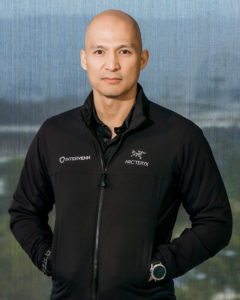
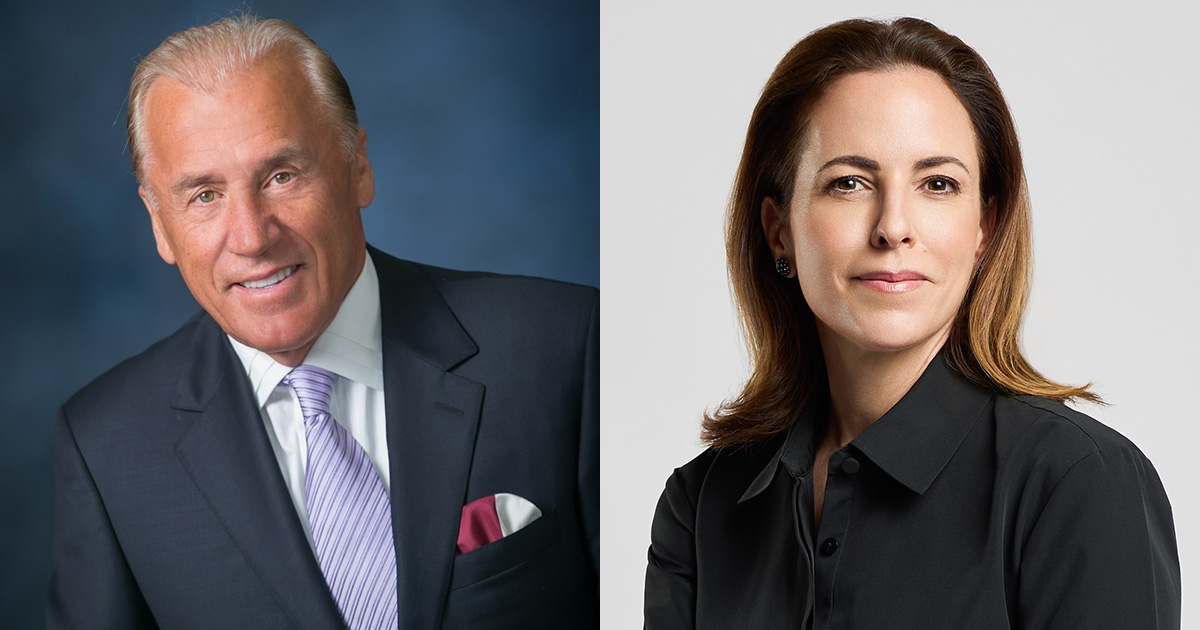
Aldo Carrascoso MBA’08, the CEO and co-founder of InterVenn Bioscience
That led him to Babson, though Carrascoso faced a problem. “I almost didn’t get in,” he says. Placed on the waitlist and worried that he might not be ultimately admitted, he hopped on a plane and showed up at Babson’s admissions office at 7 a.m.
An admissions director told him that unannounced visits weren’t a typical part of the application process. Carrascoso replied: “Do entrepreneurs follow the process?”
After graduation, Carrascoso started founding successful companies, including Jukin Media (a provider of video content) and Veem (a global payment provider). “Babson was a launching pad for me,” he says. “Babson has forged my experience.”
Carrascoso isn’t a researcher or scientist, but he considers himself a problem solver, so he jumped at the chance to form InterVenn with two chemists (Carolyn Bertozzi and Carlito Lebrilla) working with glycans. “I am a problem solver first, a technologist second,” Carrascoso says.
Having watched his mother die of cancer, and other family members who suffered from the disease, Carrascoso has long been discouraged by what he perceives to be a lack of progress in fighting it. “I was incredibly frustrated,” he says. “We are using the same tools and expecting different results.”
Glycans represent a new tool to use. While glycans contain a wealth of biological information, that data is incredibly complex and has been difficult and time consuming to decipher, until now. InterVenn utilizes artificial intelligence to unlock glycans’ powerful trove of data in mere moments. “What used to take 12 months now takes 12 seconds,” Carrascoso says.
Future Uses
Ovarian cancer, the fifth deadliest cancer among women, is an important first target for InterVenn’s efforts. The cancer is hard to detect early, with vague symptoms that can mimic other common conditions. As a result, it is often not discovered until later stages when it has spread beyond the ovaries.
“People use the term game changer. Ninety-nine percent of the time they don’t mean it. I mean it.”
Aldo Carrascoso MBA’08
InterVenn, however, is not stopping with ovarian cancer. Carrascoso says the company’s work with glycans has a host of uses, not only to detect a range of cancers (lung, pancreas, colon, among others) but also to predict the efficacy of certain treatments.
In all, InterVenn is pursuing 50 products for release, and last year, it announced it had raised $34 million to fund its work. Carrascoso is hopeful for what his company’s efforts with glycans can accomplish. “We have cracked the ceiling of what this is,” he says.
Latest Stories
Posted in Community

Posted in Insights
Posted in Community