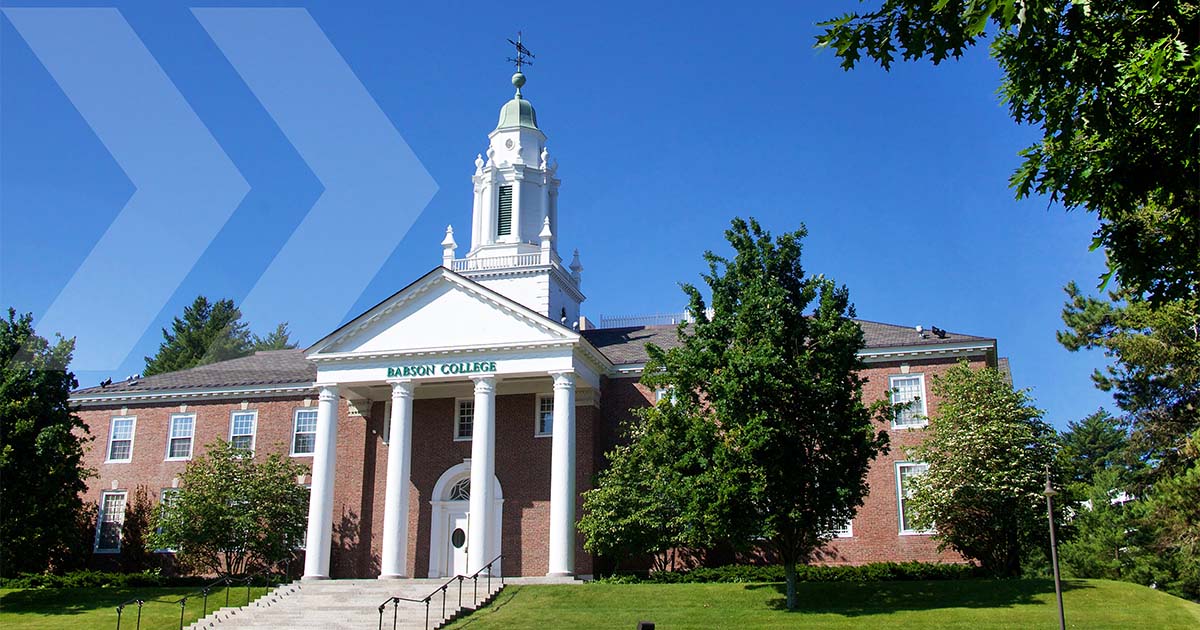
A Greener Babson: Beehives and Earth Month Events Drive Sustainability on Campus
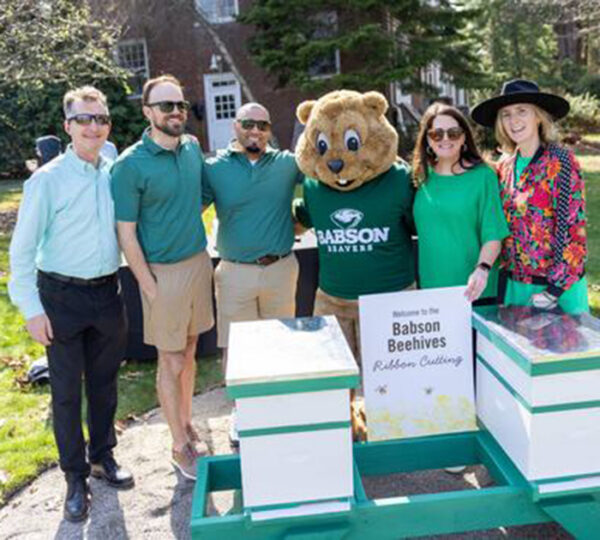
As a self-taught beekeeper who came to the practice out of medical necessity, Manny Rodrigues can easily detail the many benefits of beehives, two of which were recently installed in the apple orchard at Babson College’s Wellesley campus.
The average hive can yield more than 50 pounds of honey per year, breaking down to 66 12-ounce jars of the natural sweetener per colony. But, for Rodrigues, that’s only the beginning.
“It’s not just about the honey,” he said. “It’s about everything else that comes with them.”
From boosting pollination to improving plant health, the bees are expected to play a quiet but powerful role on campus, helping fruit trees bear more consistently, supporting biodiversity, and offering students a firsthand look at how natural systems work.
For Rodrigues, the journey to Babson began with a far more personal problem.
Several years ago, he began experiencing persistent stomach pain that doctors couldn’t fully explain. Over time, he noticed a pattern: The discomfort flared up whenever he consumed processed sugar. Looking for alternatives, he turned to raw, natural honey—and the symptoms disappeared.
“I said, ‘I know what the cause of this pain is,’ ” Rodrigues recalled. “So I started thinking—how am I going to get honey?”
What started as a practical solution quickly became a passion. Rodrigues dove into online research, enrolled in Bristol County beekeeping classes, and built his first hive. Within a few years, he had multiple state-inspected colonies and a growing appreciation for the intricacies of bee behavior.
“When you come home, you can just sit there and watch them,” he said. “You see how they work together. Honestly, they’re better than humans when it comes to teamwork.”
Beekeeping Comes to Campus
That fascination now has a new audience at Babson.
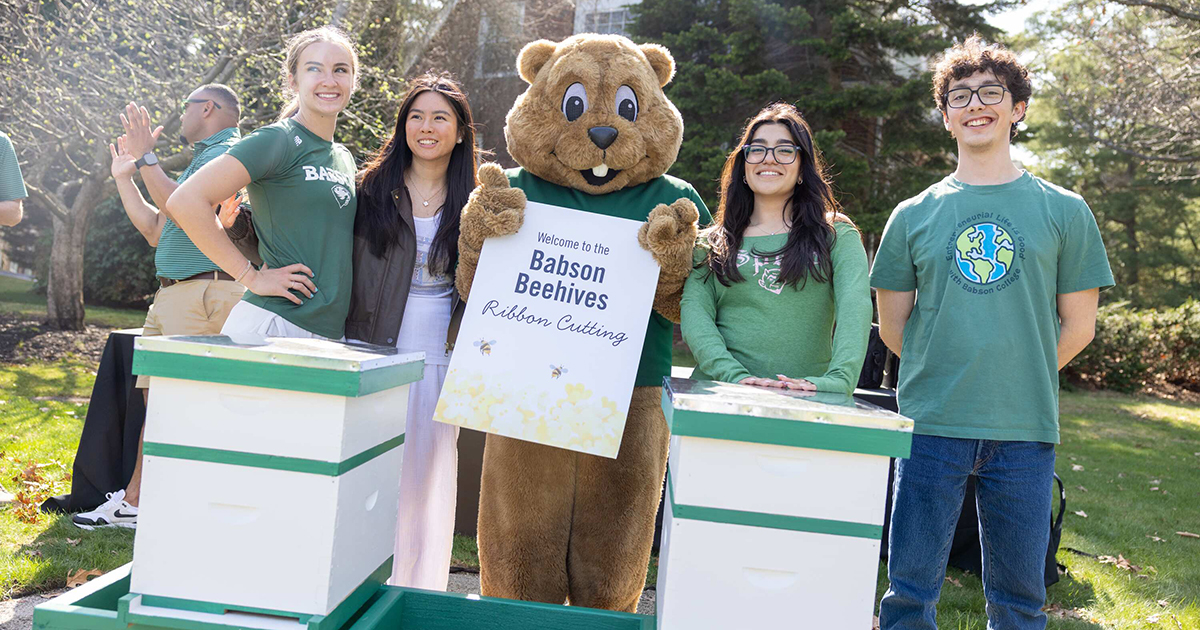
The two hives, installed on April 16, mark the beginning of what could become a broader campus beekeeping initiative. The colonies are expected to directly enhance pollination in the area—something Rodrigues has already seen firsthand at home, where previously unproductive plants began to bloom after his bees arrived.
“They pollinate everything,” he said. “You start seeing flowers, fruits—things that weren’t there before.”
Once the bee colonies arrive in May, Rodrigues will monitor the hives weekly, feeding and maintaining the busy community as they establish themselves, with the possibility of additional hives throughout campus as they grow.
“Honestly, they’re better than humans when it comes to teamwork.”
Manny Rodrigues, Babson College Beekeeper
The project itself came together in a way that reflects Babson’s entrepreneurial ethos.
Rodrigues, who previously worked in municipal recycling before moving into construction, connected with Babson through a series of chance encounters. A social media post about a bee-related job eventually caught the attention of Babson Greenworks Director Leila Lamoureux MBA’18, sparking a conversation that led to the campus installation.
It’s a path that wasn’t planned—but one that opened the door to something bigger.
“You’re in one place, and then something else comes along,” Rodrigues said. “And suddenly you’re part of something new.”
Earth Month in Action
The beehives are just a piece of a larger sustainability push at Babson throughout April, as the College marked Earth Month with a wide-ranging series of events organized through Babson Greenworks.
The 20th anniversary of Babson’s Sustainability and Energy Conference spotlighted entrepreneurs focused on social impact, and included a keynote address from longtime social entrepreneur David Shaw.
Shaw, CEO of the biotech investment company Black Point Group, has a wide range of experience in science and health-based companies, investment management, and social impact. He recently wrote Wave Making: Inspired By Impact, a book detailing his experiences and encouraging others to become wave makers.
“I’ve been an entrepreneur for 40 years, and I feel like I should have come here a couple of decades ago,” Shaw joked at Babson’s Knight Auditorium. Hosted by the Babson Sustainability and Energy Club, the conference later presented Shaw with the inaugural Entrepreneur for Impact Award in recognition of his decades of leadership.
“My priorities are similar to yours,” Shaw said. “For me, entrepreneurship, sustainability, and, a word that’s been used a few times at this point, community building, is often the driving force to build great companies.”
Led by Lamoureux, other initiatives brought sustainability to life across campus, spanning food systems, consumer behavior, climate action, and community engagement.
Among the highlights:
- On Earth Day on April 22, students participated in a Miyawaki Forest Planting, which is a dense, fast-growing micro-forest with native trees and shrubs placed close together. The plantings will become a dense, self-sustaining forest that supports wildlife and improves soil and air quality.
- A “Plate Not Waste” initiative and a Trim Dining Hall takeover helped educate students about food waste and more mindful consumption.
- A mid-month clothing swap encouraged the College community to reuse and reduce textile waste.
- A Climate Action Simulator asked participants to collaborate on real-world climate solutions.
A Broader Push Toward Sustainability
Taken together, the month’s programming emphasizes a campus-wide enthusiasm and commitment to establish sustainability as a core part of the college’s entrepreneurial ecosystem—one that emphasizes action as much as awareness.
From bees pollinating campus trees to students modeling climate solutions, the initiative embeds environmental thinking into everyday campus experiences.
And, if Rodrigues has learned anything from his time with bees, it’s that small, coordinated efforts can often lead to meaningful impact.
“The only way to really understand it,” he said, “is to sit in front of the hive and watch.”
Svetlin Bardarov contributed to this report.
Posted in Community
Latest Stories
Posted in Community


Posted in Outcomes